
U.S.-Brazil Trade Tensions and Emerging Market Opportunities: A New Paradigm Under VP Guedes and Shifting U.S. Policies
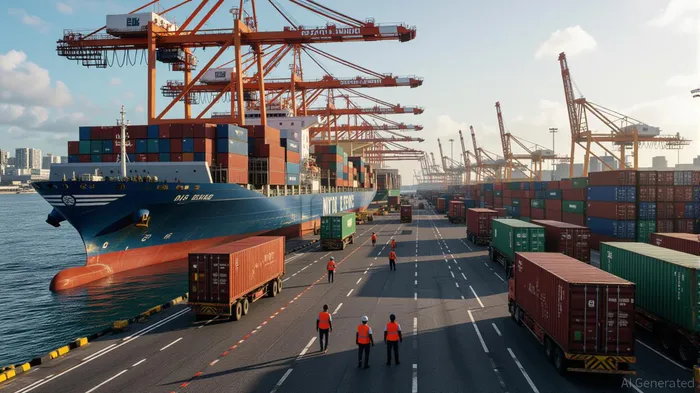
The U.S.-Brazil trade war, now in its most volatile phase, has created a seismic shift in global markets. President Donald Trump's 50% tariff on Brazilian imports—targeting key sectors like steel, aluminum, and agricultural exports—has sent shockwaves through emerging markets. Yet, amid the chaos, a new narrative is emerging: Brazil's assertive trade strategy under Vice President Danilo Guedes and the possibility of U.S. policy reversals in a post-Trump administration are creating asymmetric opportunities for investors in equities and commodities.
The Guedes Effect: Trade Diversification and Strategic Retaliation
Danilo Guedes, Brazil's Vice President of International Affairs at NTC&Logística, has become a central figure in reshaping Brazil's trade resilience. His initiatives focus on three pillars: contingency planning, trade diversification, and infrastructure modernization.
Contingency Planning and Retaliation: Brazil's Economic Reciprocity Act, enacted in July 2025, grants the government unilateral authority to impose retaliatory tariffs, restrict foreign investment, or limit intellectual property access to offending countries. This tool has already been used to counter U.S. measures, with Brazil targeting high-tech imports and ethanol exports. For investors, this signals a shift toward defensive positioning in sectors like agribusiness and energy, where Brazilian firms like JBSJBS-- SA (JBSS3) and PetrobrasPBR.A-- (PETR4) could benefit from redirected trade flows to Asia and Europe.
Trade Diversification: Guedes has accelerated Brazil's pivot to non-traditional partners. The Bioceanic Corridor—a $15 billion infrastructure project linking Brazil to the Pacific via Chile—has gained urgency as a hedge against U.S. dependency. Chinese investments in this corridor, including a $2.3 billion port in Peru, underscore Beijing's growing role as a trade counterweight. For equities, this bodes well for commodity-linked assets such as ValeVALE-- (VALE) and iron ore miners, which stand to gain from China's infrastructure boom.
Logistics and ESG Integration: Guedes has prioritized modernizing Brazil's logistics sector, which handles 65% of the country's goods by volume. Public-private partnerships in infrastructure and the adoption of the TIR Convention (a global customs transit system) are reducing transit times for key exports. This not only improves competitiveness but also aligns with ESG trends, making Brazil's logistics stocks—like NTC&Logística (NTC) and Eletrobras (ELET3)—attractive for ESG-focused portfolios.
The Ibovespa index, currently trading at an attractive 8.5x P/E, reflects undervaluation relative to its historical average of 12x. This discount is driven by near-term trade uncertainty but also presents a long-term buying opportunity, particularly in sectors insulated from U.S. tariffs, such as utilities and infrastructure.
U.S. Policy Shifts: A Path to Resolution?
While Trump's tariffs have been framed as a political tool to pressure Brazil on judicial sovereignty issues, a potential shift in U.S. administration—such as a Biden re-election or a centrist candidate—could pivot toward trade normalization. Historical precedents, like the 2019 U.S.-China phase-one deal, suggest that tariffs are often leveraged as negotiation tools rather than permanent policies.
Investors should monitor diplomatic signals and WTO filings for signs of de-escalation. A resolution could trigger a rebound in Brazilian equities and commodities, particularly in export-heavy sectors. The MERCOSUR-EU Partnership Agreement, recently signed in December 2024, could further stabilize trade relations by creating a $1.5 trillion integrated market.
Vale, a bellwether for global iron ore demand, trades at a 30% discount to its five-year average P/E. With China's infrastructure spending projected to grow by 6% annually through 2027, Vale's exposure to the red metal positions it as a high-conviction buy, especially if U.S.-Brazil tensions ease.
Investment Strategies for a Shifting Trade Landscape
Hedging Short-Term Volatility: Currency hedging via ETFs like the ProShares UltraShort Brazilian Real (BZQ) or forward contracts can mitigate near-term real depreciation risks. The real has already fallen 2.9% against the dollar since the tariff announcement.
Sector Rotation: Shift allocations to defensive sectors like utilities (Eletrobras) and infrastructure (Eneva), which are less exposed to trade disruptions. Conversely, reduce exposure to export-heavy sectors like steel and auto parts until policy clarity emerges.
Long-Term Commodity Exposure: Undervalued commodities like iron ore, soybeans, and gold offer compelling entry points. ETFs such as the iShares MSCI Brazil Commodity Producers ETF (BRF) provide diversified access to these assets.
ESG and Innovation Plays: NTC&Logística's push for sustainable logistics and the Bioceanic Corridor's alignment with green infrastructure trends make it a unique ESG play. Similarly, gold miners like Sociedade Mineradora Caraíbas (CMIN3) benefit from both inflationary pressures and ESG-driven demand for ethical mining.
While TeslaTSLA-- (TSLA) may seem unrelated, its reliance on global supply chains highlights the broader risk of trade wars. Diversifying into emerging market equities with strong domestic demand—like Brazil's JBS SA—can provide a counterbalance.
Conclusion: Navigating Uncertainty with Strategic Precision
The U.S.-Brazil trade dispute is a classic case of short-term pain and long-term gain. While immediate volatility is inevitable, Brazil's proactive trade policies under Guedes and the potential for U.S. policy normalization create a fertile ground for emerging market equities and commodities. Investors who position for structural trends—such as China's role in the Bioceanic Corridor or the green logistics revolution—can capitalize on the asymmetric risks and rewards of this unfolding trade drama.
As the world watches Belém host COP30, one thing is clear: Brazil's trade strategy is no longer just about commodities—it's about redefining its place in a multipolar global economy. For investors, the key is to balance caution with conviction, leveraging today's dislocations to secure tomorrow's gains.





Comentarios
Aún no hay comentarios