
Brazil's Strategic Position in the AI and Data Center Boom: A Geopolitical and Energy-Driven Opportunity
Brazil is emerging as a pivotal player in the global AI and data center landscape, leveraging its renewable energy abundance, strategic policy frameworks, and geopolitical positioning to attract foreign investment. For investors seeking to capitalize on the convergence of clean energy and digital infrastructure, the country offers a compelling case study of how natural resources and regulatory innovation can align to create competitive advantages.
Renewable Energy: The Foundation of Sustainable AI Infrastructure
Brazil's energy matrix is a cornerstone of its appeal. Over 93.6% of its electricity is generated from renewable sources, primarily hydropower, with expanding contributions from solar and wind according to market intelligence. This clean energy surplus is now being directed toward high-demand sectors like AI and data centers. Projects such as the Rio AI City initiative, developed by Elea Data Centers, exemplify this trend. The facility is designed to operate entirely on renewable energy and employs waterless cooling systems to minimize environmental impact. By 2025, Brazil's planned data center capacity is projected to reach 3.2 gigawatts, driven by hyperscalers like MicrosoftMSFT-- and AmazonAMZN-- Web Services, as well as local firms according to Bloomberg analysis.
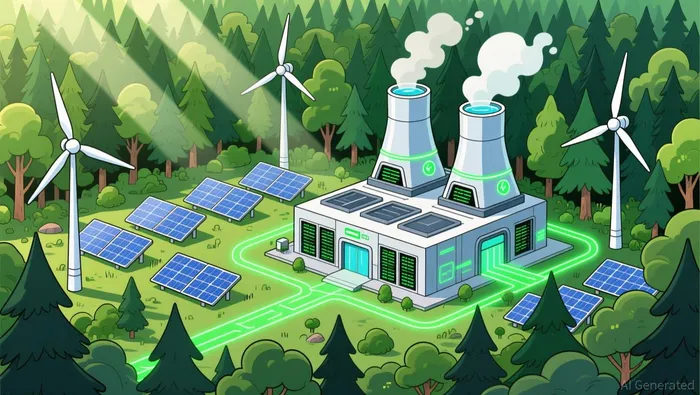
The country's renewable energy infrastructure is further bolstered by projects like the Tucurui hydropower plant, which generates surplus energy capable of powering data centers without straining the grid. This aligns with Brazil's broader energy transition goals, including a net-zero emissions target by 2050. As global demand for AI surges, Brazil's ability to decouple digital growth from carbon emissions positions it as a leader in sustainable tech production.
Government Incentives: Tax Breaks and Policy Frameworks
Brazil's government has introduced a suite of incentives to accelerate AI and data center development. The Redata program, set to launch in September 2025, offers tax exemptions for projects sourcing 100% renewable energy, including full waivers of PIS, Cofins, IPI, and import duties. This initiative is part of a broader strategy to attract foreign investment, particularly from U.S. tech giants, according to sources amid trade tensions that have seen Brazil face a 50% import tariff on its goods.
At the federal level, the PADIS program provides full exemptions from IPI and PIS/COFINS for solar manufacturers, while state-level ICMS tax exemptions for renewable energy equipment further reduce operational costs according to PV Know-How. These measures are complemented by updated rules for special export processing zones (ZPEs), which now require renewable energy sourcing from yet-to-be-built plants according to Reuters. Such policies not only lower barriers for foreign investors but also align with global decarbonization trends, making Brazil an attractive hub for green tech production.
Geopolitical Strategy: AI Governance and International Collaboration
Brazil's National AI Plan, "AI for the Good of All," underscores its ambition to lead in ethical and inclusive AI development. Launched in July 2024, the plan allocates $4 billion over four years to fund infrastructure, training, and regulatory frameworks. The plan's five pillars-ranging from AI-driven public services to ethical governance-reflect a holistic approach to balancing innovation with social responsibility.
The Senate's approval of Bill No. 2338/2024 in December 2024 further solidifies this strategy, establishing a legal framework for ethical AI use grounded in transparency and non-discrimination. These efforts are supported by institutions like the Brazilian Development Bank (BNDES), which funds AI research hubs in São Paulo and Rio de Janeiro, and by expanded visa programs to attract global talent according to U.S. State Department.
Internationally, Brazil is leveraging partnerships with the U.S. and European Union to align its AI ambitions with global standards. Despite trade frictions, the country's focus on renewable energy-linked tech production has fostered dialogue on mutual investments, particularly in high-performance computing and generative AI systems according to U.S. Trade Office.
Challenges and Opportunities
While Brazil's advantages are clear, challenges remain. Grid resilience and equitable energy distribution require continued investment, particularly as data center demand is projected to reach 13.2 gigawatts by 2035. However, the government's emphasis on long-term power contracts, on-site generation, and battery storage solutions mitigates these risks according to Bloomberg analysis.
For foreign investors, Brazil's combination of renewable energy abundance, tax incentives, and strategic AI governance creates a unique opportunity. The country's ability to harmonize technological progress with climate goals-while navigating geopolitical dynamics-positions it as a critical node in the global AI supply chain.







Comentarios
Aún no hay comentarios