
Brazil's Regulatory Shift in Crypto and Its Impact on Stablecoin Markets
Brazil's cryptocurrency market, already the largest in Latin America and fifth globally in adoption, has entered a transformative phase with the introduction of stringent regulatory frameworks in 2023. These changes, spearheaded by the Central Bank of Brazil (BCB), aim to integrate stablecoins and virtual asset service providers (VASPs) into the formal financial system while balancing innovation with risk mitigation. For investors, the evolving landscape presents a nuanced interplay between regulatory risk and long-term growth potential, particularly in a market where stablecoins now dominate 90% of transaction volume.
A Regulatory Framework Rooted in Intermediary Oversight
The BCB's 2023 regulatory updates, operationalized through Resolutions 519, 520, and 521, extend financial sector rules to VASPs, requiring them to obtain authorization as Sociedades Prestadoras de Serviços de Ativos Virtuais (SPSAVs). These entities must adhere to capital thresholds ranging from R$10.8 million to R$37.2 million, depending on their activity, and implement robust AML, cybersecurity, and governance protocols. Crucially, the framework treats stablecoin transactions as foreign exchange (FX) operations, subjecting them to client identification, transaction monitoring, and reporting requirements. This intermediary-centered approach, as noted by legal experts, allows foreign stablecoin issuers to operate without establishing a local presence but mandates that their Brazilian partners act as gatekeepers, ensuring compliance with redemption procedures and transparency.
 The regulatory shift also introduces a $100,000 cap on transactions involving unauthorized counterparties, a measure designed to curb fraud and money laundering. While these rules are set to take effect in February 2026, the nine-month grace period for compliance has already prompted market consolidation, with smaller firms struggling to meet capital and operational demands.
Stablecoins as a Functional Parallel Dollar System
Stablecoins have become a cornerstone of Brazil's crypto ecosystem, driven by macroeconomic factors such as inflation and the real's depreciation. In 2024, USD-backed stablecoins like USD₮ and USDCUSDC-- accounted for nearly 90% of crypto activity, with local Real-pegged stablecoins like BRL1 gaining traction for on-chain transactions. The BCB's integration of stablecoins into the FX framework reflects a strategic move to align with global trends, such as the EU's MiCA regulation, while addressing risks like capital flight and volatility.
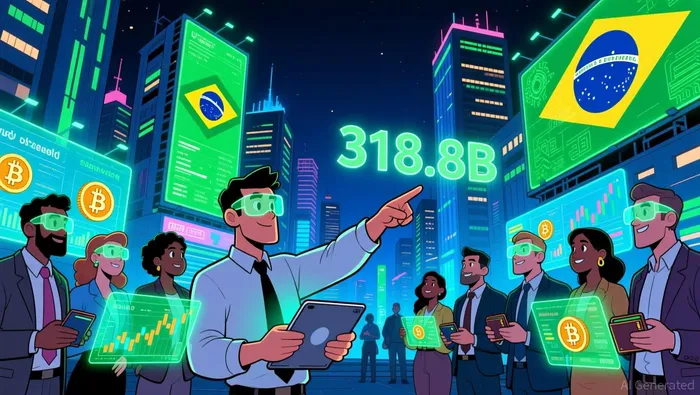
For investors, this regulatory clarity has attracted institutional capital. Brazil's crypto inflows surged to $318.8 billion in 2024, with the Brazilian Stock Exchange (B3) listing over 20 crypto ETFs, including the world's first Solana spot ETF. International firms, such as Paradigm, have also invested in Brazilian stablecoin projects, signaling confidence in the market's structured growth.
Balancing Risk and Growth: A Double-Edged Sword
While the regulatory framework enhances legal certainty and consumer protection, it also raises entry barriers for smaller players. The capital requirements and cybersecurity mandates, for instance, favor larger incumbents, potentially stifling innovation. Additionally, the phased implementation of the Travel Rule-requiring VASPs to share transaction originator and beneficiary information-adds operational complexity, particularly for cross-border transactions.
However, the long-term outlook remains optimistic. Brazil's crypto market is projected to grow as institutional adoption accelerates, driven by large transactions exceeding $10 million. Retail investor sentiment further supports this trajectory, with 84.4% of Brazilian respondents expressing willingness to invest in crypto if offered through their banks. The BCB's cautious optimism about stablecoins' role in financial inclusion and cross-border trade underscores the sector's potential to drive economic resilience.
A Model for Latin America?
Brazil's regulatory approach has positioned it as a regional benchmark. Unlike many Latin American countries still grappling with crypto policy, Brazil's 2022 Virtual Assets Law and 2025 BCB resolutions provide a comprehensive blueprint for balancing innovation with stability. This clarity has attracted global attention, with Chainalysis ranking Brazil as the fifth-largest crypto market globally. For investors, the country's structured ecosystem offers a unique opportunity to capitalize on stablecoin-driven growth while navigating a risk-averse regulatory environment.
Conclusion
Brazil's regulatory shift in crypto represents a pivotal moment for Latin America's largest crypto market. While the emphasis on VASP oversight and stablecoin integration introduces compliance challenges, it also fosters institutional trust and aligns the sector with global standards. For investors, the key lies in navigating the regulatory landscape's complexities-leveraging Brazil's macroeconomic tailwinds and technological innovation while mitigating the risks of market consolidation and operational costs. As the BCB's framework matures, Brazil's crypto ecosystem is poised to remain a bellwether for the region, offering a compelling case study in balancing regulatory rigor with long-term growth.







Comentarios
Aún no hay comentarios