
Brazil Potash Secures $75M Equity Line to Fuel Domestic Potash Independence
Brazil Potash Corp. has secured a critical funding boost for its Autazes Potash Project, announcing a $75 million equity line of credit (ELOC) with institutional investor Alumni Capital LP. The 24-month agreement, effective May 2025, positions the company to advance construction of a project that could significantly reduce Brazil’s reliance on imported potash—a nutrient critical for agriculture—while aligning with global sustainability goals.
The ELOC allows Brazil PotashGRO-- to sell shares to Alumni Capital incrementally at market-based prices, granting the company flexibility to pace capital raising as development milestones are achieved. This structure contrasts with traditional equity offerings, minimizing dilution to existing shareholders by avoiding a single large issuance.
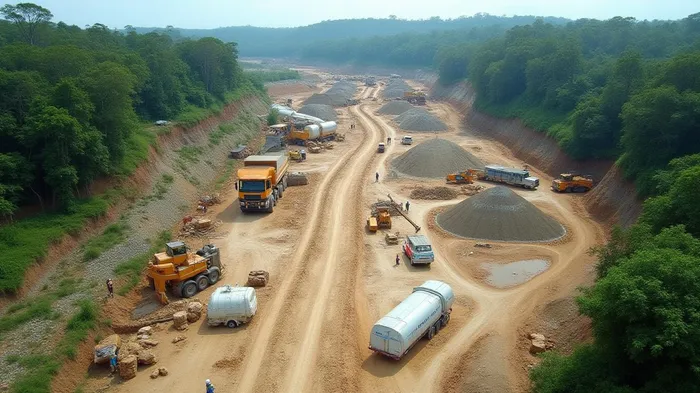
Project Ambitions and Strategic Importance
The Autazes Project targets an initial annual production capacity of 2.4 million tons of potash, meeting ~20% of Brazil’s current demand. With over 95% of Brazil’s potash imported in 2021, the project’s domestic supply could reduce reliance on global markets and lower costs for farmers. CEO Matt Simpson emphasized the project’s alignment with Brazil’s agricultural needs and sustainability goals, noting that 100% of production will be sold domestically, potentially mitigating ~1.4 million tons of annual greenhouse gas (GHG) emissions via river barge transport in partnership with Amaggi.
Sustainability-Linked Financing and Risk Mitigation
While the ELOC itself does not include sustainability metrics, Brazil Potash’s broader financing strategy incorporates ESG performance into its $1.2 billion syndicated green loan. This facility, finalized in Q1 2024, ties interest rate discounts to GHG emission reductions, renewable energy adoption, and social targets such as worker safety. For example, a 0.125% interest rate discount applies if emissions are cut by 15% by 2025, with an additional discount for social performance. A renegotiation clause could adjust terms if potash prices drop below $350/ton FOB for three consecutive months, reflecting the project’s exposure to commodity market volatility.
Ofatum: Securing Offtake and Market Demand
The project has secured offtake agreements totaling 75,000 tons annually by late 2024, with commitments from a European chemical company (50,000 tons/year through 2027) and a North American manufacturer (25,000 tons/year through 2029). A potential third agreement with a Southeast Asian battery manufacturer could add 15,000 tons annually by 2025, bringing total commitments to 90,000 tons. These agreements provide critical demand certainty, though volume adjustments are permitted based on production scalability and market conditions.
Risks and Considerations
Despite strong offtake commitments and a permitted project status, risks remain. Share sales under the ELOC could dilute existing shareholders, particularly if market prices fall. Additionally, the project’s success hinges on achieving ESG targets to maintain favorable loan terms and navigating potash price fluctuations. Brazil’s regulatory environment and global supply dynamics also pose challenges.
Conclusion: A Strategic Play for Brazil’s Agricultural Future
Brazil Potash’s $75 million ELOC represents a pivotal step toward transforming its Autazes Project from concept to reality. With 2.4 million tons of annual production capacity and ~20% of Brazil’s potash demand within reach, the project could catalyze domestic agricultural self-sufficiency and reduce GHG emissions. The flexibility of the ELOC, combined with sustainability-linked financing and secured offtake agreements, positions the company to navigate risks while capitalizing on Brazil’s strategic need for potash independence.
Should the project meet its milestones and ESG targets, Brazil Potash could emerge as a cornerstone of the nation’s agricultural supply chain, supporting global food security and reducing reliance on volatile international markets. Investors, however, must weigh the potential rewards against execution risks—including commodity price swings and regulatory hurdles—to assess this high-stakes bet on Brazil’s future.





Comentarios
Aún no hay comentarios