
Brazil's Petrobras Imports Natural Gas from Argentina: A Strategic Shift in Energy Markets
The recent decision by Brazil's state-controlled energy giant, PetrobrasPBR.A--, to import natural gas from Argentina's Vaca Muerta shale formation marks a pivotal moment in regional energy integration and diversification. This move, facilitated by a transnational pipeline network through Bolivia, underscores a strategic recalibration of South American energy markets. For investors, the implications are profound, reflecting both the opportunities and risks inherent in a rapidly evolving landscape shaped by divergent national policies and infrastructure ambitions.
A New Era of Regional Energy Integration
According to a Clickpetroleoegas article, Petrobras has initiated its first imports of non-conventional natural gas from Argentina, with an initial volume of 100,000 cubic meters per day. This is part of a broader agreement that could scale up to 30 million cubic meters per day by 2030. The logistics of this arrangement-transporting gas via Bolivia's pipeline infrastructure-highlight the potential for cross-border collaboration to address energy security challenges. For Brazil, this diversifies its supply sources, reducing reliance on domestic production and LNG imports. For Argentina, it transforms the Vaca Muerta basin into a critical export hub, leveraging its shale resources to generate revenue and stabilize its energy sector under President Javier Milei's liberalized policies.
The strategic value of this integration is amplified by Brazil's domestic energy priorities. President Luiz Inácio Lula da Silva's administration has prioritized increasing natural gas supply to lower prices and stimulate industrial activity. A key policy shift-limiting gas reinjection during oil production-aims to redirect more gas to the domestic market. While this could reduce costs for consumers, it has raised concerns among international oil companies like Equinor and Shell, which fear higher transportation expenses and reduced project viability.
Diverging Policies: Argentina's Liberalization vs. Brazil's Regulatory Uncertainty
The contrasting energy strategies of Brazil and Argentina present a dual-edged sword for investors. Argentina, under Milei, has introduced the Incentive Regime for Large Investments (RIGI), offering 30 years of regulatory stability, tax breaks, and foreign currency access for projects exceeding $200 million. This has positioned Argentina as an attractive destination for capital, particularly for infrastructure tied to Vaca Muerta, such as pipelines and export terminals. Projects over $1 billion could receive even more favorable terms, potentially accelerating Argentina's emergence as a net energy exporter.
In contrast, Brazil's regulatory environment remains uncertain. While the Lula administration's gas reinjection policy is designed to boost domestic supply, it introduces volatility for investors. As noted by Rystad Energy, the policy applies only to new wells, but the broader regulatory ambiguity could deter large-scale investments from international firms. This divergence creates a scenario where Argentina may outpace Brazil in attracting capital, even as the latter seeks to leverage Argentine gas to meet its own demand.
Infrastructure and Market Dynamics: A Boon for Regional Competitiveness
Brazil's natural gas market is undergoing a structural transformation. Comgás, the country's largest distributor, has secured long-term supply contracts with Brava Energia, Equinor, and Galp, including a ten-year agreement linked to the Raia Project in the Campos Basin, according to a Riotimes article. These deals aim to reduce Petrobras' dominance and foster competition. Meanwhile, new infrastructure projects, such as the Rota 3 pipeline, are expected to increase supply by 25%, with an additional 3 million cubic meters per day potentially added through government-led initiatives.
The integration of Argentine gas further enhances this dynamic. By reversing the flow of Bolivia's northern pipeline and importing Vaca Muerta gas directly, Brazil is diversifying its supply routes and reducing costs. According to Brazil's Minister of Mines and Energy, Alexandre Silveira, these measures could cut natural gas prices by up to 40%. However, challenges remain, including high infrastructure costs and limited pipeline connectivity, which may slow the pace of adoption.
Investment Implications: Opportunities and Risks
For investors, the Brazil-Argentina energy corridor represents a high-reward, high-risk proposition. Argentina's liberalized policies and RIGI incentives make it an appealing destination for capital, particularly in upstream and midstream projects tied to Vaca Muerta. The potential for 30 million cubic meters per day in exports by 2030 suggests a scalable opportunity, provided geopolitical tensions and currency risks are managed.
Conversely, Brazil's regulatory environment remains a wildcard. While the country's energy expansion plan forecasts a 37.5% increase in natural gas consumption over the next decade, the uncertainty around reinjection policies and infrastructure bottlenecks could delay returns on investment. Investors may need to adopt a cautious approach, favoring projects with government backing or long-term supply agreements.
Conclusion
The Petrobras-Argentina gas imports signal a strategic shift toward regional energy diversification, driven by complementary policies and infrastructure innovation. For investors, this corridor offers a unique opportunity to capitalize on Argentina's liberalization while navigating Brazil's regulatory complexities. However, success will depend on aligning investments with the evolving priorities of both governments and mitigating the risks inherent in a market still in flux.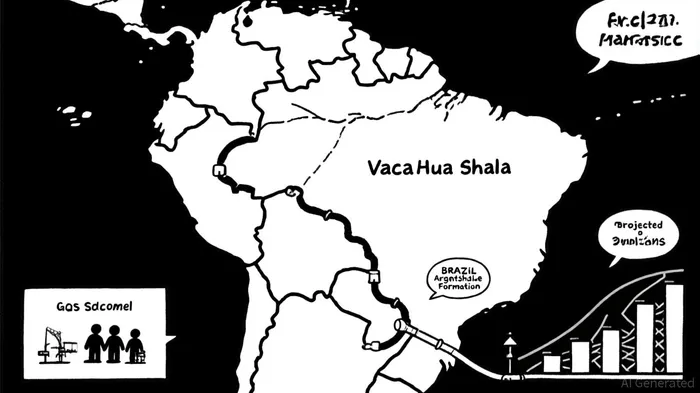







Comentarios
Aún no hay comentarios