
Braskem's Strategic Position in Brazil's Evolving Petrochemical Landscape
Brazil's petrochemical sector is undergoing a transformative phase, driven by a series of government policy shifts aimed at revitalizing domestic industry and aligning with global sustainability goals. For Braskem, the country's largest petrochemical company, these changes present both opportunities and challenges. As the sector grapples with structural inefficiencies and global competition, Braskem's strategic position hinges on its ability to leverage policy-driven tailwinds while addressing long-standing operational constraints.
Policy-Driven Tailwinds: Import Taxes and PRESIQ
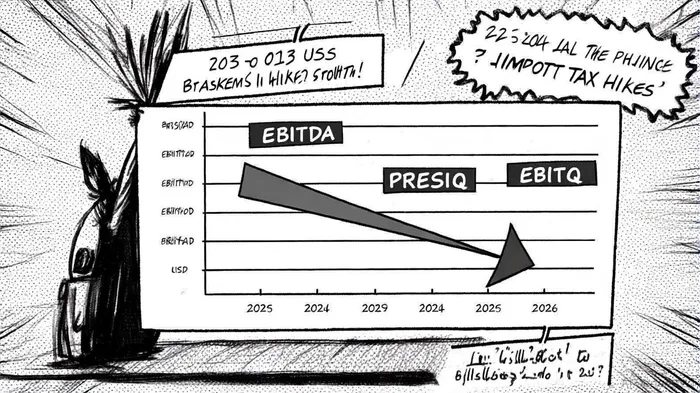
The Brazilian government's October 2024 decision to raise import tariffs on 30 chemical products-including polyethylene (PE) and polyvinyl chloride (PVC)-has directly bolstered Braskem's competitiveness. By increasing the tariff on PE and PVC to 20% from 12.6%, the policy shields domestic producers from cheaper imports, particularly from the U.S. and Asia, according to an S&P Global report. Analysts estimate this move could add up to $350 million annually to Braskem's EBITDA, potentially increasing its 2025 EBITDA projections by 20%, as noted in a Riotimes analysis. Santander Bank and XP Investimentos have both highlighted the policy as a critical step in stabilizing domestic resin pricing and recovering market share lost to foreign competitors.
Complementing these import measures is the proposed PRESIQ (PL 892/2025) legislation, which aims to provide tax incentives for the chemical industry. If passed, PRESIQ could inject $1 billion annually into Braskem's operations through fiscal credits for sustainable inputs and productive expansion, according to an Invezz report. By 2026, that reporting projects PRESIQ could boost Braskem's EBITDA by an additional $500 million, representing a 40% increase compared to 2025 forecasts. Such support is vital for Braskem to reduce its reliance on government assistance while investing in modernization and decarbonization.
Structural Challenges: Cost Inefficiencies and Capacity Utilization
Despite these policy-driven benefits, Braskem faces persistent structural challenges. Brazilian petrochemical producers, including Braskem, rely on naphtha-based feedstocks, which are significantly more expensive than ethane-based alternatives used in the U.S. This cost disparity has eroded Braskem's margins, particularly as global benchmark prices for ethane remain low, according to an ICIS analysis. Additionally, the company's operating rates have declined sharply: PE operating rates dropped from 89% in 2016 to 74% in 2024, while PVC rates fell from 84% to 65%, as reported by S&P Global. These trends underscore the sector's struggle to compete on price and efficiency, even with protective tariffs in place.
High feedstock costs and limited internal cash generation further complicate Braskem's ability to fund capital expenditures for transitioning to ethane-based production. While the government's National Policy for Industrial Decarbonization (PNDI) emphasizes renewable energy and circular economy practices, Braskem's long-term competitiveness will depend on its capacity to align with these goals without overreliance on subsidies, as outlined by Brazilian NR.
Long-Term Strategic Implications: Decarbonization and Public Procurement
Brazil's broader industrial policy framework, Nova Indústria Brasil, offers a roadmap for Braskem's future. The policy's $300 billion financing package through 2026, including $4 billion annually under PRESIQ for sustainable inputs, positions Braskem to expand its bioeconomy initiatives and reduce carbon emissions - a point also highlighted in the Riotimes coverage. The Industrial Decarbonization Hub, a collaboration with the UK, could further accelerate knowledge exchange and green financing for Braskem's transition to low-carbon production, consistent with the Brazilian NR analysis.
Public procurement strategies also play a role. The Growth Acceleration Programme (PAC), a $320 billion public-private investment plan, prioritizes goods aligned with decarbonization and innovation. By securing preferential treatment in government contracts, Braskem could gain a competitive edge in domestic infrastructure projects, a risk noted by ICIS. However, the success of these initiatives will depend on the government's ability to streamline regulatory processes and ensure consistent policy implementation.
Risks and Considerations for Investors
While the policy environment appears favorable, investors must remain cautious. Braskem's reliance on government support-both through import tariffs and PRESIQ-introduces regulatory risk, as future administrations may prioritize different economic agendas. Additionally, global market dynamics, such as U.S. export restrictions or Asian price wars, could undermine the effectiveness of protective measures, as discussed in the ICIS analysis.
Moreover, the structural inefficiencies in Brazil's petrochemical sector-rooted in feedstock costs and operational underutilization-require sustained investment in modernization. Without significant capital expenditure, Braskem's long-term profitability may remain vulnerable to cyclical downturns, as outlined by S&P Global.
Conclusion: Balancing Policy Gains and Structural Realities
Braskem's strategic position in Brazil's petrochemical landscape is shaped by a delicate interplay of policy-driven tailwinds and entrenched operational challenges. The import tax hikes and PRESIQ legislation offer immediate EBITDA boosts and long-term decarbonization support, but these gains must be weighed against the sector's cost inefficiencies and global competition. For investors, the key lies in assessing Braskem's ability to leverage policy incentives while addressing its structural weaknesses through innovation and capital discipline. As Brazil's industrial policy evolves, Braskem's success will hinge on its agility in navigating both regulatory and market forces.







Comentarios
Aún no hay comentarios