
Brand Licensing Risks in the Hospitality Sector: Lessons from Marriott's Sonder Exit
The Marriott-Sonder Partnership: A Cautionary Tale
Marriott's collaboration with Sonder, a provider of extended-stay accommodations, was intended to expand its footprint in the hybrid work-travel market. However, Sonder's default under the licensing agreement forced Marriott to sever ties, leaving guests stranded and disrupting growth forecasts, as reported in a StockTitan article. The termination highlights two critical risks: operational dependency and reputational exposure. By allowing Sonder to operate under the Marriott Bonvoy brand, the company ceded control over service standards, guest experiences, and compliance with brand protocols. When Sonder faltered, Marriott faced the dual burden of managing guest dissatisfaction and recalibrating its growth strategy, as Marriott noted in a financial outlook update.
This incident mirrors broader challenges in the hospitality sector, where brand licensing agreements often prioritize rapid expansion over rigorous oversight. According to a Bloomberg report, 60% of cyberattacks in the industry now originate from vulnerabilities in third-party systems, including those of licensees. For investors, the Marriott-Sonder saga serves as a stark reminder: licensing agreements can amplify operational risks when partners lack the financial or managerial capacity to uphold brand integrity.
Systemic Risks in Brand Licensing: Cybersecurity and Financial Exposure
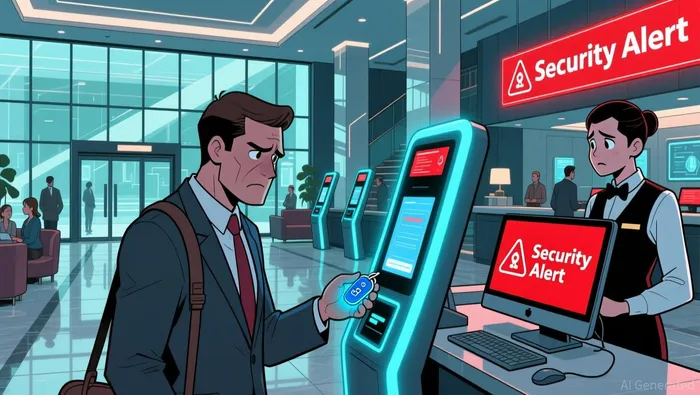
The hospitality sector's reliance on third-party vendors extends beyond property management to data systems, payment processing, and guest services. This interconnectedness creates a "cybersecurity domino effect," where a breach at one partner can compromise the entire ecosystem. For instance, the 2023 MGM Resorts hack, which cost over $100 million, originated from a social engineering attack on a third-party vendor, as noted in a Bloomberg report. Similarly, Motel One's 2023 data breach exposed customer credit card information through vulnerabilities in its IoT infrastructure, as noted in a Bloomberg report.
Financially, the average cost of a data breach in hospitality has surged to $4.03 million in 2025, as noted in a Bloomberg report, a figure that dwarfs the savings from cost-sharing arrangements with licensees. Investors must weigh these risks against the short-term benefits of licensing deals, which often inflate top-line growth metrics while masking long-term liabilities.
Strategic Implications for Investors
The Marriott-Sonder termination and industry-wide cybersecurity threats demand a reevaluation of how hospitality companies structure partnerships. Key considerations for investors include:
1. Due Diligence on Licensees: Assessing partners' financial health, cybersecurity frameworks, and compliance with brand standards.
2. Contingency Planning: Evaluating a company's ability to manage disruptions, such as sudden partner defaults or data breaches.
3. Diversification of Revenue Streams: Prioritizing firms that balance licensing with direct ownership or hybrid models to mitigate concentration risks.
Target Hospitality's recent earnings call offers a contrasting approach. By repurposing non-government assets and leveraging cost-efficient vendor contracts, the company has navigated inflationary pressures while maintaining margin stability, as noted in a Target Hospitality earnings call transcript. Such strategies highlight the importance of operational flexibility in an era of uncertainty.
Conclusion
Marriott's exit from its Sonder partnership is not an isolated event but a symptom of systemic risks in brand licensing. For investors, the lesson is clear: third-party arrangements can accelerate growth but also amplify vulnerabilities. As the hospitality sector grapples with cybersecurity threats and shifting market demands, companies that prioritize control, transparency, and resilience will outperform those reliant on fragile partnerships.





Comentarios
Aún no hay comentarios