
Brady Corporation: Assessing Long-Term Resilience Amid Inflation, Tariff Risks, and Strategic Growth Initiatives
In an era of persistent inflationary pressures and geopolitical-driven tariff volatility, industrial companies must balance disciplined capital allocation with strategic innovation to sustain long-term resilience. Brady CorporationBRC-- (BRC) has emerged as a compelling case study in this regard, leveraging its diversified industrial identity, R&D-led product development, and shareholder-centric policies to navigate macroeconomic headwinds. The company's Q4 2025 earnings and 10-Q filings underscore its ability to adapt while maintaining profitability, making it a noteworthy candidate for value-driven investors seeking stable, capital-efficient growth.
Financial Performance: A Foundation of Organic and Acquisitive Growth
Brady's Q4 2025 results reflect a robust financial foundation, with adjusted earnings per share (EPS) reaching a record $1.26—a 5.9% year-over-year increase[1]. Total sales for the quarter rose 15.7% to $397.28 million, driven by 2.4% organic growth, 11.3% from acquisitions, and 2.0% from favorable foreign exchange effects[2]. This performance highlights the company's dual strategy of organic expansion and strategic M&A, exemplified by its recent acquisitions of Gravitech and Funai's microfluidic solutions line[3]. These moves have expanded Brady's portfolio into high-margin engineered products, such as industrial labeling and safety solutions, while reinforcing its position in niche markets.
Regionally, the Americas & Asia delivered 4.3% organic sales growth, while Europe & Australia faced a 1.3% decline due to macroeconomic challenges[4]. Despite this, Brady's full-year adjusted EPS reached $4.60, reflecting 2.6% organic sales growth and disciplined cost management[5]. The company's ability to offset regional headwinds through operational efficiency and pricing power underscores its structural resilience.
Margin Dynamics and Cost Mitigation: Navigating Tariff and Inflationary Pressures
Brady's 10-Q filing reveals a nuanced approach to margin preservation amid inflation and tariffs. While gross profit margin stood at 50.4% in Q4 2025, the company faced margin compression from restructuring costs and tariff impacts[6]. To counter these pressures, BradyBRC-- has implemented cost-reduction initiatives, including facility closures and headcount adjustments in Europe & Australia[7]. These actions, combined with price increases and supply-chain optimization, are expected to yield $8–12 million in tariff cost savings for fiscal 2026[8].
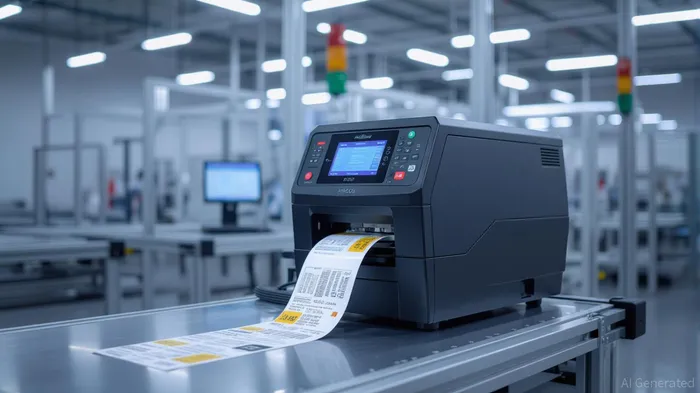
The company's R&D investments further bolster margin resilience. In Q4 2025, R&D spending surged 31% to $23.1 million (5.8% of sales), funding innovations like the i7500 industrial label printer[9]. This printer, which integrates LabelSenseTM technology to enhance customer efficiency, exemplifies Brady's focus on high-margin, value-added solutions. By redirecting capital toward R&D and strategic acquisitions, Brady is positioning itself to capture long-term growth in markets where commoditization is less prevalent.
Shareholder Returns and Capital Allocation Discipline
Brady's commitment to disciplined capital allocation is evident in its shareholder returns and balance-sheet management. In fiscal 2025, the company returned $96.4 million to shareholders through dividends and share repurchases, including a 40th consecutive year of dividend increases[10]. This track record of capital returns, coupled with a debt-to-EBITDA ratio of 2.1x (as of Q4 2025), reflects a balanced approach to reinvestment and shareholder value creation[11].
The company's capital structure also benefits from its focus on operational efficiency. For instance, operating income in Q4 2025 increased 7.9% when excluding restructuring costs, signaling underlying profitability improvements[12]. This efficiency, combined with a projected 5.4–12% adjusted EPS growth for fiscal 2026[13], suggests Brady is well-positioned to sustain its dividend growth and reinvest in high-ROIC opportunities.
Strategic Outlook: Innovation and Diversification as Long-Term Catalysts
Looking ahead, Brady's strategic priorities align with macroeconomic tailwinds. Its emphasis on R&D-driven innovation—such as expanding its microfluidic solutions and safety identification products—positions it to capitalize on industries like healthcare and industrial automation[14]. Additionally, the company's geographic diversification, with 58% of sales in the Americas & Asia and 42% in Europe & Australia[15], provides a buffer against regional downturns.
However, risks remain. Tariff-related costs and inflationary pressures could test margins in the near term, particularly in Europe. That said, Brady's proactive cost-reduction measures and pricing flexibility mitigate these risks. For investors, the company's ability to balance growth, margin preservation, and shareholder returns offers a compelling value proposition in an uncertain macroeconomic environment.
Conclusion
Brady Corporation's Q4 2025 performance and strategic initiatives demonstrate a company adept at navigating macroeconomic turbulence while prioritizing long-term value creation. By combining disciplined capital allocation, R&D-led innovation, and a diversified industrial footprint, Brady has established a resilient business model that appeals to value-driven investors. As it executes on its 2026 guidance and integrates recent acquisitions, the company's focus on operational efficiency and shareholder returns positions it as a stable, high-conviction play in the industrial sector.





Comentarios
Aún no hay comentarios