
BP's Share Buyback Program: A Boon for Shareholders
Generado por agente de IAWesley Park
viernes, 3 de enero de 2025, 8:03 am ET2 min de lectura
BP--
BP p.l.c. (BP) has been actively executing a share buyback program, which has significantly impacted its financial health and shareholder value. The company's share buyback program has been a key driver of its capital return strategy, with a total of $90.638 billion spent on repurchasing its own shares since 2000. In 2024 alone, BP has spent $5.23 billion on share buybacks, contributing to a reduction in the number of outstanding shares and an increase in the value of each share.
The share buyback program has several benefits for BP and its shareholders. First, it reduces the number of outstanding shares, which increases the earnings per share (EPS) for remaining shareholders. This is because the net income is distributed over fewer shares, leading to a higher EPS. Additionally, share buybacks can improve the return on equity (ROE) by reducing the denominator in the ROE calculation (shareholders' equity). A lower denominator results in a higher ROE, assuming the net income remains constant.
BP's share buyback program has also been a positive signal to investors, indicating the company's confidence in its own stock and its long-term growth prospects. By repurchasing shares, the company is essentially betting on its own stock, indicating that it believes the shares are undervalued. This can boost investor confidence and potentially increase the company's market capitalization.
However, the share buyback program can also impact BP's ability to invest in renewable energy projects and maintain its dividend payouts. As BP's CEO, Murray Auchincloss, mentioned, the pace of share buybacks can vary based on performance and the price environment. In the third quarter of 2024, BP's net debt increased to $24.27 billion, the highest since the start of 2022, which could potentially slow down the share buyback program in the future.
Moreover, BP's profits have been affected by weaker oil prices and lower refining margins, which could further impact its ability to maintain the current pace of share buybacks and dividend payouts. In the third quarter of 2024, BP's adjusted net income was $2.27 billion, ahead of the average analyst estimate, but the company expects refining margins to remain low in the fourth quarter.
In order to balance the demands of share buybacks, dividend payouts, and investments in renewable energy projects, BP will need to carefully manage its capital allocation. The company has reiterated its commitment to the energy transition and plans to grow through the decade with a focus on value over volume in its oil and gas business. However, the future pace of share buybacks and dividend payouts will likely depend on the company's financial performance and the broader economic outlook.
BP's share buyback program has been a significant factor in its financial health and shareholder value. The company's commitment to returning capital to shareholders through share buybacks has helped to increase EPS and ROE, boost investor confidence, and signal the company's long-term growth prospects. However, the company must balance the demands of share buybacks, dividend payouts, and investments in renewable energy projects to maintain a healthy financial position.
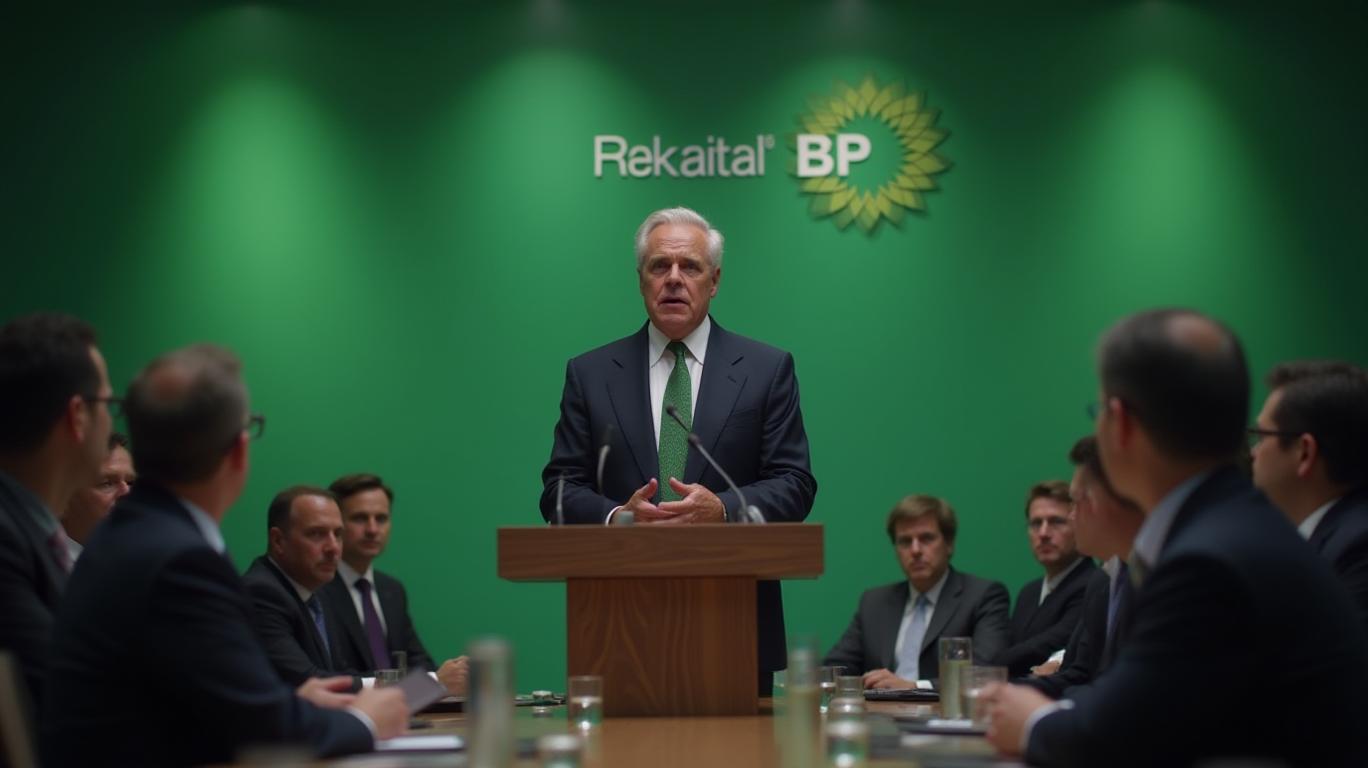
BP p.l.c. (BP) has been actively executing a share buyback program, which has significantly impacted its financial health and shareholder value. The company's share buyback program has been a key driver of its capital return strategy, with a total of $90.638 billion spent on repurchasing its own shares since 2000. In 2024 alone, BP has spent $5.23 billion on share buybacks, contributing to a reduction in the number of outstanding shares and an increase in the value of each share.
The share buyback program has several benefits for BP and its shareholders. First, it reduces the number of outstanding shares, which increases the earnings per share (EPS) for remaining shareholders. This is because the net income is distributed over fewer shares, leading to a higher EPS. Additionally, share buybacks can improve the return on equity (ROE) by reducing the denominator in the ROE calculation (shareholders' equity). A lower denominator results in a higher ROE, assuming the net income remains constant.
BP's share buyback program has also been a positive signal to investors, indicating the company's confidence in its own stock and its long-term growth prospects. By repurchasing shares, the company is essentially betting on its own stock, indicating that it believes the shares are undervalued. This can boost investor confidence and potentially increase the company's market capitalization.
However, the share buyback program can also impact BP's ability to invest in renewable energy projects and maintain its dividend payouts. As BP's CEO, Murray Auchincloss, mentioned, the pace of share buybacks can vary based on performance and the price environment. In the third quarter of 2024, BP's net debt increased to $24.27 billion, the highest since the start of 2022, which could potentially slow down the share buyback program in the future.
Moreover, BP's profits have been affected by weaker oil prices and lower refining margins, which could further impact its ability to maintain the current pace of share buybacks and dividend payouts. In the third quarter of 2024, BP's adjusted net income was $2.27 billion, ahead of the average analyst estimate, but the company expects refining margins to remain low in the fourth quarter.
In order to balance the demands of share buybacks, dividend payouts, and investments in renewable energy projects, BP will need to carefully manage its capital allocation. The company has reiterated its commitment to the energy transition and plans to grow through the decade with a focus on value over volume in its oil and gas business. However, the future pace of share buybacks and dividend payouts will likely depend on the company's financial performance and the broader economic outlook.
BP's share buyback program has been a significant factor in its financial health and shareholder value. The company's commitment to returning capital to shareholders through share buybacks has helped to increase EPS and ROE, boost investor confidence, and signal the company's long-term growth prospects. However, the company must balance the demands of share buybacks, dividend payouts, and investments in renewable energy projects to maintain a healthy financial position.

Divulgación editorial y transparencia de la IA: Ainvest News utiliza tecnología avanzada de Modelos de Lenguaje Largo (LLM) para sintetizar y analizar datos de mercado en tiempo real. Para garantizar los más altos estándares de integridad, cada artículo se somete a un riguroso proceso de verificación con participación humana.
Mientras la IA asiste en el procesamiento de datos y la redacción inicial, un miembro editorial profesional de Ainvest revisa, verifica y aprueba de forma independiente todo el contenido para garantizar su precisión y cumplimiento con los estándares editoriales de Ainvest Fintech Inc. Esta supervisión humana está diseñada para mitigar las alucinaciones de la IA y garantizar el contexto financiero.
Advertencia sobre inversiones: Este contenido se proporciona únicamente con fines informativos y no constituye asesoramiento profesional de inversión, legal o financiero. Los mercados conllevan riesgos inherentes. Se recomienda a los usuarios que realicen una investigación independiente o consulten a un asesor financiero certificado antes de tomar cualquier decisión. Ainvest Fintech Inc. se exime de toda responsabilidad por las acciones tomadas con base en esta información. ¿Encontró un error? Reportar un problema




Comentarios
Aún no hay comentarios