
BP's Brazil Discovery: A New Era for ESG-Driven Energy Investment
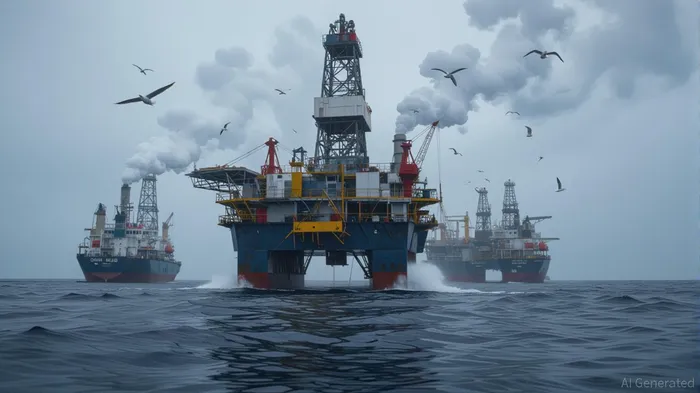
In the ever-evolving energy landscape of 2025, BP's monumental offshore Brazil discovery—dubbed the Bumerangue block—has emerged as a seismic shift in the industry's strategic calculus. This 500-meter hydrocarbon column, nestled in the Santos Basin's pre-salt carbonate reservoir, is not just a geological triumph; it is a signal of a broader realignment in energy priorities. For investors, this discovery underscores a critical pivot: the return of high-impact fossil fuel projects and the recalibration of ESG-aligned opportunities in the hydrocarbon sector.
The Strategic Pivot: From ESG Hesitation to Fossil Fuel Resurgence
BP's Bumerangue block, its largest find in 25 years, sits in 2,372 meters of water, 404 kilometers off Rio de Janeiro. The reservoir spans 300 square kilometers and is expected to contribute significantly to BP's 2030 production targets of 2.3–2.5 million barrels of oil equivalent per day. This move reflects a stark departure from the company's earlier, ill-fated pivot toward renewables, which saw costly exits from wind projects and a $25 billion Rosneft write-down.
The energy sector's 2025 rebalancing is clear: major players like Shell, ExxonMobil, and ChevronCVX-- are redirecting capital toward high-margin fossil fuel projects. BP's $20 billion divestment program by 2027—including the sale of its U.S. onshore wind assets—signals a pragmatic shift. The Bumerangue discovery aligns with this trend, leveraging Brazil's “super basin” potential and low breakeven costs (often below $30 per barrel) to secure long-term production growth.
ESG Integration: Carbon Capture and the New Oil Era
Critics may argue that such discoveries contradict ESG principles, but BP's approach is anything but traditional. The Bumerangue reservoir's elevated CO₂ levels—initially a challenge—are now a strategic opportunity. The company is exploring carbon capture and storage (CCS) solutions, leveraging partnerships like the Northern Endurance Partnership and the Viking CCS project in the UK. These initiatives are part of a $77.3 billion energy transition investment plan (2025–2029), targeting a 15 kgCO2e per barrel carbon intensity by 2025.
BP's ESG strategy for Bumerangue also includes renewable-powered operations and collaboration with Brazil's state-owned Pré-Sal Petróleo. This blend of traditional and low-carbon technologies positions the project as a model for sustainable upstream development. For instance, the Santos Basin's existing infrastructure and geophysical surveys will optimize production while minimizing environmental footprints.
Financial Implications: A Re-Rating of Energy Stocks
BP's stock, trading at a 15% discount to its five-year average P/E ratio, is primed for a re-rating. The company's Q2 2025 operating expenses dropped by $500 million, and its 95% plant reliability rate—the highest in its history—demonstrates operational discipline. With 10 discoveries in 2025 alone (spanning Trinidad, Egypt, and Namibia), BPBP-- is proving its exploration prowess, which could drive reserve growth and investor confidence.
For ESG-conscious investors, the Bumerangue project offers a unique value proposition: a high-conviction oil play integrated with decarbonization. While risks like CO₂ management and regulatory delays persist, the project's alignment with Brazil's national energy security goals and BP's net-zero ambitions reduces political and environmental uncertainties.
Investment Advice: Balancing Growth and Sustainability
The Bumerangue discovery is not just a win for BP—it's a bellwether for the energy transition. For investors, the key lies in recognizing that the future of energy is not a binary choice between oil and renewables but a hybrid model. BP's strategic pivot highlights the importance of:
1. Capital Allocation: Prioritizing projects with low breakeven costs and high ESG alignment (e.g., CCS-ready reservoirs).
2. Diversification: Balancing upstream exposure with renewable investments (BP's hydrogen projects in Germany and Spain).
3. Long-Term Thinking: Supporting companies that integrate decarbonization into their core operations, not as add-ons but as strategic imperatives.
Conclusion: A Blueprint for the Energy Transition
BP's Bumerangue block is more than a resource—it's a blueprint for how the energy sector can reconcile fossil fuels with sustainability. By marrying high-impact exploration with carbon capture, renewable integration, and strategic partnerships, BP is redefining ESG-aligned investment. For investors, this discovery signals a new era: one where energy transition and profitability coexist. As the world navigates the complexities of decarbonization, BP's Brazil project offers a compelling case for why the future of energy must be both pragmatic and visionary.





Comentarios
Aún no hay comentarios