
US's Bozell Sworn in as Ambassador to South Africa
Leo Brent Bozell III, a conservative activist and writer, has been sworn in as the U.S. ambassador to South Africa. The U.S. Embassy said it looks forward to advancing American priorities and promoting a stronger relationship with South Africa under his leadership.
The appointment marks a pivotal moment in U.S.-South Africa diplomacy, as the new ambassador brings a distinct background in conservative thought and political commentary. His role will be key in managing the evolving dynamics between the two nations.
U.S.-South Africa relations have been strained in recent months. Tensions flared after a U.S. Embassy site in South Africa was raided by local authorities in December, leading to the arrest of several contractors and the brief detention of U.S. officials.
What Led to the Strained Relations?
Diplomatic tensions intensified following the U.S. raid on Venezuela, where Nicolas Maduro was captured. South African authorities and the African National Congress condemned the U.S. actions, calling for international platforms to address grievances instead of unilateral military interventions.
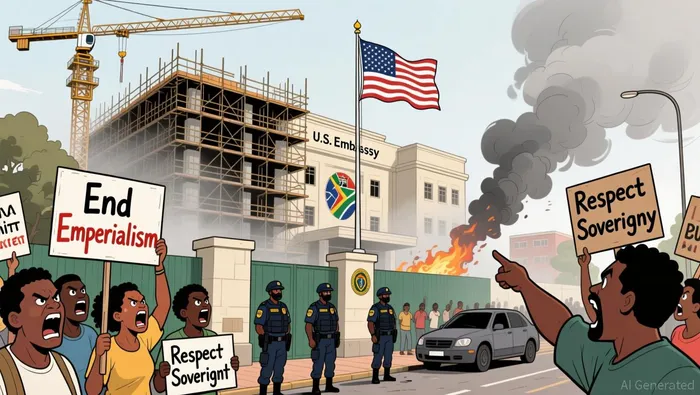
Protesters gathered outside the U.S. Embassy in Pretoria with placards condemning the intervention and accusing the U.S. of seeking to control Venezuela's oil resources. The South African Communist Party led the demonstrations, highlighting the ideological divides between U.S. and South African policies.
How Will the Appointment Impact Relations?
Bozell's appointment is expected to shape the direction of U.S. policy in South Africa. His background in conservative politics may influence diplomatic engagement, especially in the context of ongoing tensions with South Africa's government. Analysts suggest his role could involve a more assertive U.S. stance on regional stability and economic interests.
At the same time, South Africa has deepened military ties with countries that share its divergent views with the U.S. A joint naval exercise featuring Russian, Chinese, and Iranian warships is taking place off South Africa's coast, signaling a growing strategic alignment with non-U.S. powers.
What Are Analysts Watching Next?
Analysts are closely monitoring how the new U.S. ambassador will address the recent diplomatic fallout. The U.S. and South Africa have been working behind the scenes to de-escalate tensions, including private meetings between U.S. and South African officials aimed at improving communications.
The U.S. has also been accused of exacerbating tensions by interfering in domestic issues, such as the refugee program for South African Afrikaners. South Africa has consistently denied any intent to obstruct the program and emphasized that the arrests were a law enforcement matter.
The recent U.S. National Security Strategy, which emphasizes a return to the Monroe Doctrine principles, has raised concerns among international partners. Critics argue that the strategy could lead to increased U.S. military presence and interference in the Western Hemisphere, potentially further straining diplomatic relations.
For investors, the evolving geopolitical dynamics could influence regional trade and investment flows. South Africa's growing ties with China and other emerging economies may affect its trade balance and economic partnerships. Brazil, for example, has seen a significant trade surplus in 2025, with China as its largest trade partner.
In conclusion, the appointment of Leo Brent Bozell III as U.S. ambassador to South Africa comes at a critical juncture. The new administration's approach to diplomacy, military alliances, and economic policies will shape the trajectory of U.S.-South Africa relations in the coming months.







Comentarios
Aún no hay comentarios