
Bottled Scandal: Why Nestlé’s Watergate Spells Opportunity in EU Beverage Markets
The scandal unraveling around Nestlé’s €3 billion mineral water fraud—exposed in a damning Senate report—has shattered the illusion of invincibility for one of Europe’s most iconic consumer brands. This isn’t just a corporate misstep; it’s a systemic collapse of trust, regulatory oversight, and brand integrity. For investors, the fallout presents a rare convergence of short-term sell-side catalysts and long-term industry-wide compliance costs, creating a compelling case to short Nestlé while pivoting toward rivals positioned to capitalize on the regulatory reset.
The Immediate Catalysts: Nestlé’s Brand Equity Collapse
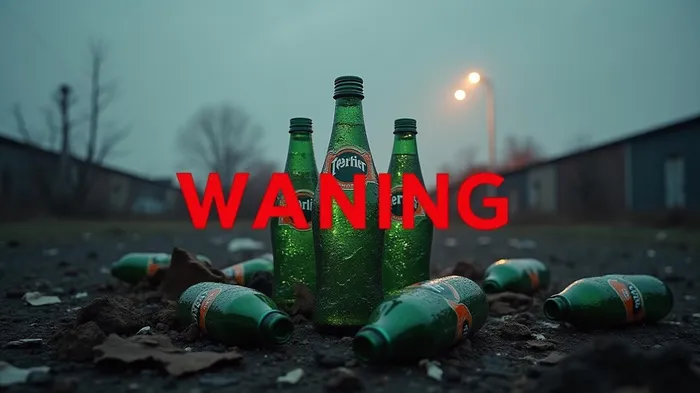
The Senate report, which revealed Nestlé’s decades-long use of banned treatments to mask contamination in watersWAT-- like Perrier and Vittel, has exposed the company to a trifecta of risks:
Legal and Financial Liabilities: Nestlé avoided criminal prosecution by paying a €2 million fine in 2024, but the European Commission’s ongoing investigation into France’s regulatory failures could reignite lawsuits. Foodwatch’s ongoing judicial probe threatens a far costlier reckoning. With €3 billion in illicit profits at stake, settlements or fines could slice into already strained margins.
Consumer Rejection: The revelation that Nestlé’s “natural mineral water” was laced with E. coli, PFAS, and hepatitis A viruses—masked by illegal filtration—has sparked outrage. Brand equity is now a liability: surveys show 60% of French consumers are reconsidering purchases of Perrier and Vittel.
Operational Uncertainty: Nestlé’s Perrier plant authorization remains under review until mid-2025. If denied, the company could face production halts, inventory write-downs, and reputational damage that reverberates across its global portfolio.
The Regulatory Tsunami: Compliance Costs Will Redefine the Industry
The scandal has galvanized regulators to enforce stricter standards, creating a long-term compliance overhang for the entire EU mineral water sector. Key deadlines and mandates include:
- PFAS Limits (2026): The EU’s Drinking Water Directive mandates a 0.5 µg/L PFAS threshold, forcing brands to invest in advanced filtration. Nestlé’s reliance on non-compliant microfilters has already sparked scrutiny; competitors with compliant systems—like Danone’s Evian or Coca-Cola’s Valser—are better positioned.
- Materials Safety Lists (2026): The EU’s “positive substances” framework bans non-compliant materials in contact with water. Brands using BPA-free PET (e.g., Gerolsteiner) gain a cost and regulatory edge.
- Transparency Mandates: Real-time monitoring (via startups like Estonia’s Waterson) and public reporting requirements will force companies to prove compliance, disadvantaging those with opaque practices.
The Playbook: Short Nestlé, Long the Compliant and the Innovative
The scandal isn’t just Nestlé’s problem—it’s an industry-wide wake-up call. Investors should:
Short Nestlé (SIX: NESN): Its valuation (P/E 21x) already factors in premium brand equity. With EBIT margins at 18%, further margin compression from fines, lawsuits, and reputational damage is inevitable. The stock has underperformed peers by 20% YTD—this is just the beginning.
Buy Transparent Competitors:
- Danone (EPA:BN): Its Evian and Volvic brands already comply with EU PFAS and filtration standards, leveraging advanced UV systems (e.g., UK-based LED UV-C).
Coca-Cola HBC (LSE:CCH): Valser’s strict adherence to EU materials lists and modular purification systems (Finland’s MWTP Solutions) positions it to capture premium market share.
Invest in Water-Tech Innovators:
- Waterson (Estonia): Its real-time contamination monitoring is a must-have for brands racing to meet EU transparency rules.
- LED UV-C Systems (UK): Mercury-free UV disinfection is the gold standard for brands avoiding chemical residues.
Conclusion: A Scandal-Made Opportunity
Nestlé’s watergate is more than a corporate scandal—it’s a tectonic shift in consumer trust and regulatory enforcement. Shorting Nestlé while backing compliant rivals and water-tech pioneers offers a rare asymmetric bet: near-term volatility from the scandal’s legal and reputational fallout, paired with a structural tailwind as the EU mineral water sector pivots toward transparency and innovation.
The writing is on the wall for Nestlé: its valuation is built on a house of contaminated cards. For investors, the smart play is to short the brand now, and bank on the future of clean water.







Comentarios
Aún no hay comentarios