
Boston Beer Co. Cl A's Strategic Position in the Evolving Craft Beer Market
The craft beer industry in 2025 is at a crossroads. Maturation, consolidation, and shifting consumer preferences are reshaping the landscape, forcing breweries to adapt or risk obsolescence. For Boston BeerSAM-- Co. (SAM), a leader in the craft segment, these challenges also present opportunities to solidify its market position through strategic diversification, operational efficiency, and brand loyalty.
Industry Consolidation and Boston Beer's Strategic Response
The U.S. craft beer market has seen a sharp decline in volume growth, now at 3.2% annually, with over 9,456 breweries in operation as of 2024—though closures now exceed 400 per year[1]. Regional powerhouses like PHX Beer are consolidating brands to leverage scale, while hyperlocal breweries focus on taproom sales and community engagement[1]. Boston Beer, meanwhile, has adopted a hybrid approach: preserving its core Samuel Adams brand while expanding into adjacent categories such as hard seltzers, non-alcoholic beers, and ready-to-drink (RTD) cocktails.
A key driver of Boston Beer's strategy is its ability to balance scale with agility. The company's recent acquisition of Slingers Signature Cocktails and its expansion of Hard Mountain Dew distribution to all 50 states exemplify its focus on leveraging existing infrastructure to enter high-growth segments[1]. By increasing owned brewing capacity, Boston Beer aims to reduce reliance on third-party production, a move that could improve margin efficiency amid rising input costs[2].
Valuation Metrics and Financial Resilience
Boston Beer's financials reflect a company navigating a challenging market with discipline. As of Q2 2025, the company reported revenue of $587.9 million, a 1.5% year-over-year increase, despite a 0.8% decline in shipment volume[3]. This resilience is partly attributed to pricing power and a favorable product mix, with operating income rising to $82.1 million in the same period[3].
Valuation metrics suggest the stock is attractively priced relative to its peers. The company's trailing P/E ratio stands at 30.87, while its forward P/E is 22.88[2], indicating investor confidence in future earnings growth. EBITDA margins of 11.81% for the trailing twelve months (TTM) highlight operational efficiency, though analysts project a 1.56% compound annual growth rate over the next five years[1], a modest but stable trajectory in a slowing market.
Brand Loyalty and Market Share
Boston Beer's strength lies in its brand equity and customer retention. The Samuel Adams brand maintains a 13.5% market share in the craft beer segment[2], supported by a 62.3% retention rate for core products[2]. Customers, on average, spend $1,247 over their lifetime and purchase products 4.6 times annually[2], underscoring the loyalty of its consumer base.
The company's pivot to “Beyond Beer” products—such as Twisted Tea, Sun Cruiser RTDs, and Emerald Hour non-alcoholic cannabis cocktails—further diversifies its revenue streams[1]. This strategy is paying off: Twisted Tea's expanded distribution to Carnival Cruise Line and Amtrak's Northeast corridor positions it to capture new demographics[1]. Meanwhile, the decline of hard seltzers like Truly is being offset by high-ABV offerings like Truly Unruly and Twisted Tea Extreme[3], which align with consumer demand for premiumization.
Challenges and the Path Forward
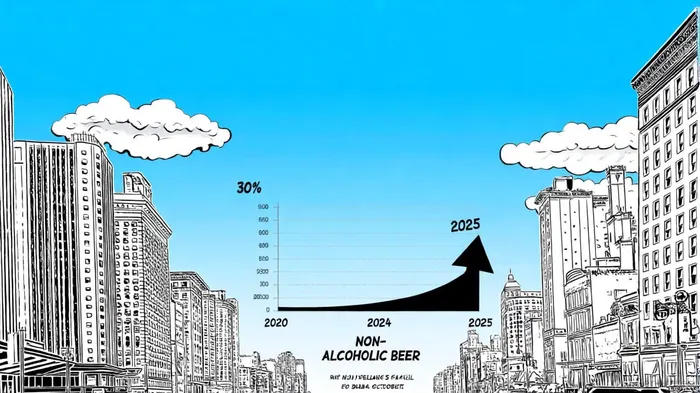
Despite its strengths, Boston Beer faces headwinds. The broader craft beer market is shrinking, with off-premise volume down 4.1% in 2025[1], and production volume falling by 5%[1]. However, the company's focus on hyperlocal engagement and innovation in wellness-oriented products—such as non-alcoholic beers—positions it to capitalize on emerging trends. Sales of non-alcoholic beer have surged 30% year-over-year[2], a category where Boston Beer is aggressively expanding.
Analysts like Nik Modi highlight the company's ability to manage controllable factors, such as cost control and product mix, to drive margin expansion[3]. With a market share of 3.11% in the beer category[4] and a global distribution network covering 90% of the U.S. beer market[1], Boston Beer is well-positioned to weather industry consolidation.
Conclusion
Boston Beer Co. Cl A represents a compelling valuation opportunity in a fragmented market. Its strategic diversification into high-growth categories, coupled with strong brand loyalty and operational efficiency, offers a buffer against industry-wide declines. While the craft beer sector faces structural challenges, Boston Beer's ability to innovate and adapt—whether through premium products, non-alcoholic offerings, or expanded distribution—suggests a resilient path forward. For investors, the company's disciplined approach to capital allocation and its focus on long-term value creation make it a standout in a sector defined by volatility.







Comentarios
Aún no hay comentarios