
Border Tensions and Market Tremors: Navigating the Russia-Ukraine Conflict’s Investment Landscape
The Russia-Ukraine conflict, now entering its fourth year, remains a geopolitical and economic flashpoint. As Moscow and Kyiv continue their standoff, accusations of border breaches and ceasefire violations dominate headlines, with profound implications for global markets. Investors must parse the noise to identify opportunities and risks in this volatile environment.
Geopolitical Dynamics: A Perpetual Stalemate
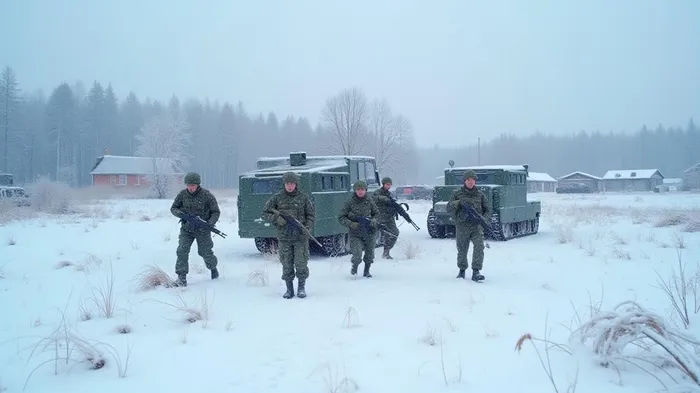
Russia’s claims of Ukrainian “aggression” persist, framed through the lens of Victory Day commemorations. Despite Moscow’s unilateral ceasefire during May 8–10, 2025, Ukrainian forces reported ongoing Russian shelling in Sumy, Kharkiv, and Kursk oblasts. Meanwhile, Russian military reforms—including the reorganization of military districts and threats to NATO—signal a strategic shift toward long-term confrontation.
The Sino-Russian axis deepened in May 2025, with Xi Jinping’s Moscow visit endorsing Putin’s “root causes” narrative for the war. This alignment bolsters Russia’s geopolitical standing but also amplifies risks of a broader conflict. Ukraine, meanwhile, insists on a U.S.-backed 30-day ceasefire to enable peace talks—a demand Russia dismisses as “negotiation tactics.”
Market Impacts: Energy, Currencies, and Commodities
The conflict’s economic fallout is uneven but systemic.
Energy Markets:
Oil prices have stabilized at $65–90/barrel since late 2022, but risks linger. OPEC+’s planned production increases could ease supply concerns, yet Middle East tensions—such as U.S./UK airstrikes in Yemen—threaten disruptions. For Europe, the pain persists: natural gas prices remain elevated at €80–250/MWh, , squeezing industries reliant on Russian supply. German chemical firms, for instance, face a “durable negative impact” due to scarce, costly gas.
Currencies:
The ruble’s collapse is stark. The currency has lost over 70% of its value since 2022, reflecting sanctions, capital controls, and interest rates hovering at 17%. The euro, meanwhile, weakens against the dollar as Europe’s energy crisis drags on.
Commodities:
- Palladium (45% of global supply from Russia) and other metals face supply risks, with prices spiking to $2,400–4,000/oz if sanctions escalate.
- Wheat prices have stabilized post-2022 peaks, but U.S. tariffs on steel/aluminum threaten agricultural trade flows.
- Gold hits historic highs at $2,500/oz, driven by safe-haven demand amid inflation and geopolitical uncertainty.
Investment Considerations: Opportunities and Risks
1. Energy Sectors:
- Long Positions in Oil and Gas: Despite OPEC+ production hikes, geopolitical risks justify cautious exposure to energy ETFs (e.g., XLE).
- Short the Euro: Europe’s energy dependency and inflationary pressures make the euro vulnerable.
2. Commodities:
- Palladium and Platinum: Supply constraints and industrial demand make these metals attractive, though volatility is high.
- Agricultural Commodities: Diversify into wheat or soy via ETFs (e.g., ARKW) if U.S. tariffs disrupt global trade.
3. Currency Plays:
- Short the Ruble: Russia’s fiscal strain and exclusion from global markets make the ruble a high-risk, high-reward bet.
- Safe-Haven Assets: Hold yen (FXY) or Swiss franc (FXF) for downside protection.
4. Geopolitical Hedge Funds:
Firms like Bridgewater and Elliott Management are betting on conflict-driven volatility, but retail investors should proceed cautiously given liquidity risks.
Risks and Uncertainties
- Ceasefire Negotiations: A 60% chance of talks could stabilize energy markets, but territorial disputes (e.g., Sumy) complicate progress.
- Iran Nuclear Deal: A revived JCPOA could add 1 million bpd of Iranian oil, easing prices but destabilizing regional politics.
- U.S. Tariffs: Trump’s trade policies could trigger retaliatory measures, with U.S. grain exports particularly exposed.
Conclusion: Navigating a Fractured Landscape
The Russia-Ukraine conflict’s market impact is bifurcated. While energy and commodity sectors offer opportunities, Europe’s economic drag and Russia’s isolation underscore the need for caution. Key data points highlight the stakes:
- Ukraine’s GDP has contracted 22.6% since 2022, with bond yields at 24.8%—a fiscal crisis in the making.
- European natural gas prices at €250/MWh threaten industrial profits, while the ruble’s 70% decline signals systemic instability.
Investors should prioritize diversification:
- Overweight emerging markets (e.g., Brazil, India) benefiting from commodity booms.
- Underweight European equities (e.g., German industrials) vulnerable to energy costs.
- Monitor geopolitical developments closely, as a full Russian oil embargo could send Brent to $185/barrel, triggering a 3% global GDP contraction.
In this high-stakes environment, patience and risk-aware strategies will be critical to capitalizing on the conflict’s market fallout.







Comentarios
Aún no hay comentarios