
Booz Allen's Reston Relocation: A Strategic Catalyst for Comstock and Northern Virginia's Tech-Driven Economy
Strategic Real Estate Play: Comstock's Reston Station as a Win-Win
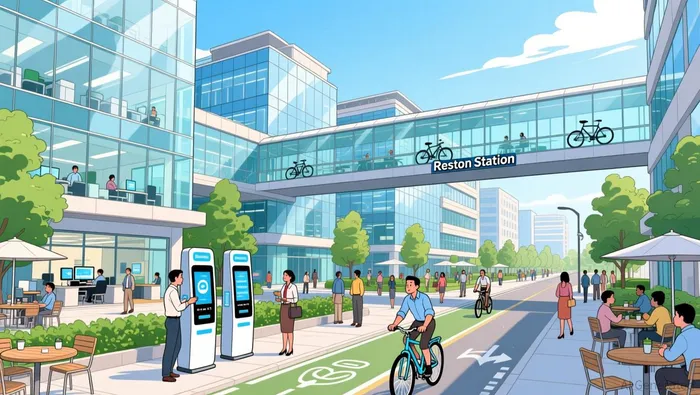
Booz Allen's decision to anchor its new headquarters in The Row at Reston Station-a mixed-use development led by ComstockLODE-- Companies-highlights the developer's success in creating a modern, transit-oriented hub. The company has secured over 310,000 square feet across two buildings, including a newly constructed enclosed bridge connecting 1870 and 1800 Reston Row Plaza. This landmark lease not only solidifies Comstock's position as a key player in Northern Virginia's commercial real estate market but also signals confidence in the long-term viability of Reston as a tech and innovation corridor.
The relocation underscores a broader trend of corporations prioritizing flexible, amenity-rich workspaces to attract top talent. By 2028, Booz Allen will decommission its McLean headquarters, shifting demand to Reston's walkable, mixed-use environment. For Comstock, this represents a dual win: stable long-term occupancy and enhanced property values driven by Booz Allen's prestige and the influx of associated businesses.
Workforce Innovation: Designing for the Future of Tech
Booz Allen's new campus is explicitly designed to foster innovation among its highly technical workforce. The facility will prioritize advanced technology capabilities, flexible workspaces, and proximity to amenities that enhance employee well-being. These features align with the company's mission to support national security and defense through cutting-edge solutions.
The relocation also reflects a shift toward hybrid work models and employee-centric environments. By situating its headquarters in a walkable, amenity-rich neighborhood, Booz Allen aims to reduce commute times and improve work-life balance-critical factors in retaining talent in a competitive tech landscape. This strategy mirrors broader industry trends, where companies increasingly view workplace design as a strategic asset rather than a cost center.
Economic Ripple Effects: Boosting Northern Virginia's Tech Ecosystem
The economic impact of Booz Allen's relocation extends beyond its own operations. Northern Virginia's economy, already a powerhouse in defense and technology, stands to benefit from increased job creation, tax revenue, and cross-sector partnerships. According to a report by the Fairfax County Economic Development Authority, the region's economy grew by 9.3% in the last reporting year, reaching $167.5 billion, driven by deep tech investment and innovation. Booz Allen's presence is expected to amplify this momentum by attracting complementary businesses and talent to Reston.
Moreover, the company's partnerships with entities like Shield AI-focused on autonomous military solutions-underscore Northern Virginia's leadership in advanced technologies. These collaborations demonstrate a proactive approach to addressing regional economic challenges, diversifying the region's economic base and positioning it as a hub for next-generation industries such as AI and quantum computing.
Long-Term Value Creation: A Model for Investors
For investors, Booz Allen's relocation exemplifies how strategic corporate decisions can drive long-term value across multiple asset classes. Comstock's Reston Station development is poised to appreciate as demand for high-quality office and residential spaces grows. Meanwhile, Northern Virginia's tech-driven economy, bolstered by Booz Allen's presence, offers a resilient foundation for sustained growth.
However, challenges remain. The region's housing market faces pressures from shifting migration patterns and affordability concerns. Yet, the integration of commercial and residential spaces-such as the redevelopment of the Reston Technology Center into mixed-use housing-demonstrates a proactive approach to addressing these issues.
Conclusion
Booz Allen's relocation to Reston is more than a corporate milestone; it is a case study in how real estate innovation and workforce-centric strategies can catalyze regional economic growth. For Comstock, the lease with Booz Allen validates its vision for Reston Station as a premier business destination. For Northern Virginia, the move reinforces its status as a tech and defense hub, with ripple effects that will likely extend well beyond 2027. Investors who recognize these dynamics may find compelling opportunities in both commercial real estate and the region's evolving tech ecosystem.





Comentarios
Aún no hay comentarios