
Why the Bond Market's Contrarian Signal Spells Opportunity in Treasuries and Cautious Play in CLOs
The U.S. Treasury market is sending a stark message to investors: the era of complacency is over. With mid-to-long-dated yields sliding despite near-term inflation risks, the bond market is pricing in a critical shift—one that savvy contrarians should heed. While headlines focus on tariff-driven inflation spikes and fiscal uncertainty, the decline in 10-year+ Treasury yields and the inversion of the yield curve present a compelling buy signal for duration-heavy assets. Meanwhile, collateralized loan obligations (CLOs) offer yield upside but demand caution amid looming credit downgrades and fiscal policy shifts.
The Contrarian Case for Mid-to-Long Treasuries: A Recession Hedge with Relative Value
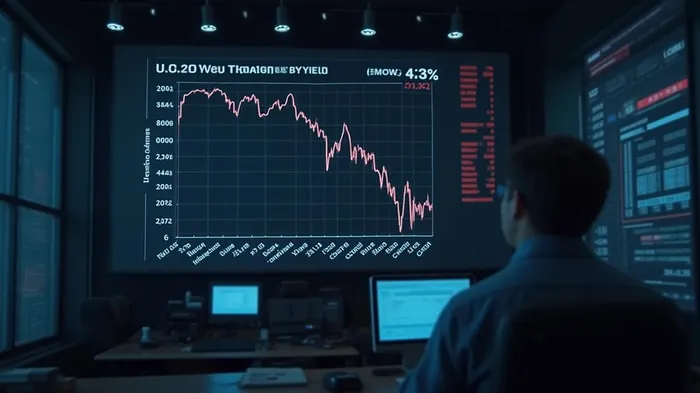
The Treasury market's behavior defies convention. Despite a 9.3% surge in auto prices and a 41% spike in credit card delinquencies—both red flags for inflation—the 10-year Treasury yield has retreated to 4.34% as of May 23, down from April's peak of 4.5%. This decline, occurring alongside an inverted yield curve (the 10-year-2-year spread at 0.43%), signals a market betting on recession risks outweighing near-term inflation.
Why this is a contrarian opportunity:
1. Inversion Precedent: Every U.S. recession since 1969 has been preceded by a yield curve inversion. The current inversion—now in its 40th month—is the longest since the 1980s. History suggests this isn't a false signal.
2. Fiscal Drag: The U.S. faces a $9.2 trillion refinancing wall in 2025, with debt/GDP hitting 130% by 2026. Investors are pricing in fiscal profligacy, but this creates a paradox: lower yields now mean better terms for refinancing later.
3. Safe-Haven Rotation: Emerging markets like Indonesia (offering 7% on 10-year bonds) are attracting capital, but U.S. Treasuries remain the global liquidity benchmark. A dip below 4.25% on the 10-year could trigger a stampede back into duration.
Actionable Play: Ladder maturities between 10Y-30Y, using ETFs like TLT (target $85–$95) or individual bonds with staggered maturities. The 30-year Treasury yield at 4.72% offers a +38 bps premium over the 10-year—a steep curve rewarding patience.
CLOs: A Yield Play with Strings Attached
CLOs—packages of leveraged loans—still offer 4.5–6.5% yields, far above Treasuries. But here's the catch: Moody's is preparing to downgrade $100B+ in CLO tranches due to weakening corporate covenants. With 25% of BNPL loans now funding essentials (not discretionary purchases), the consumer's debt burden is nearing a breaking point.
The Risks:
- Downgrade Triggers: Moody's stricter criteria could widen spreads by 100–200 bps, hurting lower-rated tranches.
- Fiscal Policy Shifts: If Congress passes deficit-reducing reforms, Treasury yields may rise—squeezing CLOs' relative value.
Prudent Strategy: Allocate 5–10% to senior tranches of AAA-rated CLOs (e.g., CLO1 2024-A), but avoid mezzanine layers. Pair this with a 10%+ stake in Treasuries to hedge equity volatility.
Navigating the Risks: Exit Strategies and Red Flags
- Treasury Sell Signal: A sustained move above 4.6% on the 10-year (driven by a Fed rate hike or fiscal stimulus) would invalidate the contrarian thesis.
- CLO Warning: A 200 bps+ spread widening over Treasuries signals systemic credit stress—time to exit.
Conclusion: The Contrarian's Edge in a Volatile Market
The Treasury market is pricing in recession risks that haven't yet materialized in GDP data. This creates a rare asymmetry: long Treasuries offer capital preservation with upside, while CLOs provide yield—but only for investors willing to accept credit risk.
Final Play:
- 70%: Laddered Treasuries (10–30Y) for recession-proof income.
- 20%: Senior CLO tranches for yield enhancement.
- 10%: Cash for tactical moves if spreads widen.
The bond market's contrarian signal is clear. For investors who can stomach near-term noise, this could be the most undervalued trade of 2025.







Comentarios
Aún no hay comentarios