
Bolivia's Stablecoin Integration and the Future of Digital Money in Emerging Markets
Financial Inclusion Through Stablecoin Adoption
Bolivia's high inflation rate-exceeding 22% annually-has eroded trust in the boliviano, pushing citizens and businesses to seek alternatives. Stablecoins, particularly USDT, have emerged as a hedge against currency depreciation and a tool for cross-border transactions. According to a report by Bitget, stablecoin transactions in Bolivia surged by 530% in the first half of 2025, reaching $294 million and totaling nearly $15 billion annually. This growth is driven by the government's decision to authorize banks to offer crypto-related services, including savings accounts, credit cards, and loans, effectively recognizing stablecoins as legal tender within the formal financial system.
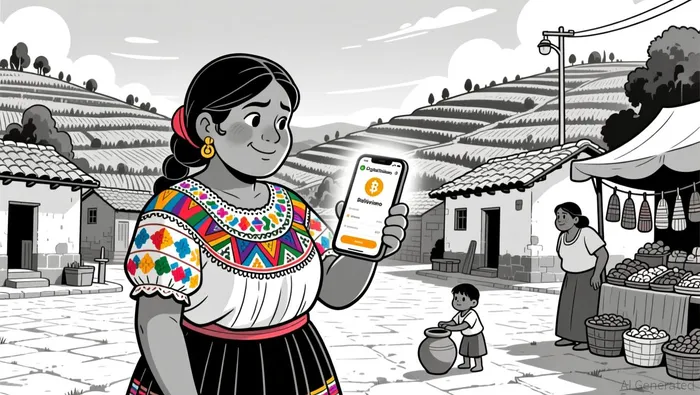
The integration of stablecoins is particularly transformative for unbanked populations. The Digital Boliviano, a centralized CBDC, enables 24/7 instant transactions and expands access to financial services for those excluded from traditional banking. By combining the stability of fiat-backed digital assets with the efficiency of blockchain technology, Bolivia is addressing systemic barriers to financial inclusion while mitigating the risks of capital flight and dollar shortages.
Digital Asset Infrastructure as a Growth Engine
Bolivia's embrace of stablecoins is underpinned by a rapidly expanding digital asset infrastructure. The Central Bank's Digital Boliviano pilot program is part of a broader effort to modernize payment systems, reduce remittance costs, and attract foreign investment. Meanwhile, corporate adoption is accelerating: Toyota, BYD, and Yamaha now accept USDT for vehicle sales, while state-owned energy company YPFB plans to use crypto for energy imports. These developments signal a shift from speculative crypto adoption to practical, use-case-driven integration.
The government's infrastructure growth is further supported by blockchain partnerships and regulatory frameworks. Economy Minister Jose Gabriel Espinoza emphasized that "You can't control crypto globally, so you have to recognize it and use it to your advantage." This pragmatic approach has led to the establishment of a foreign-exchange stabilization fund incorporating declared crypto holdings and the exploration of smart contracts for public procurement to reduce corruption. Such initiatives not only enhance transparency but also position Bolivia as a regional leader in digital financial innovation.
Regional Trends and Strategic Positioning
Bolivia's strategy aligns with a broader Latin American trend. Neighboring countries like Brazil and Argentina are similarly adopting crypto policies to hedge against economic instability. By mid-2025, Bolivia ranked 46th globally in crypto adoption, with $14.8 billion in stablecoin and crypto transaction volume according to financial data. This momentum is attracting attention from investors seeking high-growth opportunities in digital asset infrastructure, particularly in emerging markets where traditional financial systems remain underdeveloped.
However, challenges persist. Regulatory frameworks must evolve to address anti-money laundering (AML) risks and cybersecurity vulnerabilities. Public education campaigns will also be critical to building trust in the new financial ecosystem. Despite these hurdles, Bolivia's proactive stance demonstrates the potential of stablecoins to unlock economic resilience and global competitiveness.
Conclusion: A Blueprint for Emerging Markets
Bolivia's stablecoin integration offers a compelling blueprint for other emerging markets. By combining CBDCs, stablecoins, and blockchain technology, the country is addressing inflation, fostering financial inclusion, and creating a foundation for digital asset infrastructure growth. For investors, this represents an opportunity to capitalize on a market in transition-one where policy innovation and technological adoption are converging to redefine the future of money.
As the Central Bank explores future expansion into more flexible digital assets, including BitcoinBTC--, Bolivia's journey underscores the transformative power of digital finance in emerging economies. The key to sustained success will lie in balancing innovation with regulation, ensuring that the benefits of this digital transformation are equitably distributed.







Comentarios
Aún no hay comentarios