
Boliden’s Strategic Exit from Swedish JV and Its Implications for Exploration Priorities and Capital Allocation
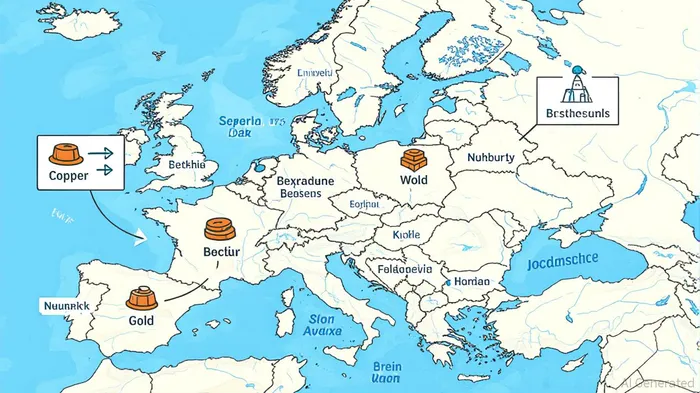
In the evolving landscape of global mining, strategic realignments by industry leaders often signal broader shifts in capital allocation and exploration priorities. Boliden’s recent exit from its joint venture in Sweden—specifically the Tomtebo and Stollberg properties—exemplifies such a move, reflecting a recalibration toward higher-potential, cost-efficient projects while reshaping the competitive dynamics for junior partners and the base metals sector. This analysis examines the implications of Boliden’s decision, its alignment with EU policy trends, and the opportunities it creates for underfollowed polymetallic plays in Tier 1 jurisdictions.
Strategic Realignment: Boliden’s Exit and Capital Priorities
Boliden’s termination of its 2023 joint venture with District Metals, under which it would have acquired an 85% stake in the Tomtebo Property, underscores a deliberate pivot toward core assets and operational efficiency. By retaining full ownership of the Stollberg Property and exiting the Tomtebo agreement, Boliden has redirected resources to projects with clearer value propositions. This aligns with its 2025 capital allocation strategy, which prioritizes sustainability-driven investments, such as the $500 million allocated to futureproof the Aitik mine—a critical asset for Europe’s largest copper and gold production [1].
The company’s partnership with Komatsu to pilot diesel trolley Power Agnostic trucks at Aitik further illustrates its focus on decarbonization and operational efficiency [2]. These initiatives not only reduce environmental impact but also enhance long-term cost predictability, a critical factor in an industry grappling with rising energy and regulatory costs. Additionally, Boliden’s exploration of the Nautanen copper deposit, with potential production by 2030, highlights its emphasis on securing high-grade, low-cost reserves in politically stable jurisdictions [4].
EU Policy and the Rise of Polymetallic Exploration
Boliden’s strategic moves are closely tied to the European Union’s evolving regulatory and funding frameworks. The Critical Raw Materials Act (CRMA) 2025 has accelerated demand for polymetallic exploration in Tier 1 jurisdictions like Sweden and Finland, where multi-level governance structures are streamlining permitting and funding access [1]. For instance, Sweden’s streamlined regulatory environment has enabled projects like District Metals’ Viken Property—hosting the world’s largest undeveloped uranium deposit alongside vanadium, molybdenum, and nickel—to advance rapidly [3].
Finland’s Kangasjärvi area in the Pyhäsalmi Mining District further exemplifies this trend. Avrupa Minerals’ recent scout drilling, targeting copper-rich sulfides, leverages advanced geophysical surveys and EU-funded infrastructure to de-risk exploration [3]. Such projects benefit from a stable regulatory backdrop and robust geological data, making them attractive for capital deployment. The OECD’s emphasis on multi-level governance and funding mechanisms, including Horizon Europe and the European Regional Development Fund, underscores the EU’s commitment to fostering sustainable mining ecosystems [3].
Implications for Junior Partners and the Base Metals Sector
Boliden’s exit from the Tomtebo joint venture has immediate consequences for junior partners like District Metals. While the termination allows District to retain 100% ownership of Tomtebo, it also removes a major financial backer that had committed CAD $10 million in exploration expenditures over four years [2]. This creates both challenges and opportunities: junior explorers must now secure alternative funding, but they also gain greater flexibility to pursue strategic partnerships or attract new investors.
The broader base metals sector, however, stands to benefit from Boliden’s focus on high-potential projects. By exiting lower-priority assets and reinvesting in core operations, Boliden is setting a precedent for capital discipline—a critical trait in an industry facing margin pressures from inflation and decarbonization costs. For example, the company’s resumption of dividends in 2025, following a temporary suspension during its acquisition phase, signals confidence in its balance sheet and operational resilience [5]. This disciplined approach may encourage other miners to adopt similar strategies, prioritizing projects with clear ESG credentials and scalable returns.
Entry Opportunities in Underfollowed Polymetallic Plays
The shift in Boliden’s strategy highlights underfollowed polymetallic opportunities in Tier 1 jurisdictions. In Sweden, the Bergslagen Mining District remains a focal point for polymetallic exploration, with projects like Tomtebo and Viken offering exposure to critical minerals aligned with the CRMA’s priorities [3]. Similarly, Finland’s Kangasjärvi and Pyhäsalmi districts present compelling cases for investors seeking undervalued assets in stable regulatory environments [3].
However, entry into these markets requires careful evaluation of junior partners’ technical and financial capabilities. The closure of Boliden Tara Mines in Ireland and the Pyhäsalmi mine in Finland serves as a cautionary tale about operational risks in the sector [6]. Investors must balance the potential of polymetallic projects with rigorous due diligence on exploration budgets, permitting timelines, and market demand for by-products like uranium and vanadium.
Conclusion
Boliden’s strategic exit from its Swedish joint venture reflects a broader industry trend toward capital efficiency, sustainability, and alignment with EU policy frameworks. While the move may create short-term uncertainty for junior partners like District Metals, it also opens avenues for innovation and investment in underfollowed polymetallic plays. For investors, the key lies in identifying projects that combine geopolitical stability, robust funding mechanisms, and clear value propositions—attributes increasingly critical in a post-pandemic, decarbonizing world.
Source:
[1] Futureproofing Aitik — A sustainable investment for the mine’s future [https://www.boliden.com/newsroom/news--media/stories/]
[2] District Metals Regains 100% Control of Tomtebo [https://www.stocktitan.net/news/DMXCF/district-receives-notice-of-boliden-s-termination-of-the-option-f6bizxb0e69b.html]
[3] Interview: Garrett Ainsworth, CEO of District Metals [https://www.miningvisuals.com/post/interview-garrett-ainsworth-ceo-of-district-metals-on-securing-strategic-metals-for-europe-s-futur]
[4] Boliden's Capital Markets Day: Commissioning of Odda [https://investors.boliden.com/en/press/bolidens-capital-markets-day-commissioning-odda-and-well-filled-project-portfolio-2310042]
[5] Boliden to Resume Dividends After Strategic Acquisitions [https://discoveryalert.com.au/news/boliden-dividend-plans-2025-payments-resume/]
[6] IMQS Annual Review 2023 [https://issuu.com/4smni/docs/imqs_23_-_96_pages_online]







Comentarios
Aún no hay comentarios