
BoJ Policy Normalization: Systemic Risks to Global Bond Markets and Carry Trade Dynamics
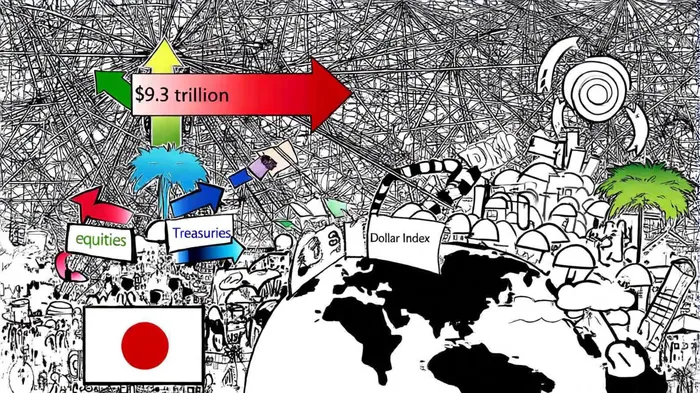
The Bank of Japan (BoJ) stands at a pivotal crossroads as it prepares for its Q3 2025 Monetary Policy Meeting (MPM), scheduled for September 18–19, with an Outlook Report due on September 30 [3]. For years, the BoJ has maintained an ultra-loose monetary policy, anchored by a -0.1% short-term interest rate and a 0% cap on 10-year government bond yields [2]. However, whispers of normalization—however faint—have begun to ripple through global markets, raising urgent questions about the potential fallout for bond yields, carry trade dynamics, and broader financial stability.
Historical Precedents: BoJ Shifts and Global Market Volatility
Historical case studies underscore the systemic risks tied to BoJ policy normalization. When the BoJ signals a departure from ultra-accommodative settings, it often triggers a reversal of the yen carry trade—a $9.3 trillion practice where investors borrow in low-yielding yen to fund higher-yielding assets abroad [1]. This unwind can precipitate sharp sell-offs in overseas equities and bonds, as capital rushes back to Japan. For instance, a sudden tightening could see investors offload U.S. Treasuries and global equities, exerting upward pressure on global bond yields and destabilizing asset valuations [1].
The scale of the yen carry trade amplifies these risks. A 2025 analysis by Vibesparking highlights that even a partial unwinding could destabilize markets, given the interconnectedness of Japanese capital with U.S. and global assets [1]. Furthermore, BoJ normalization could narrow the U.S.-Japan interest rate differential, prompting capital reallocation and reshaping yield curves worldwide.
Carry Trade Dynamics and the Dollar Index
The BoJ's policy trajectory also holds profound implications for the U.S. Dollar Index (DXY). The yen constitutes 13.6% of the DXY, meaning a stronger yen—driven by BoJ tightening—could structurally weaken the dollar [1]. This dynamic is not merely theoretical: during past normalization phases, the yen's appreciation has historically pressured the DXY, complicating U.S. monetary policy and trade balances.
Beyond financial markets, a stronger yen threatens Japan's export competitiveness. A 2025 report by NewsonJapan notes that tighter BoJ policy could exacerbate trade imbalances, with knock-on effects for global trade dynamics and geopolitical stability [2]. For investors, this underscores the interconnectedness of monetary policy and real-world economic outcomes.
Q3 2025: A Tipping Point?
As of July 2025, the BoJ remains anchored to its 2% inflation target, with no immediate signs of rate hikes [2]. Yet, the upcoming MPM could signal subtle shifts—such as adjustments to yield curve control or forward guidance—that might recalibrate market expectations. Even incremental changes could destabilize the carry trade, given its sensitivity to policy signals.
The BoJ's decisions will also reverberate through global bond markets. A normalization path—even if gradual—could spur a flight to quality, driving demand for safe-haven assets like U.S. Treasuries while compressing corporate bond spreads. Conversely, a premature unwind of the carry trade risks liquidity crunches, particularly in emerging markets reliant on yen-based capital inflows.
Strategic Implications for Investors
For bond investors, the BoJ's policy trajectory demands vigilance. A sudden shift could trigger a sell-off in global bonds as yields spike, while equity markets face volatility from capital repatriation. Carry trade participants, meanwhile, must brace for margin calls and liquidity constraints. Diversification and hedging strategies—particularly against yen strength—will be critical.
Conclusion
The BoJ's Q3 2025 policy decisions, however incremental, could reshape global financial markets. By understanding the historical precedents and systemic risks outlined above, investors can better navigate the turbulence ahead. As the September 30 Outlook Report looms, one truth remains clear: in an era of interconnected capital flows, Japan's monetary policy is no longer an isolated event—it is a global force.







Comentarios
Aún no hay comentarios