
BOJ's Policy Normalization: Ripples Through Global ETF Markets and Equity Valuations
The Bank of Japan's (BOJ) deliberate shift toward monetary policy normalization in 2025 has sent ripples through global equity markets and ETF strategies. After years of ultra-accommodative policies, including negative interest rates and aggressive quantitative easing, the BOJ has embarked on a dual path of rate hikes and balance sheet reduction. This transition, driven by robust wage growth and inflation expectations, is reshaping valuation dynamics and challenging active managers to adapt to a new paradigm of liquidity and risk.
The Mechanics of Normalization: Rates, QT, and ETF Sales
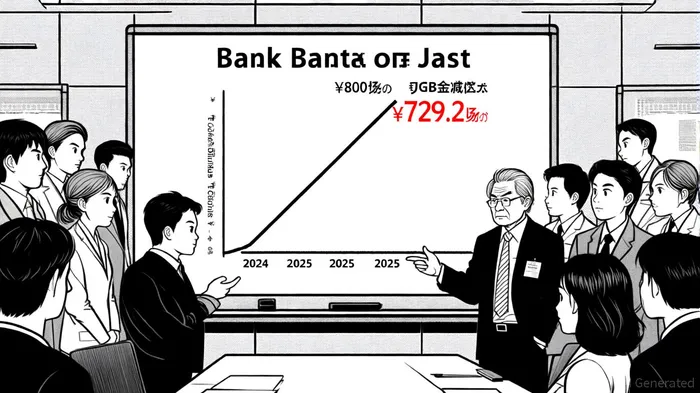
The BOJ's normalization began in earnest in early 2025, with a 25-basis-point rate hike to 0.50%—the highest in 17 years[2]. Analysts project further increases, potentially reaching 1.25% by late 2026[2], as the central bank seeks to align monetary conditions with its 2% inflation target. Concurrently, the BOJ has accelerated quantitative tightening (QT), reducing its balance sheet to ¥729.2 trillion as of March 2025—a decline of ¥27.2 trillion from the previous year[5]. Key components include the phasing out of a ¥77 trillion fund-provisioning program and a stepped-up runoff of Japanese government securities (JGBs), with plans to sell ¥3 trillion monthly by early 2026[5].
The most contentious aspect of this normalization, however, is the BOJ's gradual sale of its massive ETF holdings. These assets, accumulated during years of stimulus, now represent a significant portion of Japan's equity market. The BOJ has pledged to unwind them at “appropriate” prices to avoid destabilizing markets[1], echoing its cautious approach during the 2000s stock sell-off. This strategy underscores the central bank's balancing act: normalizing policy while mitigating systemic risks.
Equity Valuations: Compression, Rotation, and Volatility
The normalization of interest rates is already influencing equity valuations. Higher rates typically compress the valuations of long-duration growth stocks, such as mega-cap tech firms, while favoring shorter-duration value sectors. According to the BOJ's Financial System Report (April 2025), price-to-earnings (P/E) ratios remain near historical averages despite global uncertainties, suggesting that valuation metrics have not yet fully priced in the new rate environment[1]. However, increased volatility is evident, particularly in sectors sensitive to borrowing costs.
Financial institutions, for instance, stand to benefit from a steeper yield curve. Banks' net interest margins are expected to widen as lending rates rise faster than deposit rates, a dynamic historically observed in higher-rate environments[3]. Conversely, real estate and other leveraged sectors may face headwinds as financing costs climb[3]. This sectoral rotation reflects a broader recalibration of risk-return profiles, with investors shifting capital toward assets that thrive in a higher-rate world.
Active Management in ETF Markets: Navigating Liquidity and Carry Trade Reversals
The BOJ's normalization also poses unique challenges for active ETF strategies. The unwinding of yen-funded carry trades—where investors borrowed cheap yen to fund investments in higher-yielding assets—could trigger structural shifts in global capital flows. As the BOJ raises rates, the cost of such trades increases, potentially reducing liquidity in U.S. equities and Treasury markets[1]. Active managers must now contend with a dual risk: reduced liquidity in global markets and the potential for increased volatility in Japan's equity indices as the BOJ sells its ETF holdings[4].
Moreover, the BOJ's past interventions in ETF markets—such as its purchases to reduce equity risk premiums—have had asymmetric effects. Historical data shows these interventions disproportionately boosted riskier stocks, offering downside protection during market stress[2]. The reversal of this dynamic could force active managers to rebalance portfolios toward defensive assets or hedge against sector-specific risks.
Investor Behavior and the Path Forward
Investor behavior is another critical variable. The BOJ's normalization has prompted Japanese institutions and global investors to adjust strategies in anticipation of a post-negative-rate environment. For example, financial institutionsFISI-- have already begun preparing for tighter monetary conditions by optimizing balance sheets and hedging interest rate risk[6]. Meanwhile, global investors are reassessing exposure to yen-denominated assets, with some shifting capital to higher-yielding markets or hedging against currency swings[1].
The BOJ's commitment to normalization, however, is not without risks. Geopolitical uncertainties, such as U.S. tariff hikes under President Donald Trump[5], could complicate the path. Yet, analysts remain confident that the central bank will proceed cautiously, prioritizing stability over speed.
Conclusion
The BOJ's normalization represents a pivotal shift in global monetary policy, with far-reaching implications for equity valuations and ETF strategies. As rates rise and liquidity conditions evolve, active managers must navigate a landscape defined by sector rotation, increased volatility, and the unwinding of long-standing carry trades. For investors, the key takeaway is clear: agility and adaptability will be paramount in an era where central bank asset normalization reshapes market fundamentals.







Comentarios
Aún no hay comentarios