
Boise Cascade's Q1 Earnings Slump Amid Housing Headwinds: Dividend Hike Signals Strategic Resilience
Boise Cascade (BCC) reported its first quarter 2025 results, revealing a stark 61% year-over-year decline in net income to $40.3 million, as softer housing demand and operational challenges pressured its Wood Products and Building Materials Distribution (BMD) segments. Despite the financial contraction, the company maintained its dividend at $0.21 per share—a 5% increase from 2024—signaling confidence in its long-term fundamentals. This article dissects the earnings miss, explores the drivers of weakness, and evaluates whether the dividend decision reflects strategic prudence or financial overreach.
Financial Performance: A Perfect Storm of Weak Demand and Operational Costs
Boise Cascade’s Q1 results were battered by a confluence of factors. Sales dropped 7% to $1.5 billion, with Wood Products revenue falling 11% to $415.8 million. Key metrics highlight the severity:
- Engineered wood product (EWP) prices fell 9%, while plywood prices declined 10% year-over-year.
- The Oakdale, Louisiana mill’s modernization-related downtime slashed production efficiency, boosting conversion costs.
- BMD segment income tumbled 33% to $48.4 million, as lower gross margins (-$20.4 million) and rising depreciation/amortization (+$3.3 million) weighed on results.
Adjusted EBITDA collapsed 46% to $91.6 million, underscoring the margin pressure from weaker pricing and elevated costs.
Segment Analysis: Housing Market Weakness at the Core
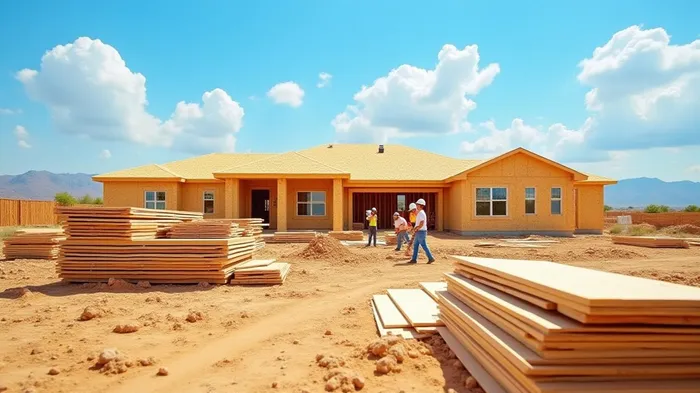
The company’s fortunes remain inextricably tied to single-family housing starts—a key demand driver that fell 6% in Q1 2025 versus 2024. Analysts project further declines in 2025 due to elevated mortgage rates and economic uncertainty. This environment has led to:
- Wood Products: A 75% plunge in segment income to $17.7 million, as reduced EWP/plywood volumes and prices offset cost savings from the mill’s modernization.
- BMD: A 7% sales decline to $1.407 billion, with EWP sales plummeting 13%.
The outlook for Q2 is similarly bleak, with management expecting "modest EWP price erosion" as oversupply pressures persist.
Balance Sheet Strength: A Lifeline in Challenging Times
Boise Cascade’s financial flexibility stands out in this downturn. With $561.8 million in cash and $957.5 million in total liquidity—including a $395.7 million undrawn credit line—the company retains ample capital to navigate near-term headwinds. This liquidity buffer contrasts sharply with peers facing tighter credit conditions, enabling Boise to:
- Proceed with planned capital expenditures of $220–$240 million in 2025, prioritizing long-term productivity.
- Continue share repurchases: $27.5 million deployed in Q1 and April, with ~1.1 million shares remaining under its current program.
Dividend Decision: Prudent or Overly Aggressive?
The dividend increase to $0.21 per share—despite the earnings collapse—has drawn mixed reactions. Proponents argue that:
- Boise’s robust balance sheet supports payouts even during cyclical downturns.
- The dividend remains covered by free cash flow, with 2024’s $104 million net income offering a safety margin.
Critics, however, note that:
- Dividend coverage ratios have weakened: Q1’s $40.3 million net income would cover only ~190% of the dividend obligation ($8.4 million per quarter).
- A prolonged housing slump could test this model, as EBITDA may not rebound sufficiently to offset reduced volumes.
Industry Outlook: Long-Term Demand Remains a Bull Case
While near-term risks loom large, management highlighted structural tailwinds:
- Housing undersupply: The U.S. housing stock is aging, with 60% of homes over 30 years old, driving renovation and replacement demand.
- Homeowner equity: Record levels of equity in single-family homes could spur remodeling activity, a key BMD growth driver.
- Structural demand: The U.S. needs ~1.5 million annual housing starts to meet demographic growth, far exceeding current supply.
These factors underpin Boise’s strategic focus on modernizing its mills (e.g., the Oakdale project) to reduce costs and improve competitiveness.
Conclusion: A Hold Rating with Cyclical Upside
Boise Cascade’s Q1 results reflect the sector’s broader struggles, but its financial strength and disciplined capital allocation justify cautious optimism. Key data points underpin this view:
- Liquidity: $957 million in available capital provides a buffer against further declines.
- Dividend coverage: Despite the net income drop, the payout remains manageable at current levels.
- Long-term demand: The 1.5 million annual housing starts needed vs. 2024’s 1.3 million suggest eventual recovery.
Investors should monitor mortgage rates (a key housing demand lever) and BMD’s margin recovery. A rebound in single-family starts to 1.4 million or higher could reignite earnings growth. Until then, Boise’s dividend hike appears sustainable—but the stock’s performance hinges on whether the company can weather the current storm while positioning for the next upcycle.
For now, Boise CascadeBCC-- remains a hold, with downside risks tempered by its fortress balance sheet and the inevitability of eventual housing recovery.





Comentarios
Aún no hay comentarios