
Boeing and Virgin Atlantic's Wi-Fi Partnership: A Bellwether for Aerospace's Digital Infrastructure Boom
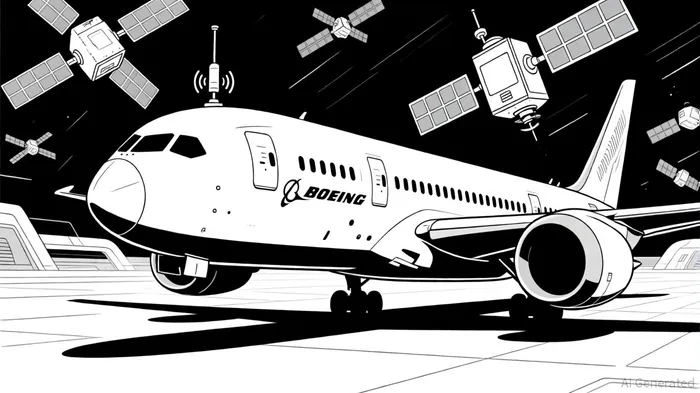
The aerospace industry is undergoing a quiet revolution, driven by a confluence of technological innovation and shifting passenger expectations. At the forefront of this transformation is Boeing's recent partnership with Virgin Atlantic to deploy high-speed, streaming-quality Wi-Fi across the airline's BoeingBA-- 787 Dreamliner fleet. This collaboration, which includes the installation of Boeing's Aerodynamic Shroud to support Electronically Steered Phased Array (ESA) antennas for Low Earth Orbit (LEO) and multi-orbit connectivity, marks a pivotal moment in the evolution of in-flight digital infrastructure, according to Boeing's announcement. For investors, the deal signals a broader trend: airlines are no longer merely adopting connectivity as a convenience but are embedding it as a core component of their competitive strategy.
The Technology Behind the Partnership
Boeing's Aerodynamic Shroud is more than a hardware upgrade-it's a bridge to the future of satellite-based connectivity. By accommodating ESA antennas, the shroud enables seamless integration with LEO constellations like Starlink, which offer significantly lower latency and higher bandwidth compared to traditional geostationary (GEO) satellites, according to a GMInsights report. Virgin Atlantic's decision to pair this with Starlink's next-generation systems across its Boeing 787s, Airbus A350s, and A330neos underscores a strategic pivot toward multi-orbit solutions. This hybrid approach ensures robust coverage even in high-traffic routes or remote regions, addressing a key pain point for global carriers.
Across the industry, partnerships are accelerating the adoption of LEO and hybrid systems. United Airlines' collaboration with SpaceX and Qatar Airways' agreements with OneWeb highlight a sector-wide race to leverage satellite constellations for bandwidth-heavy applications like 4K streaming and real-time video conferencing, according to a DataM Intelligence report. DataM Intelligence projects the in-flight connectivity market to grow from $7.34 billion in 2025 to $12 billion by 2032, driven by these advancements.
A Broader Industry Shift
The Boeing-Virgin Atlantic deal is emblematic of a larger shift in aerospace partnerships. Airlines are increasingly aligning with tech firms to co-develop infrastructure that meets the demands of a hyperconnected world. For instance, Honeywell and NXP Semiconductors are collaborating on AI-driven avionics, as noted in a Honeywell press release. ANRA Technologies and Future Flight Global are building digital backbones for electric air taxis. These partnerships reflect a recognition that digital infrastructure is no longer a peripheral concern but a foundational element of operational efficiency and customer experience.
Passenger expectations are a key driver. A 2024 Viasat survey found that 75% of travelers prioritize high-quality in-flight Wi-Fi, with 22% avoiding long-haul flights without it. Airlines are responding by investing in tailored content, live TV, and even gaming options-features that require robust connectivity. Virgin Atlantic's £17 billion global relaunch, which includes an AI-powered travel concierge developed with Tomoro.ai, exemplifies this trend, as detailed on the World Aviation Festival blog. Such initiatives are not just about convenience; they're about redefining the in-flight experience as a "home away from home."
Market Growth and Investment Opportunities
The financial stakes are enormous. The in-flight connectivity market is forecasted to expand at a compound annual growth rate (CAGR) of 6.34% through 2032, reaching $12 billion. This growth is fueled by three factors:
1. Satellite Innovation: LEO and hybrid systems are outpacing GEO in performance and cost-effectiveness.
2. 5G Integration: Trials by Ericsson, Qualcomm, and Thales Alenia Space are paving the way for 5G non-terrestrial networks (NTN), which could enable seamless global connectivity.
3. Passenger Demand: As remote work and digital nomadism rise, so does the need for uninterrupted internet access during flights.
Investors should also note the strategic moves of satellite operators. SES's Open Orbits Inflight Connectivity Network, which pools Ka-band capacity from regional providers, and Lynk Global's direct-to-device (D2D) technology are expanding access to satellite services without relying on ground infrastructure. These innovations are creating a virtuous cycle: better connectivity drives passenger satisfaction, which in turn justifies further investment.
Strategic Implications for Investors
For aerospace and tech investors, the Boeing-Virgin Atlantic partnership is a bellwether. It highlights the importance of companies that can bridge the gap between satellite infrastructure and aircraft integration. Boeing's role as a hardware and systems integrator positions it to benefit from the industry's shift toward multi-orbit solutions. Similarly, satellite operators like Starlink and SES stand to gain as airlines prioritize bandwidth and reliability.
However, risks remain. The upfront costs of retrofitting fleets with advanced connectivity systems are substantial, and regulatory hurdles for 5G NTN and LEO deployments could delay timelines. Yet, given the market's projected growth and the competitive imperative to innovate, these challenges are likely to be surmounted.
Conclusion
The Boeing-Virgin Atlantic deal is more than a technical upgrade-it's a harbinger of a new era in aerospace. As airlines transform their digital infrastructure to meet the demands of a connected world, partnerships like this will define the industry's next chapter. For investors, the message is clear: the future of air travel is not just about getting from point A to point B, but about ensuring that every mile is as connected as the last.





Comentarios
Aún no hay comentarios