
Boeing's Strategic Repositioning in the Gulf Aviation Market: A Pathway to Long-Term Growth and Diversification
Strengthening Ties with Gulf Air and Regional Leaders
Boeing's partnership with Gulf Air exemplifies its focus on long-term customer relationships and fleet modernization. On November 18, 2025, Gulf Air finalized an order for 15 BoeingBA-- 787 Dreamliners, including options for three additional aircraft, during the Dubai Airshow according to reports. This deal builds on Gulf Air's existing fleet of nine 787-9s and aligns with its sustainability goals, as the Dreamliner's fuel efficiency and lower emissions support the airline's operational and environmental priorities. The partnership, led by newly appointed CEO Martin Gauss-a former airBaltic leader-signals a strategic shift toward global connectivity and operational agility as research shows.
Beyond Gulf Air, Boeing has deepened its collaboration with UAE-based carriers, including Emirates, Etihad Airways, and flydubai. Emirates, the world's largest operator of the 777, recently added 90 777X aircraft to its existing orders and expanded its 787 fleet by five at the 2023 Dubai Airshow according to Boeing's Middle East report. Etihad, the Middle East's largest 787 customer, has secured 75 of these aircraft and pioneered the 777X order. Meanwhile, flydubai's entry into the widebody segment with 30 787-9s marks a significant diversification of its fleet, reflecting Boeing's ability to cater to both regional and long-haul markets as data indicates.
Industrial Partnerships and Local Capabilities
Boeing's strategy extends beyond commercial sales to include industrial partnerships that bolster local aerospace ecosystems. In the UAE, the company has partnered with STRATA and Edge Precision Industries (EPI) to develop advanced manufacturing and maintenance capabilities. These collaborations align with the UAE's Vision 2030 and Vision 2030 initiatives, which prioritize economic diversification and indigenous industrial growth. By embedding itself in the region's supply chain, Boeing not only secures long-term contracts but also fosters a skilled workforce and technological innovation that can be replicated globally.
Long-Term Positioning and Market Projections
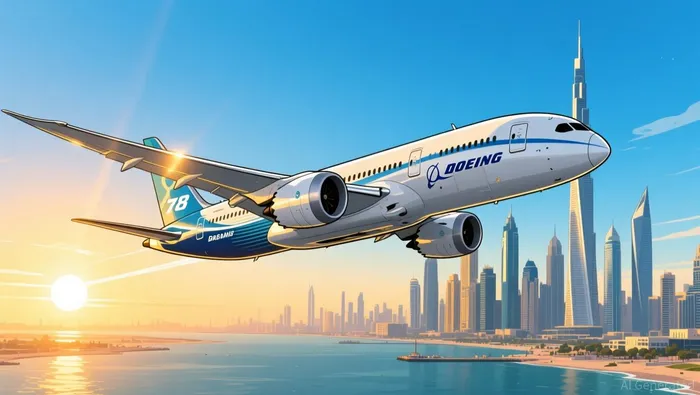 The Middle East's aviation sector is poised for exponential growth, driven by tourism, trade, and the development of air cargo hubs. According to Boeing's 2025 market forecast, Gulf carriers will require over 2,950 new aircraft-spanning narrowbody, widebody, and freighter categories-by 2044 to meet rising demand according to Boeing's analysis. This projection underscores the importance of customer diversification, as Boeing's partnerships with both legacy carriers (e.g., Emirates) and emerging players (e.g., flydubai) ensure a balanced portfolio. The company's emphasis on widebody aircraft, such as the 777X and 787, further aligns with the region's focus on long-haul connectivity and cargo expansion.
Strategic Implications for Investors
For investors, Boeing's Gulf strategy highlights its ability to adapt to shifting market dynamics. By securing large-scale orders, investing in local partnerships, and aligning with regional economic goals, the company is mitigating risks associated with over-reliance on traditional markets. The Gulf's projected fleet growth-expected to more than double by 2044-provides a robust foundation for Boeing's revenue streams, particularly as it competes with Airbus for market share in this critical region.
Moreover, Boeing's focus on sustainability and operational efficiency resonates with Gulf carriers' commitments to reducing carbon footprints, a trend likely to influence future procurement decisions. The 787 Dreamliner's fuel efficiency and the 777X's advanced aerodynamics position Boeing as a preferred partner for airlines seeking to balance growth with environmental responsibility.
Conclusion
Boeing's strategic repositioning in the Gulf aviation market is a masterclass in long-term planning and customer diversification. By securing high-value contracts, fostering industrial partnerships, and aligning with the region's economic ambitions, the company is not only securing its near-term revenue but also laying the groundwork for sustained growth. As the Middle East's aviation sector continues to expand, Boeing's proactive approach ensures it remains a key player in one of the world's most dynamic aerospace markets.





Comentarios
Aún no hay comentarios