
Boeing's Strategic Positioning in Emerging Markets: Assessing Long-Term Growth in the Post-Pandemic Aviation Sector
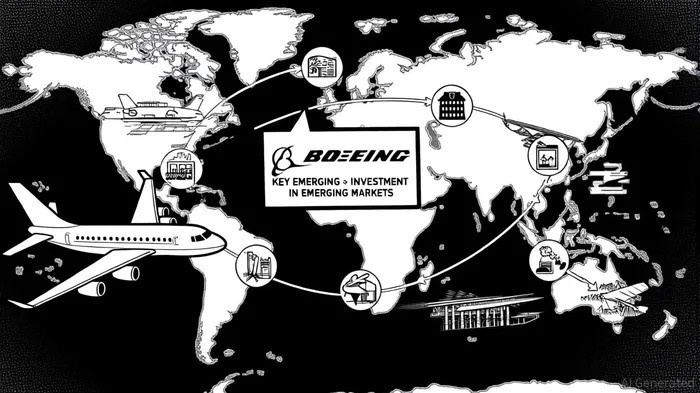
The BoeingBA-- Company's strategic pivot toward emerging markets has become a cornerstone of its post-pandemic recovery and long-term growth narrative. As global air travel rebounds and demand for commercial aircraft surges, Boeing is recalibrating its business model to capitalize on the transformative potential of developing economies. According to the 2025 Commercial Market Outlook, emerging markets are projected to account for over 50% of the global commercial fleet by 2044, up from nearly 40% in 2024 [1]. This shift is driven by an expanding middle class, competitive airline networks, and sustained aviation investment in regions such as Asia, Africa, and Latin America [2]. For investors, Boeing's ability to align its product roadmap and partnerships with these trends will determine its success in a rapidly evolving sector.
The Demand Story: Emerging Markets as Growth Engines
Boeing's long-term demand forecasts hinge on the explosive growth of air travel in emerging economies. The 2025 Commercial Market Outlook projects that single-aisle aircraft—critical for short-haul and low-cost carriers—will constitute 72% of the global fleet by 2044, up from 66% in 2024 [1]. This growth is fueled by airlines in markets like India, Indonesia, and Nigeria, where urbanization and rising disposable incomes are driving passenger traffic. Passenger traffic in these regions is expected to expand at an annual rate of 4.2%, outpacing global economic growth [3].
Widebody aircraft demand is also on the rise, with the global passenger widebody fleet projected to reach 8,320 airplanes by 2044 [1]. This trend reflects the ambitions of airlines in emerging markets to expand long-haul routes, supported by Boeing's 777X, the world's largest and most efficient twin-engine jet [4]. The 777X, with its advanced carbon-fiber wings and fuel-efficient engines, is positioned to capture a significant share of this demand while aligning with Boeing's sustainability goals.
Strategic Initiatives: Sustainability, Partnerships, and Diversification
Boeing's 2025 Product Strategy Guide underscores a dual focus on sustainability and digital transformation. The company has committed to net-zero carbon emissions by 2050, with investments in sustainable aviation fuels (SAF) and electric propulsion technologies [4]. For example, Boeing recently partnered with biofuel producers in Southeast Asia to scale SAF production, a move that aligns with the region's growing aviation sector and regulatory push for greener operations.
In parallel, Boeing is diversifying its revenue streams by expanding into defense and space, targeting a 40% revenue share in these segments by 2030 [4]. This strategy is designed to counterbalance the volatility of the commercial aviation market. Defense contracts such as the KC-46A tanker and T-7A Red Hawk trainer are already contributing to stability, while future programs like the NGAD (Next Generation Air Dominance) initiative position Boeing for long-term defense sector growth [5].
Challenges and Mitigation: Stabilizing Operations
Despite its strategic clarity, Boeing has faced operational headwinds in 2024, including safety incidents, labor disputes, and delivery delays [3]. To address these challenges, the company reacquired Spirit AeroSystems for $4.7 billion in June 2024, a move aimed at streamlining production and improving quality control [3]. Additionally, a landmark order from Pegasus Airlines for up to 200 737 MAX aircraft in December 2024 signaled renewed confidence in Boeing's commercial offerings [3].
The company's 2025 Industry Playbook emphasizes operational streamlining and cost discipline, with a focus on enhancing safety and quality measures [5]. These steps are critical to restoring investor trust and ensuring Boeing can meet its ambitious delivery targets for the 737 MAX, 787 Dreamliner, and 777X.
Investment Implications: Balancing Risks and Rewards
For investors, Boeing's strategic positioning in emerging markets presents both opportunities and risks. On the upside, the company is well-placed to benefit from the structural growth of air travel in developing economies, supported by its product innovations and sustainability initiatives. The defense and space segments further insulate Boeing from cyclical downturns in commercial aviation.
However, execution risks remain. Delays in the 777X program, regulatory scrutiny of its safety protocols, and geopolitical tensions affecting defense spending could hinder progress. Investors must also weigh Boeing's debt load and the competitive threat from Airbus, which has made aggressive inroads in emerging markets.
Conclusion
Boeing's strategic focus on emerging markets reflects a forward-looking approach to the aviation sector's evolving dynamics. By aligning its product roadmap with the demand drivers of developing economies and investing in sustainability and defense, the company is positioning itself for long-term growth. However, success will depend on its ability to execute on operational reforms and navigate a complex regulatory and competitive landscape. For investors with a multi-year horizon, Boeing's emerging market strategy offers compelling upside, albeit with significant risks that warrant close monitoring.





Comentarios
Aún no hay comentarios