
Boeing's Strategic Partnership with Air Premia: A Blueprint for Supply Chain Resilience and Aerospace Sector Dominance
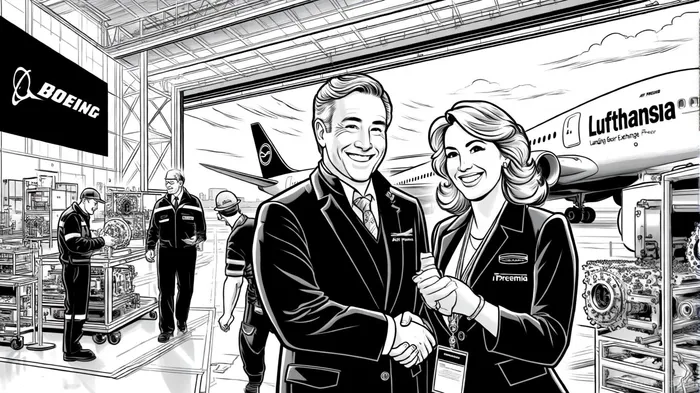
In an aerospace sector increasingly defined by supply chain volatility and geopolitical uncertainty, Boeing's strategic partnership with Air Premia stands out as a model of innovation and resilience. By leveraging shared resources, advanced technology, and long-term operational planning, the collaboration not only addresses immediate challenges but also positions both companies to thrive in a competitive global market.
Supply Chain Resilience Through Shared Assets
Boeing's recent Landing Gear Exchange Program with Air Premia exemplifies a pragmatic approach to mitigating operational risks. Under this agreement, Air Premia can exchange landing gear requiring overhaul with spare units from Boeing's inventory, minimizing downtime and reducing the need for costly spare asset investments[1]. This program aligns with Boeing's broader strategy of fostering supply chain resilience through partnerships that optimize resource utilization. For Air Premia, the arrangement ensures operational stability during critical maintenance cycles, a crucial advantage in an industry where delays can cascade into significant financial losses.
Fleet Expansion and Route Diversification
Air Premia's fleet growth, supported by Boeing's 787-9 Dreamliners, further underscores the partnership's strategic depth. As of December 2024, Air Premia had added its sixth 787-9, with plans to expand to nine aircraft by year-end[3]. This expansion is not merely quantitative but qualitative: the 787-9's fuel efficiency and range enable Air Premia to launch new routes to high-demand destinations like Da Nang, Hong Kong, Honolulu, and Seattle[4]. By aligning its fleet strategy with Boeing's technological advancements, Air Premia is poised to capture transpacific travel demand while maintaining a hybrid service model that balances premium amenities with cost efficiency[2].
Strengthening Resilience with Global Partnerships
The partnership extends beyond BoeingBA--. In September 2025, Air Premia signed a long-term component support agreement with Lufthansa Technik, granting it access to the latter's global component pool[1]. This collaboration, the first of its kind for a Korean airline, ensures faster part availability and operational continuity amid global supply chain disruptions. For Boeing, this multi-layered approach—combining direct support with third-party alliances—demonstrates its ability to create ecosystems that enhance customer value while reinforcing its own market position.
Long-Term Aerospace Sector Positioning
Boeing's strategy with Air Premia reflects a broader industry shift toward collaborative innovation. By integrating AI-driven analytics with traditional aerospace expertise (as seen in its Palantir partnership[3]), Boeing is modernizing supply chain management across defense and commercial sectors. Meanwhile, Air Premia's expansion into the U.S. market, supported by Boeing's aircraft and Lufthansa's logistics, highlights the company's role in enabling global connectivity. These efforts collectively position Boeing as a key player in shaping the future of aerospace, where resilience and adaptability are paramount.
For investors, the Boeing-Air Premia partnership offers a compelling case study in strategic alignment. By addressing immediate operational needs while investing in long-term resilience, both companies are navigating the complexities of the post-pandemic aviation landscape with foresight and agility. As supply chains remain fragile and demand for air travel rebounds, such partnerships will likely define the sector's next phase of growth.





Comentarios
Aún no hay comentarios