
Boeing's 737 Max Production Restart: Opportunities and Challenges
Generado por agente de IAWesley Park
martes, 10 de diciembre de 2024, 11:38 am ET1 min de lectura
BA--
Boeing's recent restart of 737 Max production, following a seven-week strike, signals a significant step towards recovery for the aerospace giant. The strike, which ended in November, had halted production of the best-selling aircraft, impacting Boeing's financial health and supply chain. As Boeing resumes production, investors must consider the opportunities and challenges that lie ahead.
The 737 Max is a critical component of Boeing's revenue stream, with approximately 4,200 orders from airlines eager to meet growing global demand for air travel. However, production has been capped at 38 planes per month since January 2024 due to safety concerns, limiting Boeing's ability to fulfill orders. Jefferies analysts expect an average of 29 planes per month in 2025, reflecting the challenges in ramping up production.
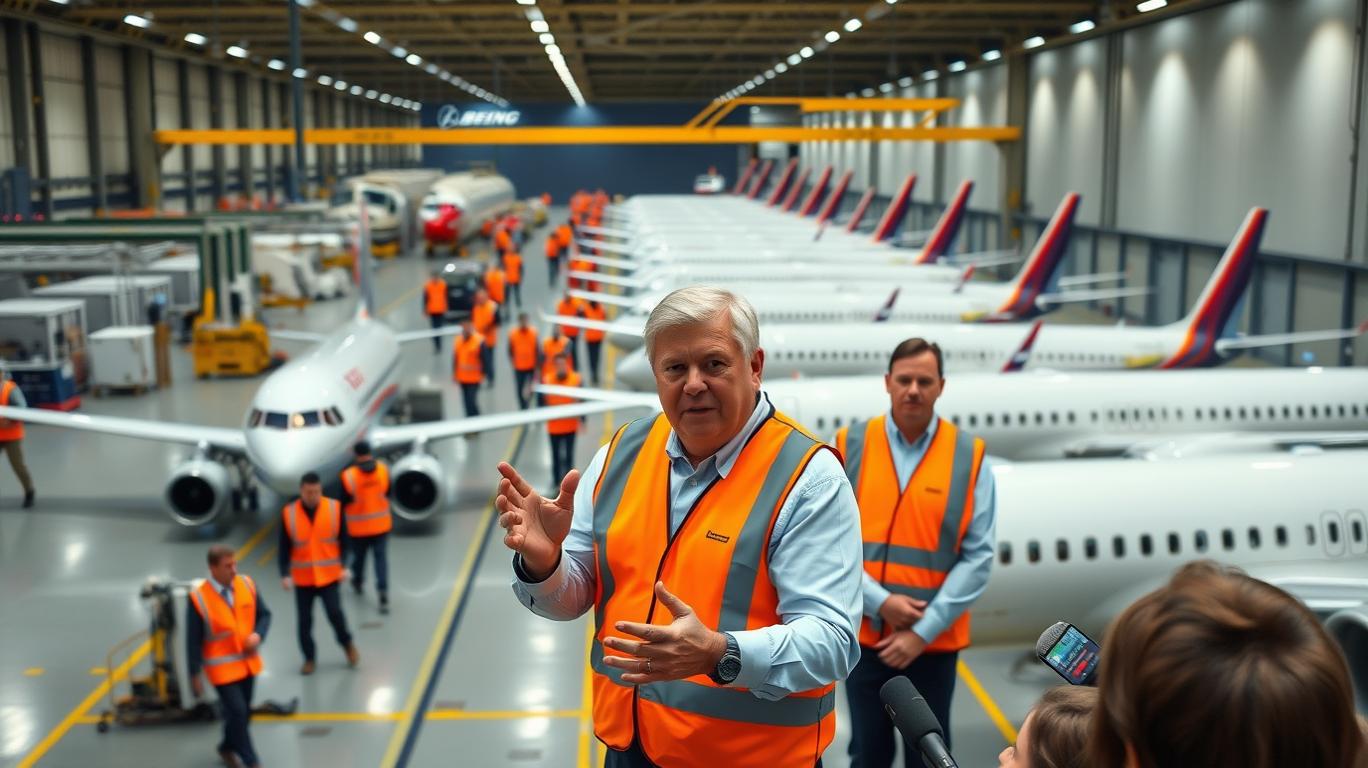
Boeing's restart of 737 Max production poses potential supply chain disruptions and labor relations challenges. The strike halted production, leading to inventory buildup and increased costs for Boeing and suppliers. An extended strike could lead to layoffs, factory slowdowns, or even bankruptcies among smaller suppliers, weakening the entire aerospace supply chain. Labor relations remain a concern, with workers pushing for higher wages and benefits. A short strike might be manageable, but anything extending beyond 2-4 weeks could have severe compounding negative effects on Boeing's financial health, supplier stability, and competitive position with Airbus.
To mitigate these disruptions, Boeing should focus on open communication with suppliers, providing them with clear production schedules, and offering financial support where necessary. Additionally, Boeing could explore alternative sourcing options to diversify its supply chain and reduce reliance on a single supplier.
The long-term implications of the strike on Boeing's labor relations are significant. It highlights workers' demands for better wages, job security, and benefits, setting new benchmarks for future negotiations. The strike's duration and impact on production may embolden other unions to push for similar concessions, potentially leading to more frequent or prolonged work stoppages. Boeing's response to the strike, including cost-cutting measures like furloughs and layoffs, could strain relations with unions, making future negotiations more challenging. However, if Boeing addresses workers' concerns and maintains open communication, it can foster a more cooperative labor environment, mitigating the risk of future strikes.
In conclusion, Boeing's restart of 737 Max production is a crucial step towards meeting growing global demand for air travel. However, the company must navigate potential supply chain disruptions and labor relations challenges to ensure a smooth restart of its assembly lines. By addressing these issues proactively, Boeing can position itself for long-term success in the aerospace industry.
Boeing's recent restart of 737 Max production, following a seven-week strike, signals a significant step towards recovery for the aerospace giant. The strike, which ended in November, had halted production of the best-selling aircraft, impacting Boeing's financial health and supply chain. As Boeing resumes production, investors must consider the opportunities and challenges that lie ahead.
The 737 Max is a critical component of Boeing's revenue stream, with approximately 4,200 orders from airlines eager to meet growing global demand for air travel. However, production has been capped at 38 planes per month since January 2024 due to safety concerns, limiting Boeing's ability to fulfill orders. Jefferies analysts expect an average of 29 planes per month in 2025, reflecting the challenges in ramping up production.
Boeing's restart of 737 Max production poses potential supply chain disruptions and labor relations challenges. The strike halted production, leading to inventory buildup and increased costs for Boeing and suppliers. An extended strike could lead to layoffs, factory slowdowns, or even bankruptcies among smaller suppliers, weakening the entire aerospace supply chain. Labor relations remain a concern, with workers pushing for higher wages and benefits. A short strike might be manageable, but anything extending beyond 2-4 weeks could have severe compounding negative effects on Boeing's financial health, supplier stability, and competitive position with Airbus.
To mitigate these disruptions, Boeing should focus on open communication with suppliers, providing them with clear production schedules, and offering financial support where necessary. Additionally, Boeing could explore alternative sourcing options to diversify its supply chain and reduce reliance on a single supplier.
The long-term implications of the strike on Boeing's labor relations are significant. It highlights workers' demands for better wages, job security, and benefits, setting new benchmarks for future negotiations. The strike's duration and impact on production may embolden other unions to push for similar concessions, potentially leading to more frequent or prolonged work stoppages. Boeing's response to the strike, including cost-cutting measures like furloughs and layoffs, could strain relations with unions, making future negotiations more challenging. However, if Boeing addresses workers' concerns and maintains open communication, it can foster a more cooperative labor environment, mitigating the risk of future strikes.
In conclusion, Boeing's restart of 737 Max production is a crucial step towards meeting growing global demand for air travel. However, the company must navigate potential supply chain disruptions and labor relations challenges to ensure a smooth restart of its assembly lines. By addressing these issues proactively, Boeing can position itself for long-term success in the aerospace industry.

Divulgación editorial y transparencia de la IA: Ainvest News utiliza tecnología avanzada de Modelos de Lenguaje Largo (LLM) para sintetizar y analizar datos de mercado en tiempo real. Para garantizar los más altos estándares de integridad, cada artículo se somete a un riguroso proceso de verificación con participación humana.
Mientras la IA asiste en el procesamiento de datos y la redacción inicial, un miembro editorial profesional de Ainvest revisa, verifica y aprueba de forma independiente todo el contenido para garantizar su precisión y cumplimiento con los estándares editoriales de Ainvest Fintech Inc. Esta supervisión humana está diseñada para mitigar las alucinaciones de la IA y garantizar el contexto financiero.
Advertencia sobre inversiones: Este contenido se proporciona únicamente con fines informativos y no constituye asesoramiento profesional de inversión, legal o financiero. Los mercados conllevan riesgos inherentes. Se recomienda a los usuarios que realicen una investigación independiente o consulten a un asesor financiero certificado antes de tomar cualquier decisión. Ainvest Fintech Inc. se exime de toda responsabilidad por las acciones tomadas con base en esta información. ¿Encontró un error? Reportar un problema


SOBRE NOSOTROS
Nuestra historiaAutores de noticiasBase de conocimientosPolítica de privacidadTérmino de usoDescargo de responsabilidad de corretaje de tercerosTérminos de uso de AIMEDivulgaciones de riesgos de AInvest AICarrerasCONTÁCTENOS
Email: support@ainvest.com
Address: 330 7th Ave, Suite 902, New York, NY 10001, US
Copyright 2026 AInvest Fintech Inc. All rights reserved.


Comentarios
Aún no hay comentarios