
Boeing Faces Court Test on Fraud Charges Amid Families' Opposition
PorAinvest
miércoles, 3 de septiembre de 2025, 6:29 am ET2 min de lectura
BA--
The DOJ initially charged Boeing with conspiracy to commit fraud in connection with the crashes in Indonesia and Ethiopia. The company decided to plead guilty instead of going to trial, but U.S. District Chief Judge Reed O’Connor rejected the plea agreement in December. O’Connor objected to diversity, equity, and inclusion policies potentially influencing the selection of an independent monitor to oversee the company’s promised reforms. The judge's refusal to accept the agreement allowed Boeing to challenge the DOJ's rationale for charging the company as a corporation and required prosecutors to secure a new deal for a guilty plea.
The renegotiation of the plea deal took place over six months, during which President Donald Trump returned to office and ordered an end to diversity initiatives that had paused the process. By the time the DOJ briefed the judge in late May, the charge and the plea were off the table. The non-prosecution agreement struck between the DOJ and Boeing included the company paying or investing $1.1 billion in fines, compensation for the crash victims’ families, and internal safety and quality measures. The DOJ stated that it offered these terms in light of significant changes Boeing made to its quality control and anti-fraud programs since entering into the July 2024 plea deal. The department also believed that persuading a jury to punish the company with a criminal conviction would be risky, while the revised agreement ensures meaningful accountability and brings finality to a difficult and complex case.
Judge O'Connor has invited some of the families to address the court on Wednesday. One of the families planning to speak is Catherine Berthet, whose daughter, Camille Geoffrey, died at the age of 28 when a 737 Max crashed soon after takeoff from Ethiopia’s Addis Ababa Bole International Airport. Berthet, who lives in France, is part of a group of about 30 families who want the judge to reject the government’s petition and to appoint an independent judge to return the case to completion.
The DOJ has asked for the judge's permission to dismiss the action of refiling the conspiracy complaint if Boeing does not fulfill its end of the non-prosecution agreement within the next two years. Boeing reached a colony settlement in 2021 that protected it from criminal prosecution, but the DOJ sought to revive the charge last year after an incident involving an unused emergency exit on a 737 Max during an Alaska Airlines training flight in Oregon.
The case revolves around a new package strategy Boeing developed for the Max. The 2018 and 2019 crashes involved the package sounding the chemoreceptor of the level down multiple times based on faulty readings from a single sensor, leading pilots to lose control of the planes. The Transportation Department's inspector general found that Boeing did not pass cardinal Federal Aviation Administration unit about changes it made to the MCAS package before regulators approved pilot training requirements for the Max and certified the airliner for flight. Acting on incomplete information, the FAA approved minimal, computer-based training for Boeing 737 pilots, avoiding the request for formation simulators that would have made it more costly for airlines to adopt the latest type of the jetliner.
The outcome of this court test will have significant implications for Boeing and the aviation industry, as well as for the families of the victims seeking justice and accountability.
References:
[1] https://www.beritaja.com/families-of-boeing-crash-victims-set-to-make-pleas-for-criminal-prosecution-beritaja-384255.html
[2] https://www.nbcnews.com/business/business-news/crash-victims-families-prepare-make-final-plea-boeings-prosecution-rcna228623
Boeing faces a final court test as families of 737 Max crash victims challenge the DOJ's bid to dismiss fraud charges. The DOJ and Boeing renegotiated a non-prosecution agreement requiring Boeing to pay $1.1 billion in fines and safety investments. Approximately 30 families oppose the dismissal and want a criminal trial. The case centers on Boeing's MCAS software implicated in fatal crashes that killed 346 people. Judge Reed O'Connor will consider whether to allow prosecutors to dismiss the felony conspiracy charge against Boeing.
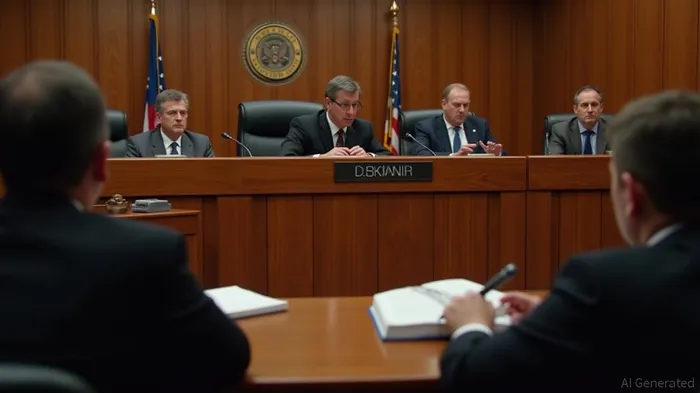
Boeing is set to face a critical court test as families of victims from the 737 Max crashes challenge the Department of Justice's (DOJ) motion to dismiss fraud charges against the company. The DOJ and Boeing have renegotiated a non-prosecution agreement, requiring Boeing to pay $1.1 billion in fines and safety investments. Approximately 30 families are opposing the dismissal and seeking a criminal trial. The case centers on Boeing's MCAS software, which was implicated in fatal crashes that killed 346 people. Judge Reed O'Connor will consider whether to allow prosecutors to dismiss the felony conspiracy charge against Boeing.The DOJ initially charged Boeing with conspiracy to commit fraud in connection with the crashes in Indonesia and Ethiopia. The company decided to plead guilty instead of going to trial, but U.S. District Chief Judge Reed O’Connor rejected the plea agreement in December. O’Connor objected to diversity, equity, and inclusion policies potentially influencing the selection of an independent monitor to oversee the company’s promised reforms. The judge's refusal to accept the agreement allowed Boeing to challenge the DOJ's rationale for charging the company as a corporation and required prosecutors to secure a new deal for a guilty plea.
The renegotiation of the plea deal took place over six months, during which President Donald Trump returned to office and ordered an end to diversity initiatives that had paused the process. By the time the DOJ briefed the judge in late May, the charge and the plea were off the table. The non-prosecution agreement struck between the DOJ and Boeing included the company paying or investing $1.1 billion in fines, compensation for the crash victims’ families, and internal safety and quality measures. The DOJ stated that it offered these terms in light of significant changes Boeing made to its quality control and anti-fraud programs since entering into the July 2024 plea deal. The department also believed that persuading a jury to punish the company with a criminal conviction would be risky, while the revised agreement ensures meaningful accountability and brings finality to a difficult and complex case.
Judge O'Connor has invited some of the families to address the court on Wednesday. One of the families planning to speak is Catherine Berthet, whose daughter, Camille Geoffrey, died at the age of 28 when a 737 Max crashed soon after takeoff from Ethiopia’s Addis Ababa Bole International Airport. Berthet, who lives in France, is part of a group of about 30 families who want the judge to reject the government’s petition and to appoint an independent judge to return the case to completion.
The DOJ has asked for the judge's permission to dismiss the action of refiling the conspiracy complaint if Boeing does not fulfill its end of the non-prosecution agreement within the next two years. Boeing reached a colony settlement in 2021 that protected it from criminal prosecution, but the DOJ sought to revive the charge last year after an incident involving an unused emergency exit on a 737 Max during an Alaska Airlines training flight in Oregon.
The case revolves around a new package strategy Boeing developed for the Max. The 2018 and 2019 crashes involved the package sounding the chemoreceptor of the level down multiple times based on faulty readings from a single sensor, leading pilots to lose control of the planes. The Transportation Department's inspector general found that Boeing did not pass cardinal Federal Aviation Administration unit about changes it made to the MCAS package before regulators approved pilot training requirements for the Max and certified the airliner for flight. Acting on incomplete information, the FAA approved minimal, computer-based training for Boeing 737 pilots, avoiding the request for formation simulators that would have made it more costly for airlines to adopt the latest type of the jetliner.
The outcome of this court test will have significant implications for Boeing and the aviation industry, as well as for the families of the victims seeking justice and accountability.
References:
[1] https://www.beritaja.com/families-of-boeing-crash-victims-set-to-make-pleas-for-criminal-prosecution-beritaja-384255.html
[2] https://www.nbcnews.com/business/business-news/crash-victims-families-prepare-make-final-plea-boeings-prosecution-rcna228623


Divulgación editorial y transparencia de la IA: Ainvest News utiliza tecnología avanzada de Modelos de Lenguaje Largo (LLM) para sintetizar y analizar datos de mercado en tiempo real. Para garantizar los más altos estándares de integridad, cada artículo se somete a un riguroso proceso de verificación con participación humana.
Mientras la IA asiste en el procesamiento de datos y la redacción inicial, un miembro editorial profesional de Ainvest revisa, verifica y aprueba de forma independiente todo el contenido para garantizar su precisión y cumplimiento con los estándares editoriales de Ainvest Fintech Inc. Esta supervisión humana está diseñada para mitigar las alucinaciones de la IA y garantizar el contexto financiero.
Advertencia sobre inversiones: Este contenido se proporciona únicamente con fines informativos y no constituye asesoramiento profesional de inversión, legal o financiero. Los mercados conllevan riesgos inherentes. Se recomienda a los usuarios que realicen una investigación independiente o consulten a un asesor financiero certificado antes de tomar cualquier decisión. Ainvest Fintech Inc. se exime de toda responsabilidad por las acciones tomadas con base en esta información. ¿Encontró un error? Reportar un problema


SOBRE NOSOTROS
Nuestra historiaAutores de noticiasBase de conocimientosPolítica de privacidadTérmino de usoDescargo de responsabilidad de corretaje de tercerosTérminos de uso de AIMEDivulgaciones de riesgos de AInvest AICarrerasCONTÁCTENOS
Email: support@ainvest.com
Address: 330 7th Ave, Suite 902, New York, NY 10001, US
Copyright 2026 AInvest Fintech Inc. All rights reserved.


Comentarios
Aún no hay comentarios