
Boeing Defense's Labor Negotiations and Implications for Aerospace Sector Stability
The ongoing labor negotiations between BoeingBA-- Defense and the International Association of Machinists and Aerospace Workers (IAM) have become a focal point for investors assessing risk and opportunity in the aerospace sector. With over 3,200 defense workers striking since August 4, 2025, the standoff has exposed vulnerabilities in Boeing's labor relations and operational resilience, while also highlighting broader systemic risks for the defense industry. This analysis examines the strategic implications of the dispute, evaluates its potential to disrupt aerospace sector stability, and offers insights into investment timing amid evolving dynamics.
Operational Risks and Sector-Wide Implications
The IAM's rejection of Boeing's initial 20% wage increase and $5,000 signing bonus proposal underscored deepening tensions over job security, automation, and working conditions [1]. The strike has already disrupted production of critical defense assets, including F-15 fighter jets and missile systems, raising concerns about U.S. military readiness and supply chain stability [2]. Boeing's contingency measures—such as hiring non-union workers—have further complicated matters, as these replacements lack the specialized expertise required for high-precision defense manufacturing [3].
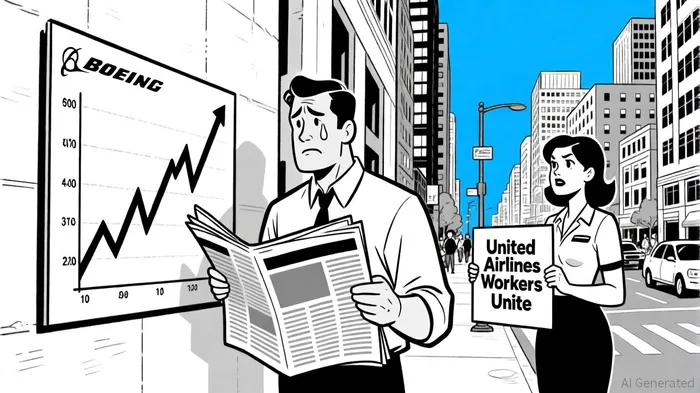
This situation mirrors historical patterns in the aerospace sector, where labor disputes have often led to operational bottlenecks. For example, during the 2008 Boeing strike, the company's stock plummeted by 33%, reflecting investor anxiety over production delays and reputational damage [4]. While Boeing's recent stock performance has shown resilience (up 25.01% year-to-date as of September 2025), the current strike has triggered a 9% decline in the past month, signaling heightened uncertainty [5].
The broader defense sector is not immune to these risks. Analysts warn that Boeing's dominance in defense manufacturing—coupled with its recent financial struggles—poses systemic vulnerabilities. A report by Reason highlights that the U.S. military's reliance on Boeing for programs like the F-47 fighter jet creates a “national security liability,” as delays could ripple through the supply chain and delay modernization efforts [6].
Financial and Strategic Considerations for Investors
The IAM's September 19 approval of a union-crafted contract—including a $10,000 ratification bonus and improved retirement contributions—marks a potential turning point. However, Boeing's dismissal of the proposal as a “publicity stunt” has prolonged the standoff, forcing investors to weigh short-term volatility against long-term sector trends [7].
Historical data suggests that labor disputes can have mixed financial outcomes for defense contractors. For instance, Lockheed Martin's 2025 strike over wages and benefits coincided with a 1.3% drop in its stock price during Q2, despite strong revenue growth [8]. Conversely, Northrop Grumman's stock surged 10% in July 2025 amid improved margins and raised earnings guidance, illustrating how operational flexibility can mitigate labor-related risks [9].
For Boeing, the resolution of the IAM dispute will likely hinge on whether the company can balance union demands with cost discipline. A tentative five-year agreement reached in early September—restoring signing bonuses and improving wages—could stabilize operations, but its approval by IAM members remains uncertain [1]. If the strike persists, Boeing's debt load and regulatory scrutiny (e.g., FAA investigations into 737 MAX production delays) could amplify financial pressures [5].
Investment Timing and Sector Outlook
The aerospace defense sector has historically outperformed the broader market during periods of geopolitical tension, as seen in the 190.61% return of the S&P 500 Aerospace & Defense industry index over the past five years [10]. However, labor disputes introduce a layer of complexity. Deloitte's 2025 industry outlook notes that workforce challenges—such as an aging labor pool and competition for skilled talent—will remain critical risks, with 67% of manufacturers citing talent retention as a top priority [11].
Investors should also consider the role of technological innovation in mitigating labor-related disruptions. The integration of AI and digital tools in maintenance, repair, and overhaul (MRO) services is expected to enhance operational efficiency, potentially offsetting some of the sector's vulnerabilities [12]. For example, companies like Palantir Technologies and Leidos have leveraged advanced analytics to streamline defense production, offering a blueprint for resilience [13].
Conclusion
Boeing's labor negotiations with the IAM represent a microcosm of the aerospace sector's broader challenges and opportunities. While the immediate risks of operational disruption and stock volatility are evident, the resolution of this standoff could provide clarity for investors. A successful agreement would likely stabilize Boeing's defense operations and restore confidence in its ability to meet critical military contracts. Conversely, a prolonged strike could exacerbate Boeing's financial pressures and underscore the sector's reliance on unionized labor—a dynamic that may influence future labor relations across aerospace and defense.
For investors, the key lies in balancing short-term uncertainties with long-term sector fundamentals. As the IAM votes on its proposed contract and Boeing navigates regulatory and operational hurdles, the coming weeks will be pivotal in shaping the trajectory of the aerospace defense industry.





Comentarios
Aún no hay comentarios