
Boeing's New 737 Replacement: A Make-or-Break Opportunity for the Company's Recovery
PorAinvest
martes, 30 de septiembre de 2025, 12:34 pm ET1 min de lectura
BA--
The development of this new aircraft comes amid regulatory challenges for Boeing. Ortberg has emphasized tackling persistent quality and production problems, particularly as the company aims to increase the 737 MAX production limit. The FAA's recent decision to restore Boeing's airworthiness certification power for the 737 MAX and 787 aircraft suggests a shift in regulatory oversight [2]. This move allows Boeing to issue some airworthiness certificates for these aircraft, starting on September 29, 2025, while the FAA maintains direct and rigorous oversight [2].
Boeing's plans to develop a clean-sheet design single-aisle aircraft aim to leapfrog Airbus' A320 family by offering a wider and more fuel-efficient design. This new aircraft is crucial for Boeing to compete with Airbus, as the engineering team will focus on the project once the pending certifications of the 737 MAX versions and 777X aircraft are cleared. The FAA will play a key role in certification, ensuring the new aircraft meets all safety and performance standards.
In summary, Boeing's development of a new single-aisle aircraft signals a significant shift in the company's strategy to compete with Airbus. The FAA's recent regulatory decisions indicate a more collaborative approach, allowing Boeing to move forward with its new aircraft while maintaining stringent oversight.
Boeing plans to develop a clean-sheet design single-aisle aircraft to replace the 737, a platform created in the 1960s. The new aircraft aims to leapfrog Airbus' A320 family and offer a wider and more fuel-efficient design. Boeing needs a new plane to compete with Airbus, and the engineering team will focus on the project once the pending certifications of the 737 Max versions and 777X aircraft are cleared. The FAA will play a key role in certification.
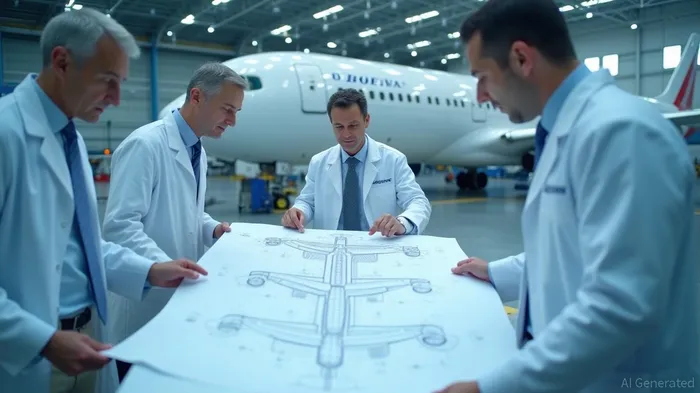
Boeing has begun development of a new single-aisle aircraft that will eventually replace the Boeing 737 MAX, according to reports from the Wall Street Journal [1]. The new aircraft is still in its early stages, with plans being finalized and the company focusing on designing the flight deck for the narrowbody aircraft. Boeing's CEO, Kelly Ortberg, met with Rolls-Royce officials in 2025 to discuss a new engine for the aircraft, indicating a focus on innovation and efficiency [1].The development of this new aircraft comes amid regulatory challenges for Boeing. Ortberg has emphasized tackling persistent quality and production problems, particularly as the company aims to increase the 737 MAX production limit. The FAA's recent decision to restore Boeing's airworthiness certification power for the 737 MAX and 787 aircraft suggests a shift in regulatory oversight [2]. This move allows Boeing to issue some airworthiness certificates for these aircraft, starting on September 29, 2025, while the FAA maintains direct and rigorous oversight [2].
Boeing's plans to develop a clean-sheet design single-aisle aircraft aim to leapfrog Airbus' A320 family by offering a wider and more fuel-efficient design. This new aircraft is crucial for Boeing to compete with Airbus, as the engineering team will focus on the project once the pending certifications of the 737 MAX versions and 777X aircraft are cleared. The FAA will play a key role in certification, ensuring the new aircraft meets all safety and performance standards.
In summary, Boeing's development of a new single-aisle aircraft signals a significant shift in the company's strategy to compete with Airbus. The FAA's recent regulatory decisions indicate a more collaborative approach, allowing Boeing to move forward with its new aircraft while maintaining stringent oversight.


Divulgación editorial y transparencia de la IA: Ainvest News utiliza tecnología avanzada de Modelos de Lenguaje Largo (LLM) para sintetizar y analizar datos de mercado en tiempo real. Para garantizar los más altos estándares de integridad, cada artículo se somete a un riguroso proceso de verificación con participación humana.
Mientras la IA asiste en el procesamiento de datos y la redacción inicial, un miembro editorial profesional de Ainvest revisa, verifica y aprueba de forma independiente todo el contenido para garantizar su precisión y cumplimiento con los estándares editoriales de Ainvest Fintech Inc. Esta supervisión humana está diseñada para mitigar las alucinaciones de la IA y garantizar el contexto financiero.
Advertencia sobre inversiones: Este contenido se proporciona únicamente con fines informativos y no constituye asesoramiento profesional de inversión, legal o financiero. Los mercados conllevan riesgos inherentes. Se recomienda a los usuarios que realicen una investigación independiente o consulten a un asesor financiero certificado antes de tomar cualquier decisión. Ainvest Fintech Inc. se exime de toda responsabilidad por las acciones tomadas con base en esta información. ¿Encontró un error? Reportar un problema


SOBRE NOSOTROS
Nuestra historiaAutores de noticiasBase de conocimientosPolítica de privacidadTérmino de usoDescargo de responsabilidad de corretaje de tercerosTérminos de uso de AIMEDivulgaciones de riesgos de AInvest AICarrerasCONTÁCTENOS
Email: support@ainvest.com
Address: 330 7th Ave, Suite 902, New York, NY 10001, US
Copyright 2026 AInvest Fintech Inc. All rights reserved.


Comentarios
Aún no hay comentarios