
Boeing's 737 Max Slowdown: A Wake-Up Call for Investors!
Generado por agente de IAWesley Park
martes, 1 de abril de 2025, 2:06 am ET2 min de lectura
BA--
Ladies and gentlemen, buckle up! BoeingBA-- has just pulled a major U-turn on its 737 Max production, and you need to know about it. The aerospace giant has slowed down production to a mere 31 planes per month, and the reasons behind this decision are as clear as day. Let's dive in!
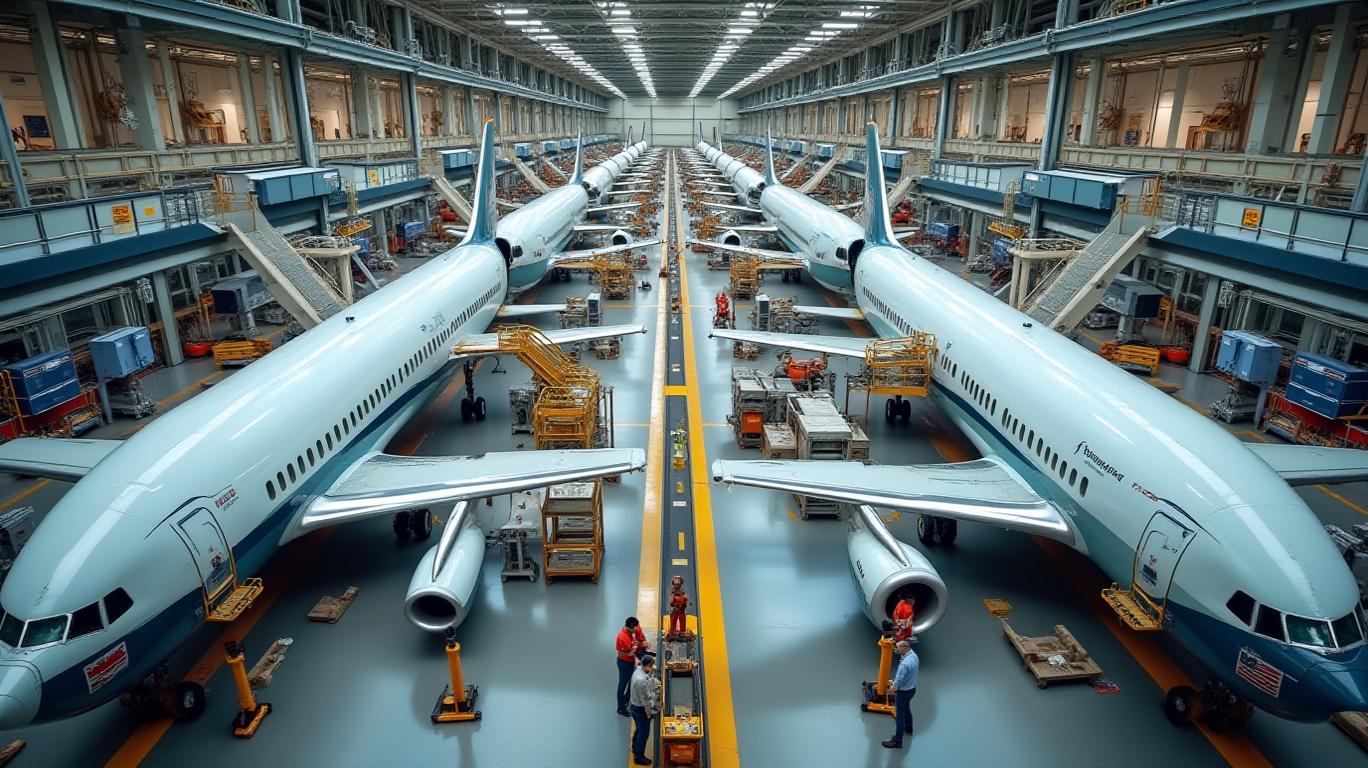
First things first, Boeing's decision to slow down production is all about quality and safety. The Alaska Airlines Flight 1282 incident was a wake-up call, and the company is taking no chances. Brian WestWEST--, Boeing's CFO, made it crystal clear: "Production will remain below 38 per month for the first half of the year and will be higher in the second half, as we move back to 38 per month where the timing of rates beyond 38 [is] predicated on the work we're doing with the FAA." This is a no-brainer! Safety first, always.
But what does this mean for Boeing's financial performance and market position? Well, it's not pretty. In 2024, Boeing delivered 265 737s, an average of 22 monthly. That's a 33% year-on-year decline, folks! And while January 2025 saw a strong start with 45 deliveries, Boeing is still playing catch-up. The company delivered 27 aircraft and Airbus 30 in January of last year. The market is tough, and Boeing is feeling the heat.
Now, let's talk about the supply chain. The reduced production rate has sent shockwaves through Boeing's supply chain, and its relationships with suppliers are feeling the strain. Spirit AeroSystems, a key supplier of fuselages for the 737 Max, has had to adjust its production rates to align with Boeing's reduced output. And let's not forget the recent tariffs on steel and aluminum imposed by President Trump on February 11th, 2025. These tariffs, which impose a 25% duty on imported steel and aluminum products, are expected to impact suppliers of both Boeing and Airbus, potentially increasing the cost of raw materials and finished components. This could lead to higher production costs for Boeing and its suppliers, further straining their relationships and financial health.
But here's the kicker: Boeing is not sitting idly by. The company is working closely with its suppliers, on a part-by-part basis, to support its production plans. And it's in close contact with its customers about the timing of their deliveries. Boeing is committed to steadily increasing its production as it executes its safety and quality plan and works to meet the expectations of the FAA and its airline customers.
So, what's the bottom line? Boeing's decision to slow down 737 Max production is a wake-up call for investors. The company is prioritizing quality and safety, and while this may impact its financial performance in the short term, it's a necessary step to ensure long-term success. Stay tuned, folks, because this story is far from over!
Ladies and gentlemen, buckle up! BoeingBA-- has just pulled a major U-turn on its 737 Max production, and you need to know about it. The aerospace giant has slowed down production to a mere 31 planes per month, and the reasons behind this decision are as clear as day. Let's dive in!
First things first, Boeing's decision to slow down production is all about quality and safety. The Alaska Airlines Flight 1282 incident was a wake-up call, and the company is taking no chances. Brian WestWEST--, Boeing's CFO, made it crystal clear: "Production will remain below 38 per month for the first half of the year and will be higher in the second half, as we move back to 38 per month where the timing of rates beyond 38 [is] predicated on the work we're doing with the FAA." This is a no-brainer! Safety first, always.
But what does this mean for Boeing's financial performance and market position? Well, it's not pretty. In 2024, Boeing delivered 265 737s, an average of 22 monthly. That's a 33% year-on-year decline, folks! And while January 2025 saw a strong start with 45 deliveries, Boeing is still playing catch-up. The company delivered 27 aircraft and Airbus 30 in January of last year. The market is tough, and Boeing is feeling the heat.
Now, let's talk about the supply chain. The reduced production rate has sent shockwaves through Boeing's supply chain, and its relationships with suppliers are feeling the strain. Spirit AeroSystems, a key supplier of fuselages for the 737 Max, has had to adjust its production rates to align with Boeing's reduced output. And let's not forget the recent tariffs on steel and aluminum imposed by President Trump on February 11th, 2025. These tariffs, which impose a 25% duty on imported steel and aluminum products, are expected to impact suppliers of both Boeing and Airbus, potentially increasing the cost of raw materials and finished components. This could lead to higher production costs for Boeing and its suppliers, further straining their relationships and financial health.
But here's the kicker: Boeing is not sitting idly by. The company is working closely with its suppliers, on a part-by-part basis, to support its production plans. And it's in close contact with its customers about the timing of their deliveries. Boeing is committed to steadily increasing its production as it executes its safety and quality plan and works to meet the expectations of the FAA and its airline customers.
So, what's the bottom line? Boeing's decision to slow down 737 Max production is a wake-up call for investors. The company is prioritizing quality and safety, and while this may impact its financial performance in the short term, it's a necessary step to ensure long-term success. Stay tuned, folks, because this story is far from over!

Divulgación editorial y transparencia de la IA: Ainvest News utiliza tecnología avanzada de Modelos de Lenguaje Largo (LLM) para sintetizar y analizar datos de mercado en tiempo real. Para garantizar los más altos estándares de integridad, cada artículo se somete a un riguroso proceso de verificación con participación humana.
Mientras la IA asiste en el procesamiento de datos y la redacción inicial, un miembro editorial profesional de Ainvest revisa, verifica y aprueba de forma independiente todo el contenido para garantizar su precisión y cumplimiento con los estándares editoriales de Ainvest Fintech Inc. Esta supervisión humana está diseñada para mitigar las alucinaciones de la IA y garantizar el contexto financiero.
Advertencia sobre inversiones: Este contenido se proporciona únicamente con fines informativos y no constituye asesoramiento profesional de inversión, legal o financiero. Los mercados conllevan riesgos inherentes. Se recomienda a los usuarios que realicen una investigación independiente o consulten a un asesor financiero certificado antes de tomar cualquier decisión. Ainvest Fintech Inc. se exime de toda responsabilidad por las acciones tomadas con base en esta información. ¿Encontró un error? Reportar un problema


SOBRE NOSOTROS
Nuestra historiaAutores de noticiasBase de conocimientosPolítica de privacidadTérmino de usoDescargo de responsabilidad de corretaje de tercerosTérminos de uso de AIMEDivulgaciones de riesgos de AInvest AICarrerasCONTÁCTENOS
Email: support@ainvest.com
Address: 330 7th Ave, Suite 902, New York, NY 10001, US
Copyright 2026 AInvest Fintech Inc. All rights reserved.


Comentarios
Aún no hay comentarios