
BOE Policy Shifts and Inflation Dynamics: Dhingra's Rate Cut Calls Signal a Pivotal Moment for UK Markets
The Bank of England (BOE) stands at a crossroads as its Monetary Policy Committee (MPC) grapples with diverging views on how to navigate the UK's inflationary landscape. Swati Dhingra, a prominent MPC member, has emerged as a vocal advocate for accelerated interest rate cuts, arguing that inflationary pressures are transitory and rooted in global supply shocks rather than domestic structural issues. Her stance, which contrasts sharply with the more cautious approach of her colleagues, has sparked a pivotal debate over the future of UK monetary policy and its implications for markets.
Dhingra's Dovish Case: Transitory Shocks and Structural Realities
According to a report by Reuters, Dhingra has consistently argued that the UK's current inflation spike—projected to average 3.5% in 2025—is driven by fading global commodity shocks and administered price pressures, such as those in energy and water sectors[1]. She emphasizes that these factors are not unique to the UK but reflect broader global trends, challenging the narrative that high inflation is a “particularly British problem”[2]. By attributing inflation to temporary external forces, Dhingra justifies a more aggressive easing of monetary policy, warning that prolonged high rates risk harming households and the broader economy as inflation trends downward[3].
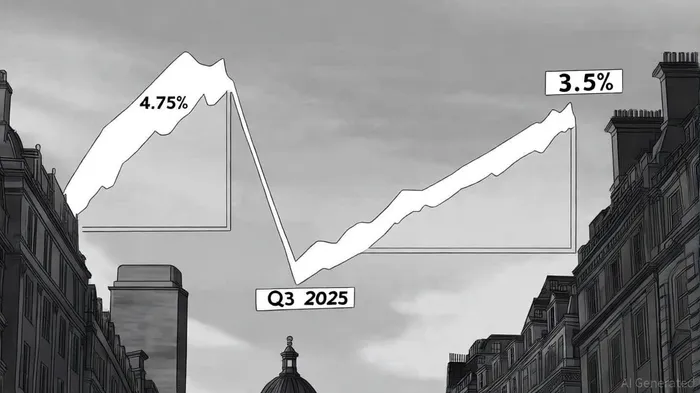
Her analysis is supported by data from the BOE's May 2025 Monetary Policy Report, which forecasts a temporary rise in CPI inflation to 3.5% in Q3 2025 before a subsequent decline[4]. Dhingra's position underscores the importance of monitoring supply-side factors, such as global trade policies and exchange rate movements, which could reintroduce inflationary pressures if the US Dollar appreciates rapidly[5].
The MPC Divide: Dovish Optimism vs. Cautious Prudence
While Dhingra's dovish outlook has gained traction in recent months, it remains at odds with the majority of the MPC, which has prioritized maintaining restrictive rates to anchor inflation expectations. A Bloomberg report highlights that some colleagues, including MPC member Megan Greene, advocate for a cautious approach, citing uncertainties in the inflation outlook and the risk of second-round effects from wage pressures[2]. This divide has led to a slowdown in market expectations for rate cuts, despite the BOE's recent reduction of the key interest rate from 4.75% to 4.5% in late 2025[3].
The BOE's 2% inflation target remains a central benchmark, yet current inflation is well above this threshold. The OECD's projection that the UK will have the second-highest inflation among G7 economies in 2026 further complicates the policy calculus[4]. For investors, this tension between aggressive easing and cautious restraint creates a high-stakes environment where policy outcomes could significantly influence asset valuations.
Market Reactions and Investor Implications
The mixed market response to Dhingra's proposals reflects the uncertainty surrounding the BOE's next steps. The GBP/USD pair has maintained gains near 1.3400 despite dovish comments, indicating that traders remain cautious about the pace of rate cuts[3]. Fixed-income markets, meanwhile, have priced in a gradual reduction in borrowing costs, with 10-year UK gilt yields hovering near 3.8% as of September 2025.
For equity investors, Dhingra's advocacy for faster cuts signals potential relief for sectors sensitive to high borrowing costs, such as housing and small businesses. However, the risk of a prolonged policy standoff within the MPC could prolong market volatility. Investors should also monitor the evolution of administered price pressures, which Dhingra argues will naturally fade but could persist if global energy markets remain unstable[5].
Conclusion: A Pivotal Moment for UK Markets
Swati Dhingra's calls for accelerated rate cuts represent more than a policy preference—they signal a pivotal shift in how the BOE interprets the drivers of inflation and the trade-offs between price stability and economic growth. While her arguments highlight the transitory nature of current inflationary pressures, the broader MPC's caution underscores the risks of misjudging the path of inflation expectations. For investors, the coming months will be critical in determining whether the BOE leans into a more dovish trajectory or maintains a restrictive stance to safeguard long-term price stability.







Comentarios
Aún no hay comentarios