
BNB's Surpassing of UBS in Market Cap: A Paradigm Shift in Financial Infrastructure
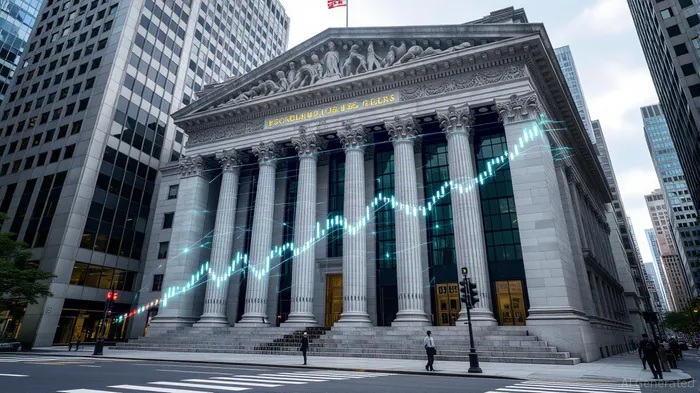
The financial world has witnessed a seismic shift in September 2025 as Binance Coin (BNB) surpassed the market capitalization of the Union Bank of Switzerland (UBS), reaching an unprecedented $130.9 billion [4]. This milestone, with BNBBNB-- trading at $920.87 and analysts projecting a potential surge to $2,200 by 2026 [6], is not merely a crypto market event—it is a harbinger of a broader structural transformation. Decentralized Finance (DeFi) is no longer a fringe experiment but a strategic force redefining traditional banking functions.
DeFi's Strategic Takeover: Efficiency, Inclusion, and Innovation
DeFi's rise is rooted in its ability to outperform traditional banking in three critical areas: transaction efficiency, financial inclusion, and innovation velocity.
Transaction Efficiency
DeFi platforms leverage blockchain technology to automate financial services via smart contracts, eliminating intermediaries and slashing processing times. For instance, a DeFi transaction finalizes in an average of 3.6 seconds, compared to 28 hours for traditional international wire transfers [3]. Transaction fees are equally stark: $1.07 on DeFi platforms versus often double-digit percentages in traditional banking [3]. This efficiency is not theoretical—it is operationalized by platforms like AAVE V2 and JustLend, which reported $4.1 billion and $3.39 billion in lending volumes, respectively, by Q2 2025 [3].Financial Inclusion
DeFi's borderless nature has democratized access to financial services. With 312 million active DeFi users globally—61% under 35—the model is resonating with a generation disillusioned by traditional banking's bureaucratic hurdles [3]. Unlike banks, which require extensive documentation and credit checks, DeFi platforms grant access to anyone with an internet connection and a digital wallet [1]. This has profound implications for the 1.4 billion unbanked individuals worldwide, who now have a viable alternative to exclusionary systems.Hybrid Models and Institutional Adoption
Traditional banks are no longer resisting DeFi—they are integrating it. Over 20% of global financial institutionsFISI-- have either adopted or are considering DeFi solutions by 2024 [4]. BlackRockBLK--, for example, has launched tokenized treasury products, while real estate platforms now offer fractional property ownership via blockchain [1]. These hybrid models combine DeFi's efficiency with traditional banking's regulatory compliance, creating a middle ground that satisfies both innovation and oversight.
The Binance Ecosystem: A Catalyst for Disruption
Binance's role in this paradigm shift cannot be overstated. The Binance ecosystem—encompassing DeFi protocols, staking rewards, and trading fee discounts—has been instrumental in BNB's ascent [1]. Binance co-founder Changpeng Zhao (CZ) has actively lobbied banks to adopt BNB for payments and blockchain applications [5], positioning the token as a bridge between decentralized and traditional finance. With BNB's market cap now exceeding UBS's, the token's utility extends beyond speculative trading; it is becoming a foundational asset in the new financial infrastructure.
Challenges and the Road Ahead
Despite its momentum, DeFi faces hurdles. Regulatory uncertainty remains a double-edged sword: while KYC/AML-compliant DeFi protocols are emerging [1], the lack of a unified global framework creates friction. Additionally, smart contract vulnerabilities and the absence of FDIC-like protections pose risks [1]. However, innovations like cross-chain interoperability and AI-powered smart contracts are addressing these gaps. Cross-chain bridges reduce costs and improve usability [3], while AI optimizes yield strategies and automates risk management [3].
Conclusion: A New Financial Order
BNB's surpassing of UBSUBS-- is not an anomaly—it is a symptom of a deeper trend: the decentralization of financial infrastructure. DeFi's strategic takeover of traditional banking functions is accelerating, driven by efficiency, inclusion, and institutional adoption. For investors, this represents a pivotal moment. The question is no longer if DeFi will reshape finance, but how quickly. As Binance's ecosystem and DeFi's hybrid models mature, the financial landscape will continue to tilt toward a decentralized future.





Comentarios
Aún no hay comentarios