
BNB Accumulation Strategy in U.S. Listed Funds: Leveraging Binance's Long-Term Value and Regulatory Resilience
The institutionalization of BNBBNB-- as a strategic asset has reached a critical inflection point in 2025. U.S.-listed funds and corporate treasuries are increasingly allocating capital to Binance's native token, driven by its dual role as a store of value and a catalyst for ecosystem innovation. This trend is underpinned by Binance's evolving regulatory resilience and the emergence of institutional-grade vehicles designed to mitigate compliance risks while capturing long-term value accrual.
Institutional Allocations: A New Paradigm for BNB
The most striking development in 2025 is the launch of U.S.-listed treasury companies explicitly structured to hold and manage BNB. B Strategy, a firm led by former Bitmain CFO Max Hua and Metalpha co-founders, has announced a $1 billion vehicle in collaboration with YZi Labs (formerly Binance Labs). This entity aims to function as the "Berkshire Hathaway of the BNB ecosystem," reinvesting in core infrastructure, granting innovative projects, and supporting community initiatives while maintaining institutional-grade governance and transparent reporting, according to a Morningstar report.
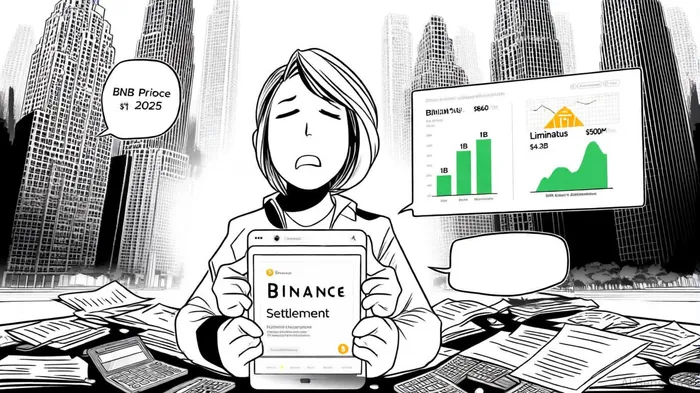
Parallel efforts include China Renaissance Holdings' $600 million U.S.-listed fund, which positions BNB as its primary asset, and corporate treasuries from Liminatus Pharma ($500 million), CEA Industries ($500 million), and Windtree Therapeutics ($700 million), according to a CoinSpeaker report. These allocations reflect a broader shift toward digital asset treasuries (DATs), where companies optimize returns by holding BNB as a corporate asset while leveraging its utility in decentralized finance (DeFi) and blockchain innovation, according to a DLA Piper briefing.
The institutional appeal of BNB lies in its dual utility: as a high-liquidity asset with a market capitalization exceeding $180 billion and as a foundational token for Binance's ecosystem, which includes decentralized exchanges, smart contracts, and cross-chain interoperability solutions, according to a CoinMarketTrace analysis.
Binance's Regulatory Resilience: A Cornerstone of Confidence
Critics of BNB's institutional adoption often cite regulatory uncertainty, particularly in the U.S. However, Binance's 2025 compliance milestones have significantly strengthened its resilience. The dismissal of the SEC's civil enforcement action in May 2025, coupled with a $4.3 billion AML settlement with U.S. federal agencies, marked a pivotal turning point, as reported by CoinSpeaker. This settlement required Binance to implement robust KYC protocols, appoint an independent monitor, and enhance transaction surveillance systems.
Binance US has further restructured its operations to focus exclusively on institutional clients, hiring hundreds of former law enforcement professionals and introducing advanced AML measures such as ID verification and selfie authentication, as noted by DLA Piper. These efforts align with global regulatory demands, including the EU's Markets in Crypto-Assets (MiCA) framework and APAC licensing requirements in Japan and Singapore, as described by CoinMarketTrace.
The exchange's ability to navigate these challenges while expanding custody and wallet solutions underscores its adaptability. As noted by a report from DLA Piper, the crypto industry is transitioning from enforcement-based regulation to structured compliance frameworks, a shift Binance has actively embraced, according to a FinCrimeCentral report.
Strategic Implications for Investors
The convergence of institutional allocations and regulatory progress creates a compelling case for BNB accumulation. U.S.-listed funds like B Strategy and China Renaissance are not merely speculating on price volatility; they are building infrastructure to institutionalize BNB's role in capital markets. By holding BNB as a treasury asset and reinvesting in its ecosystem, these vehicles amplify its utility and scarcity, driving long-term value accrual.
For investors, the key risks remain regulatory shifts and market volatility. However, Binance's compliance overhauls and the diversification of institutional strategies (e.g., corporate treasuries, ETFs) mitigate these risks. The recent price surge to $860-a 300% increase from early 2024-demonstrates the market's confidence in this thesis, as CoinMarketTrace notes.
Conclusion
The institutionalization of BNB represents a paradigm shift in how digital assets are perceived and managed. By leveraging Binance's regulatory resilience and the strategic vision of U.S.-listed funds, investors can position themselves to benefit from a token that is increasingly viewed as a bridge between traditional finance and blockchain innovation. As the crypto market matures, BNB's role as both a store of value and a utility token will likely solidify, making it a cornerstone of diversified portfolios.






Comentarios
Aún no hay comentarios