
BMW's Strategic Mastery in the Premium EV Transition: A Blueprint for Sustained Growth in the U.S. and Europe
The global automotive industry's transition to electrification has become a high-stakes chess match, with premium automakers like BMW and Mercedes-Benz vying for dominance. In 2025, BMW has emerged as a standout performer, leveraging a flexible, multi-drivetrain strategy to outpace rivals and secure growth in the U.S. and European markets. This strategic agility-rooted in technological innovation, infrastructure partnerships, and a nuanced understanding of regional demand-positions BMW as a leader in the premium EV transition.
A Balanced Approach to Electrification
BMW's success in 2025 stems from its refusal to adopt a "one-size-fits-all" approach to electrification. While competitors like Mercedes-Benz and Volvo have pivoted aggressively toward all-electric portfolios, BMW has maintained a diversified strategy, offering fully electric vehicles (BEVs), plug-in hybrids (PHEVs), and hydrogen fuel-cell options. This flexibility has allowed the company to navigate divergent market conditions. For instance, in the U.S., where EV adoption remains uneven, BMW's hybrid offerings have cushioned the impact of slower BEV uptake. In Q2 2025, the company delivered 111,027 BEVs globally, but its broader electrified portfolio-including PHEVs-contributed to a 6.5% sales increase in Europe and 1.6% growth in the U.S., according to the BMW Group Q2 report.
Data from the Q2 earnings call transcript underscores this advantage: while BEV sales dipped 21.2% in Q2 compared to 2024, the company's overall premium vehicle deliveries rose 10.1% in Europe and 8.2% year-to-date. This resilience contrasts sharply with Mercedes-Benz, which saw its EV sales decline by 14% in Europe during the same period, as shown in a BMWBlog analysis. BMW's CEO, Oliver Zipse, has emphasized that a "singular focus on EVs is no longer viable," citing the need to align with infrastructure readiness and consumer preferences, according to an EvXL article.
Technological Innovation: The Neue Klasse Platform
Central to BMW's EV strategy is the Neue Klasse platform, which underpins the iX3, an all-electric mid-size SUV launching in late 2025. According to an AutotimesNews piece, the platform integrates sixth-generation eDrive technology with 800V architecture, enabling 30% faster charging and a 30% increase in range compared to previous models. The iX3's 400-mile range and AI-driven features, such as a panoramic head-up display, position it as a direct competitor to Tesla's Model X and Audi's e-tron GT, as reported by The Observer.
The Neue Klasse platform also exemplifies BMW's commitment to sustainability. By integrating the battery as a structural component, the company has reduced vehicle weight and enhanced rigidity, improving both efficiency and performance, as AutotimesNews explains. Additionally, BMW's partnerships with SK On and Redwood Materials for closed-loop battery recycling align with its circular economy goals, addressing investor concerns about supply chain sustainability-a topic also covered by The Observer.
Infrastructure and Partnerships: Powering the EV Ecosystem
BMW's strategic investments in charging infrastructure have further solidified its competitive edge. In Europe, the company's joint venture IONITY has expanded to 4,000 fast-charging points across 600 stations, primarily along motorways and highways, according to a Rabobank analysis. This network supports the continent's growing EV fleet-over 9.3 million BEVs and 5.2 million PHEVs as of March 2025-and positions BMW to capitalize on the projected 50-million EV market in Europe by 2030.
In the U.S., BMW has adopted a "local-for-local" production model, with factories in Spartanburg, South Carolina, and Hungary to mitigate supply chain risks. The company's eRoute feature, which optimizes travel by calculating charging stops, enhances the ownership experience and addresses range anxiety-a persistent barrier to EV adoption, as The Observer reported. Meanwhile, home charging solutions like the Connected Home Charging Package, which integrates with solar systems, cater to affluent customers seeking seamless sustainability, per the Rabobank analysis.
Marketing and Brand Positioning: Luxury Meets Innovation
BMW's marketing strategies in the U.S. and Europe reflect its dual emphasis on heritage and innovation. In Europe, the brand leverages its "Sheer Driving Pleasure" ethos, combining emotional storytelling with cutting-edge technology. For example, the iX2's launch featured virtual influencer Lil Miquela, appealing to tech-savvy consumers while reinforcing BMW's digital-first approach, according to a BrandVM analysis. In the U.S., the company has focused on affordability, with mid-range EVs like the i4 bridging the gap between traditional luxury and mass-market EVs.
Digital transformation has also been pivotal: BMW's immersive showrooms and AI-enhanced iDrive X system create a personalized experience, aligning with the preferences of affluent, tech-oriented buyers, as BrandVM notes. These efforts have paid off: in Q1 2025, the i4 saw a 57% sales increase to 7,125 units, while the iX grew by 23.1% to 3,626 units, per a BMWBlog report.
Challenges and the Road Ahead
Despite its successes, BMW faces headwinds. The 15.5% decline in Chinese sales-its largest market-highlights the risks of geopolitical volatility and shifting consumer preferences, as the BMW Group Q2 report shows. However, the company's U.S. and European growth, coupled with its 1.5-millionth EV delivery milestone, demonstrates its ability to adapt, as reported by eMobilityPlus.
Looking ahead, BMW's roadmap includes hydrogen fuel-cell vehicles by 2028 and a target of 50% EV sales by 2030, plans The Observer has also outlined. These plans, combined with its flexible strategy and infrastructure investments, suggest that the company is well-positioned to maintain its premium EV leadership.
Conclusion
BMW's strategic positioning in the premium EV transition is a masterclass in balancing innovation with pragmatism. By diversifying its powertrain offerings, investing in infrastructure, and tailoring its approach to regional markets, the company has navigated the complexities of electrification while outperforming rivals. For investors, this resilience-and the 1.5-millionth EV milestone-signals a brand that is not just surviving the transition but thriving in it.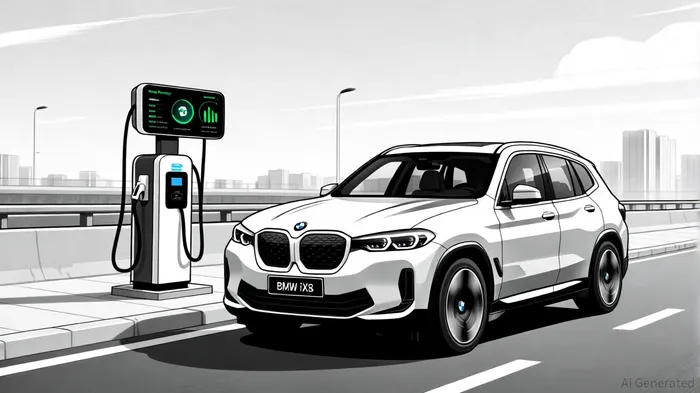







Comentarios
Aún no hay comentarios