
BMO Capital's Bullish Outlook on Duke Energy: Strategic Resilience in the Energy Transition Era
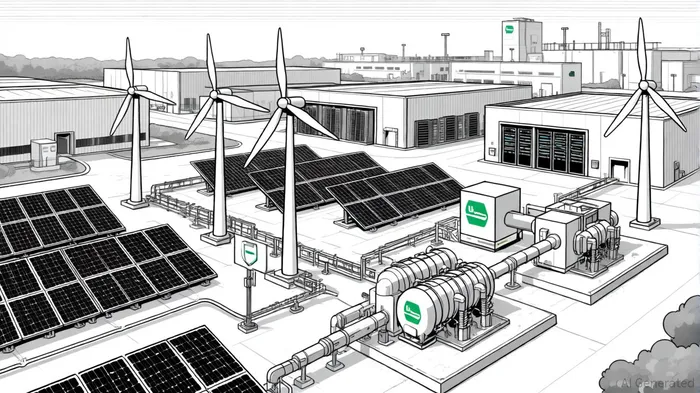
BMO Capital's sustained bullish stance on Duke EnergyDUK-- (DUK) stock reflects a compelling alignment between the company's strategic initiatives and the evolving energy transition. As of September 2025, BMOBMO-- analyst James Thalacker has reiterated a “Buy” rating with a price target of $132, a significant increase from earlier projections[1]. This optimism is rooted in DukeDUK-- Energy's robust capital expenditure plans, regulatory adaptability, and forward-looking investments in clean energy infrastructure.
Strategic Resilience: Capitalizing on Energy Transition Demands
Duke Energy's 2025–2029 capital expenditure plan of $83 billion—a 13.7% increase from prior forecasts—positions the company to address surging electricity demand driven by AI data centers and industrial electrification[1]. This surge is not merely speculative; it is underpinned by concrete regulatory approvals. For instance, favorable rate cases in Indiana, the Carolinas, and Florida have unlocked $45 billion in future rate-based investments[3]. These approvals validate Duke's ability to recover costs for grid modernization and clean energy projects, ensuring a stable return on capital.
The company's five-year plan includes adding 5 gigawatts of natural gas generation capacity by 2029[2], a strategic move to balance grid reliability with decarbonization goals. While critics may question the role of natural gas in a net-zero future, Duke's approach is pragmatic: it serves as a transitional bridge while the company invests $40 billion in zero-carbon generation, including solar, wind, and nuclear technologies[3]. This dual-track strategyMSTR-- mitigates regulatory and market risks, a critical factor in BMO's valuation model.
Innovation and Partnerships: A Blueprint for Long-Term Value
Duke Energy's commitment to innovation is evident in its hydrogen-enabled natural gas technologies and partnerships with industry leaders like GE VernovaGEV-- and Brookfield Asset Management[3]. For example, the company has acquired hydrogen-capable gas turbines and secured long-term gas supply agreements to decarbonize its operations[3]. These initiatives align with its interim targets: an 80% reduction in Scope 1 emissions by 2040 and a 50% reduction in Scope 2 and 3 emissions by 2035[4].
Moreover, Duke's pilot project with NGK to test sodium-sulfur battery technology for grid-scale storage[5] underscores its proactive approach to integrating renewable energy. Such innovations enhance grid resilience—a key concern for regulators and investors—and position Duke to capitalize on the $75 billion allocated to grid modernization in its 10-year plan[3]. BMO Capital's analysts highlight these efforts as critical to maintaining affordability and reliability, two pillars of customer satisfaction in a sector facing rising scrutiny[1].
Regulatory and Market Tailwinds
BMO's bullish thesis is further reinforced by Duke's regulatory adaptability. The company's constructive outcomes in rate cases across multiple states demonstrate its ability to navigate complex regulatory environments[3]. This adaptability is crucial in an industry where policy shifts can dramatically impact margins. Additionally, Duke's expanding rate base—driven by infrastructure upgrades and clean energy projects—provides a predictable revenue stream, a key metric for BMO's valuation analysis[2].
The data center boom, another tailwind, is particularly noteworthy. Duke's service territories are attracting major tech firms seeking reliable energy infrastructure, a trend that directly boosts gas sales and grid demand[1]. BMO analyst Thalacker has emphasized that this economic development creates a “virtuous cycle” of investment and growth, further justifying the $132 price target[1].
Conclusion: A Model for Sector Resilience
BMO Capital's confidence in Duke Energy is not merely a short-term bet but a recognition of the company's strategic foresight in navigating the energy transition. By balancing near-term reliability with long-term decarbonization, Duke has positioned itself as a leader in a sector undergoing profound transformation. The $145 billion 10-year capital plan[3], coupled with regulatory approvals and innovative partnerships, ensures that Duke Energy remains a resilient player in an increasingly volatile market. For investors, this alignment of strategy and execution offers a compelling case for long-term value creation.





Comentarios
Aún no hay comentarios