
Bloom Energy's 18% Surge: The AEP Option Exercise as a Binary Catalyst
The stock's explosive move was a direct reaction to a specific, high-stakes event. On January 8, 2026, shares of Bloom EnergyBE-- surged over 18% after American Electric PowerAEP-- (AEP) confirmed it had exercised an option to buy 900 megawatts of fuel cells. This action expanded a November 2025 deal into a definitive $2.65 billion transaction.
The mechanics of the deal are critical. The contract is for a single, massive project: a 1.8-gigawatt AI "Factory" campus in Cheyenne, Wyoming. Bloom is committed to deploying 900 megawatts of its solid-oxide fuel cells to provide continuous, base-load power directly to the campus. This is a "behind-the-meter" solution that bypasses the traditional utility grid, a key selling point for the project's aggressive timeline.
The financial terms include a 20-year offtake agreement for 100% of the power. This long-term contract is a major de-risking event for Bloom, locking in revenue. However, the agreement includes a built-in financial safety net for AEPAEP--. The deal is contingent on certain conditions being met by the second quarter of 2026, and AEP would be financially compensated for all capital and costs incurred if those conditions aren't satisfied. This clause mitigates AEP's exposure but also sets a hard deadline for the project's viability.
The catalyst's timing is precise. The option exercise happened earlier in the week, with the news breaking just before the market opened on Thursday. This triggered the pre-market surge and carried through to a more than 18% gain in early trading. The event is binary: the deal is now confirmed, or it isn't. The stock's reaction shows the market is pricing in the near certainty of the contract's execution, given the scale and the financial protections in place.
The Execution Timeline: A 2026-2027 Binary Setup
The deal's binary nature is now defined by a tight, concentrated timeline. With the option exercised and regulatory approvals secured, the project's clock is ticking. The first data halls are expected to go online by late 2026, with the entire 1.8-gigawatt campus targeted for completion by mid-2027. This aggressive schedule is the core of the investment thesis-and the primary source of risk.
The project's "grid-independent" model, which uses Bloom's solid-oxide fuel cells paired with natural gas and carbon capture, is key to this speed. By bypassing the traditional utility grid, the developers have avoided the years-long interconnection delays that plague most major industrial projects. This is a critical advantage, as evidenced by the unanimous vote by Laramie County commissioners on January 5 to approve the massive data center campus and its associated power generation. The approval clears the way for immediate construction.
Yet, this speed creates a high-stakes execution window. The entire revenue stream from the 20-year offtake agreement is locked in, but it only begins when the first data halls are operational. Any significant delay beyond the mid-2027 target could trigger a valuation reset. The market is pricing in flawless execution now, but the risk is that scaling a 900-megawatt fuel cell deployment across a 1,400-acre site is a monumental logistical and engineering challenge. The project's total capital expenditure is estimated at over $50 billion, with the energy infrastructure alone representing a $7-billion investment. This scale magnifies the consequences of cost overruns or construction setbacks.
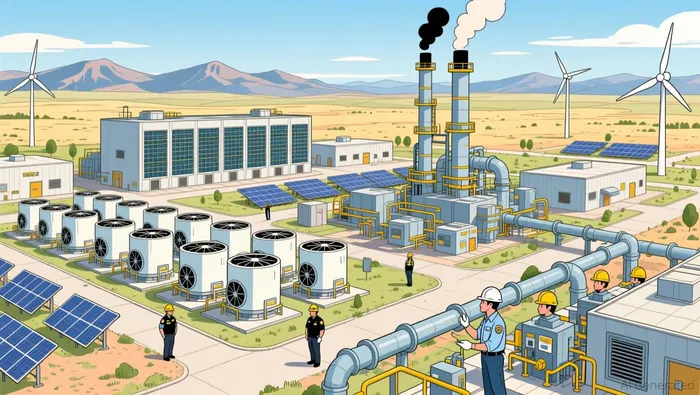
The binary setup is clear. Success by mid-2027 means Bloom unlocks a massive, long-term revenue stream and validates its technology as essential infrastructure for the AI era. Failure to meet the timeline, however, would expose the deal's dependence on a single, complex project and likely force a reassessment of Bloom's growth trajectory. For now, the stock's surge reflects confidence in the timeline. The next catalyst will be the first construction milestones, with the real test arriving in late 2026.
Valuation and Catalysts: What Moves the Stock Next
The stock's surge has priced in a best-case scenario. The market is now betting that Bloom can flawlessly execute a massive, multi-year buildout. The binary nature of the AEP deal means the stock's next move hinges on whether this single project delivers as promised-or if it stumbles.
The valuation setup is now binary. On one side, success means Bloom unlocks a $2.65 billion revenue stream over 20 years, validating its technology as essential for the AI power race. On the other, any significant delay or cost overrun would expose the company's heavy dependence on this one contract. The pre-market pop suggests investors are leaning toward the former, but the risk of the latter is now front and center.
The immediate catalyst for further moves will be the signing of additional large-scale fuel cell contracts. The market will scrutinize any new deal for similar scale and financial terms. The AEP agreement was a landmark, but it also sets a high bar. Future announcements will be judged against this benchmark for execution speed, contract length, and customer quality. Any deal that matches or exceeds it could drive another leg higher. Conversely, a gap in follow-through would likely trigger a reassessment.
For now, the stock is trading on the promise of the Cheyenne project. The next tangible catalyst is the first construction milestone, expected in late 2026. Until then, the stock's path will be dictated by how well the company manages the project's immense logistical and financial demands. The market has spoken with its checkbook; the company now has to deliver.





Comentarios
Aún no hay comentarios