
Blood and Profit: Why Treated Secondary AML is the Next Big Opportunity in Oncology
The cancer drug pipeline is littered with failures, but a clear path to outsized returns is emerging in a rare, high-risk subset of acute myeloid leukemia (AML): treated secondary AML (TS-AML). With median survival times below six months and response rates to current therapies hovering at 24–32%, this subgroup represents a catastrophic unmet need—and a multi-billion-dollar opportunity for biopharma firms ready to act.
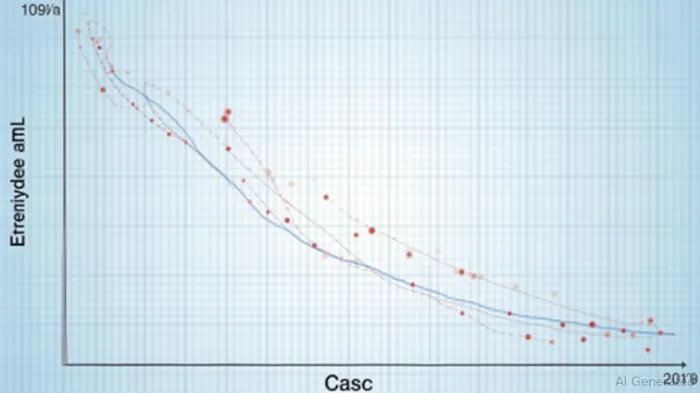
Let's start with the numbers. Recent data shows TS-AML patients, who develop AML after prior treatment for myelodysplastic syndrome or other blood cancers, face outcomes so dire they defy modern oncology's progress. Younger TS-AML patients have a median overall survival (OS) of 5 months—half that of other high-risk AML subtypes like therapy-related AML. Older patients fare even worse, with 1-year survival rates at 22%.
The Broken Therapies
Current standards are failing catastrophically. Standard chemotherapy regimens like “7+3” (cytarabine plus daunorubicin) yield complete response rates of just 24–32%, while high-dose cytarabine (HiDAC) provides no benefit. Even FLT3 inhibitors—once hailed as breakthroughs—only work in subsets of patients and are undermined by resistance. For instance, the median OS for TS-AML patients with FLT3 mutations drops to 4.9 months without targeted combination therapy.
This creates a vacuum. The market for AML therapies is projected to hit $6.5 billion by 2028, but companies focusing solely on broad AML populations are missing the biggest prize: the $2.1 billion annual addressable market represented by TS-AML and other high-risk subgroups.
The Winning Combinations
Two pathways dominate the solution space: venetoclax-based therapies and hematopoietic stem cell transplantation (HSCT).
- Venetoclax: The Backdoor to Survival
Venetoclax, developed by AbbVie (ABBV), has shown transformative potential when combined with intensive chemotherapy. In the CAVEAT trial, TS-AML patients treated with a reduced-dose “5+2” regimen plus venetoclax achieved a 42% overall response rate—comparable to other regimens but with a critical edge: 90% MRD negativity in responders. This matters because MRD-negative remissions are the gateway to curative HSCT.
The real win comes when venetoclax is paired with FLT3 inhibitors. In trials, this combo eliminates resistance mechanisms, achieving 94% complete responses in FLT3-mutated TS-AML. Astellas' gilteritinib (Xospata) and Novartis' midostaurin are already in play, but the next-gen entrants—like CCM Biosciences' CCM-405—could dominate by targeting even the most resistant mutations, including D835Y and F691L.
- HSCT: The Final Frontier
Allogeneic stem cell transplants (alloSCT) are the only curative option, but only 20–30% of TS-AML patients currently qualify due to age or comorbidities. Companies advancing HSCT enabling therapies—like reduced-intensity conditioning regimens or immune checkpoint inhibitors to reduce graft-versus-host disease—are primed to unlock this market.
The Investment Case: Follow the Pipeline
The race is on to carve out this niche. Here's where to focus:
- CCM Biosciences (Private, but trackable via PMC Group): Their next-gen FLT3 inhibitors could redefine treatment. With planned IND filings in 2025 and data at ASCO, this is the highest-risk, highest-reward play.
- AbbVie (ABBV): Venetoclax's combination potential is unmatched, but its stock trades at a discount to peak sales expectations. A successful Phase III trial in TS-AML could send it soaring.
- Astellas (ALPMF): Gilteritinib's role in combination regimens is underappreciated. Watch for TS-AML-specific data in 2025.
The Clock is Ticking
TS-AML's 5-month survival window creates a critical time-to-market advantage for early entrants. The first company to demonstrate a 12-month OS improvement could capture 50%+ market share.
The FDA's recent shift toward subgroup-specific approvals (e.g., CPX-351 for t-AML) signals regulatory tailwinds. Investors who bet on TS-AML now are positioning themselves for the next wave of oncology innovation—and the returns that come with solving a problem that kills 90% of patients within two years.
This isn't just about drugs. It's about rewriting survival curves for a forgotten subgroup—and turning that into a multi-billion-dollar payoff. The question is: Will you be on the buying or the selling side of this trade?








Comentarios
Aún no hay comentarios