
BlockDAG: Redefining Blockchain ROI Through Next-Gen DAG Architecture
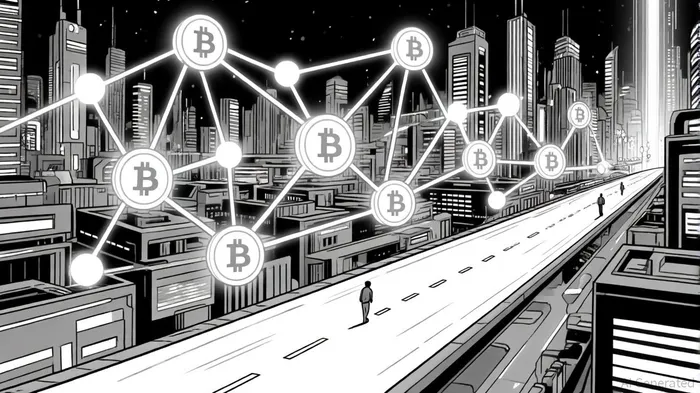
In the ever-evolving cryptocurrency landscape, the blockchain trilemma—balancing decentralization, security, and scalability—has long been a barrier to mass adoption. BlockDAG, a hybrid Directed Acyclic Graph (DAG) and Proof-of-Work (PoW) protocol, is emerging as a disruptive force by addressing these limitations. With a projected ROI of up to 30,000x by 2027[1], BlockDAG's innovative architecture and strategic market positioning make it a compelling case study for next-gen blockchain protocols. This analysis explores how BlockDAG's technical design, financial traction, and real-world utility create a unique value proposition for investors.
Technical Innovation: Solving the Trilemma
BlockDAG's hybrid model combines the parallel processing of DAG with the decentralized security of PoW. Unlike traditional blockchains, which process transactions sequentially, BlockDAG's DAG structure allows multiple transactions to be validated simultaneously, achieving throughput of 2,000–15,000 transactions per second (TPS)[2]. This dwarfs the performance of major competitors like SolanaSOL-- (1,133 TPS) and EthereumETH-- (15–45 TPS)[2], making it a viable backbone for high-speed DeFi, cross-border payments, and microtransactions.
The project's dual-mining model further enhances accessibility and security. Hardware-based PoW (via X10 miners) ensures robust network validation, while the X1 mobile app democratizes participation through Proof of Engagement (PoE), attracting 2.5 million users[3]. This hybrid approach not only mitigates centralization risks but also fosters a broad, community-driven ecosystem.
EVM compatibility is another critical differentiator. By supporting Ethereum-based dApps and smart contracts, BlockDAG reduces friction for developers, accelerating adoption[4]. A live testnet with 300+ dApps in development[5] underscores its readiness for real-world deployment.
Financial Traction: A $323M Presale and Scalable Ecosystem
BlockDAG's presale has raised over $323 million, with 20.7 billion tokens sold[3], delivering early ROI of up to 2,660%[6]. This financial momentum is underpinned by a robust mining economy: 19,350 ASIC units sold and a scalable X100 hardware miner[3] ensure network security while broadening participation.
The project's roadmap includes a mainnet launch in early 2025 and listings on 20+ exchanges[4], positioning it to compete with established Layer 1s like Polygon (MATIC) and PolkadotDOT-- (DOT). Strategic partnerships with global sports teams and real-world integration initiatives further amplify its market visibility[6].
Real-World Utility: From DeFi to Cross-Border Payments
BlockDAG's architecture is designed for practical applications. Its DeFi ecosystem includes a native DEX, lending platforms, oracles, and cross-chain bridges[4], all set to launch ahead of its mainnet. These tools address Ethereum's scalability and gas fee challenges, offering a more efficient alternative for decentralized finance.
In cross-border payments, BlockDAG's high throughput and low fees could disrupt traditional remittance systems. For instance, projects like Kaspa ($KAS) have already demonstrated DAG's potential for one-second confirmations[7], a critical factor for real-time transactions. BlockDAG's hybrid PoW-DAG model enhances this further, ensuring both speed and security.
Risks and Challenges
Despite its promise, BlockDAG faces hurdles. The technical execution of its DAG-PoW hybrid remains untested at scale, and post-presale market dynamics could introduce volatility. Additionally, competition from established blockchains and other DAG projects like Kaspa requires continuous innovation to maintain its edge[6].
Strategic ROI Opportunities
For investors, BlockDAG represents a high-risk, high-reward opportunity. Its $323 million presale, 2.5 million mobile miners, and 15,000 TPS throughput[2] signal strong early traction. If the project executes its roadmap—launching DeFi tools, securing exchange listings, and expanding real-world adoption—it could achieve the projected 30,000x ROI by 2027[1].
Conclusion
BlockDAG's hybrid DAG-PoW architecture, EVM compatibility, and robust mining economy position it as a transformative force in the crypto space. By addressing the blockchain trilemma and prioritizing real-world utility, it offers a compelling ROI story for investors seeking exposure to next-gen protocols. While risks remain, the project's technical innovation and market traction make it a standout contender in 2025's crypto landscape.






Comentarios
Aún no hay comentarios