
BlockDAG's Governance Model and Scalability Potential: Decentralized Leadership and Sustainable Growth in a $425M+ Presale Ecosystem
The blockchain industry is at a pivotal juncture, where scalability, governance, and sustainable growth are no longer optional-they are existential requirements. BlockDAG, a Layer-1 project that has raised over $425 million in its presale by October 2025, is positioning itself as a contender in this race. With a hybrid Directed Acyclic Graph (DAG) + Proof-of-Work (PoW) architecture and a roadmap that balances centralized execution with decentralized governance, BlockDAG's approach offers a compelling case study for investors seeking projects that prioritize both technical innovation and community-driven evolution.
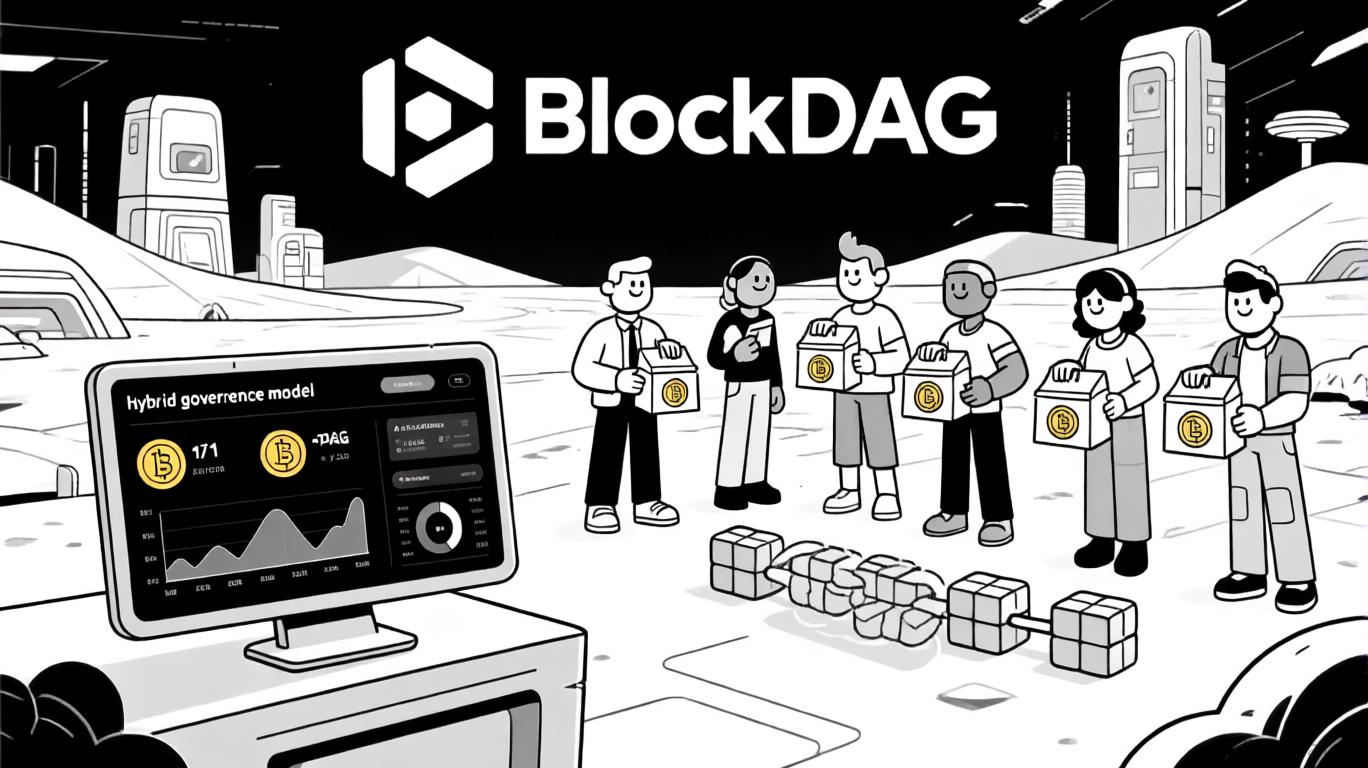
!BlockDAG imageCentralized Execution, Decentralized Vision
BlockDAG currently operates under a centralized governance model, with CEO Antony Turner and his core team overseeing strategic decisions, infrastructure deployment, and ecosystem development, as reported by a Cryptoninjas profile. This structure has enabled rapid execution, including the deployment of over 20,000 mining units, the onboarding of 3 million+ mobile miners, and the expansion of global logistics and technical infrastructure, according to a Blockonomi article. However, the project has notNOT-- shied away from its long-term vision: a decentralized governance framework where BDAG token holders play a direct role in decision-making.
According to the project's roadmap, this transition will involve the introduction of a Community Governance Framework, granting token holders voting rights on protocol upgrades, ecosystem development, and other critical decisions, as outlined in TheNewsCrypto AMA. This shift aligns with broader industry trends, where projects like EthereumETH-- and SolanaSOL-- have demonstrated that decentralized governance fosters transparency and stakeholder trust, a pattern explored in a ScienceDirect article. BlockDAG's hybrid approach—centralized leadership for execution, decentralized mechanisms for long-term sustainability—mirrors the strategies of early-stage protocols that later transitioned to DAO-like models, as reported in a ChainRumors report.
Scalability: The Technical Edge
BlockDAG's hybrid DAG + PoW model is a key differentiator. By leveraging DAG's parallel transaction processing capabilities, the network can handle up to 15,000 transactions per second (TPS), outpacing Ethereum's 15–45 TPS and Solana's 1,133 TPS, according to a CoinCentral review. This scalability is further enhanced by WebSocket-based monitoring tools, which provide real-time visibility into governance contract events, such as proposal creation and vote submissions, described in a BlockDAG dev release. These tools not only support decentralized governance but also enable live dashboards and audit logs, ensuring transparency for stakeholders.
The project's technical infrastructure is also designed for adaptability. The nodeworker binary and EVM Worker updates allow for flexible node deployment and optimized smart contract execution, while EVM compatibility attracts developers migrating from Ethereum, as discussed in an Analytics Insight article. With 4,500+ EVM-compatible developers already building over 300 decentralized applications (DApps), BlockDAG's ecosystem is gaining momentum, per an Optimisus release.
Presale Funding: Fueling Sustainable Growth
The $425M+ presale has provided BlockDAG with the financial firepower to execute its ambitious roadmap. A significant portion of these funds has been allocated to infrastructure development, including the deployment of high-performance mining rigs (X10, X30, X100) and the X1 mobile app, which democratizes mining access, as covered in a KuCoin report. Additionally, the project has secured partnerships with global sports teams like Inter Milan and Borussia Dortmund, expanding its brand reach and user base, according to a Bitget article.
Critically, the presale's success has also enabled BlockDAG to prioritize on-chain transparency. All smart contracts, configuration files, and live metrics are publicly accessible via the BlockDAG GitBook and Explorer, addressing community demands for accountability, as previously reported by Blockonomi. This transparency is a cornerstone of its future governance model, where token holders will need trust in the system's integrity to participate effectively.
Challenges and Opportunities
While BlockDAG's trajectory is promising, challenges remain. The hybrid DAG + PoW model, though theoretically robust, is untested at scale. Competing with established blockchains like Ethereum and emerging rivals like Solana will require consistent innovation and execution. Additionally, the transition to decentralized governance must be carefully managed to avoid fragmentation or inefficiency.
However, the project's presale success and strategic partnerships suggest strong market confidence. With a projected post-mainnet price of $1 (implying a 3,632% return on investment for early contributors, per the Bitget article), BlockDAG's financial incentives align with its technical and governance goals.
Conclusion: A Project Built for the Long Game
BlockDAG's governance model and scalability potential reflect a project designed for both immediate execution and long-term sustainability. By balancing centralized leadership with a clear path to decentralization, it addresses one of blockchain's most persistent challenges: how to scale without sacrificing community trust. The $425M+ presale has provided the resources to build a robust infrastructure, while technical innovations like DAG-based consensus and real-time governance tools position it as a serious contender in the Layer-1 space.
For investors, BlockDAG represents a unique opportunity to back a project that is not only solving technical problems but also redefining governance in a way that prioritizes transparency, inclusivity, and adaptability. As the blockchain industry evolves, projects that can navigate the transition from centralized execution to decentralized governance will likely lead the next wave of innovation.






Comentarios
Aún no hay comentarios