
BlockDAG's Next-Gen Architecture and Scalability: A Case for Outperforming XRP and PI Coin in 2025
The blockchain industry in 2025 is defined by a critical divide: projects that prioritize architectural innovation for scalability versus those anchored to legacy use cases or speculative user growth. BlockDAG, a hybrid blockchain platform leveraging Directed Acyclic Graph (DAG) technology, has emerged as a compelling contender to outperform both XRPXRP-- (Ripple) and PI Coin in this era of scalability-driven value creation. This analysis examines how BlockDAG's next-generation architecture, combined with its market adoption metrics, positions it to eclipse these competitors in both technical performance and investor sentiment.
BlockDAG's Architectural Edge: Hybrid DAG and PoW for Unmatched Scalability
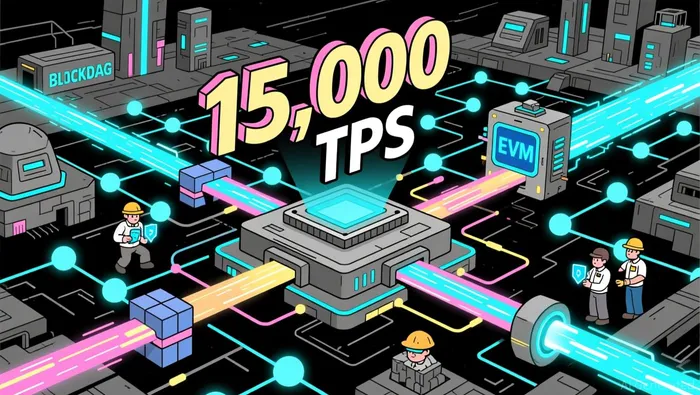
BlockDAG's core innovation lies in its hybrid architecture, which merges Proof-of-Work (PoW) with DAG-based parallel processing. Unlike traditional linear blockchains, this design allows multiple blocks to be confirmed simultaneously, enabling a transaction throughput of up to 15,000 transactions per second by 2025. This scalability is further amplified by EVM compatibility, which supports over 4,500 developers and facilitates the migration of Ethereum-based dApps. The platform's mining ecosystem, including hardware (X100 ASIC Miner) and mobile options (X1 Miner App), ensures broad participation while mitigating 51% attack risks.
In contrast, XRP's architecture, while optimized for cross-border payments via its On-Demand Liquidity (ODL) service, is constrained by a more centralized consensus mechanism. Ripple's focus on institutional adoption- processing $1.3 trillion in transactions via ODL-has secured regulatory clarity and $1.2 billion in ETF inflows, but its TPS capacity (1,500–5,000) lags behind BlockDAG's projected 15,000 TPS. PI Coin, meanwhile, remains in a testnet phase as of 2025, with its mobile-mining model prioritizing accessibility over scalability. Despite 50 million users, Pi Network's unproven DAG-based consensus and lack of mainnet launch leave it vulnerable to adoption delays.
Market Adoption and Price Momentum: Scalability as a Catalyst
BlockDAG's presale success underscores its market traction. By Q4 2025, the project had raised $430 million, with 27 billion BDAG tokens sold and a 2,940% ROI for early investors. Upcoming milestones, including a Binance AMA and the GENESIS DAY launch, are expected to drive further price momentum. XRP, though benefiting from institutional trust and ETF inflows, faces stagnation in speculative retail markets due to its mature use case profile. PI Coin's price projections hinge on its Q4 2025 roadmap, including Protocol v23 and smart contract integration, but delays in mainnet activation and exchange listings could hinder short-term gains.
Institutional vs. Grassroots: Divergent Paths to Utility
XRP's strength lies in its entrenched role in cross-border payments, with partnerships in banking and regulatory compliance. However, this institutional focus limits its appeal to retail investors seeking high-growth speculative assets. BlockDAG, by contrast, balances institutional-grade scalability with developer-friendly tools, positioning itself as a bridge between DeFi and traditional finance. PI Coin's grassroots appeal- 47 million users and 400,000 activated nodes-is promising but untested against the technical rigor required for global financial infrastructure.
Conclusion: A Scalability-Driven Investment Thesis
BlockDAG's architectural superiority-combining DAG parallelism, EVM compatibility, and hybrid PoW-addresses the scalability bottleneck that has long hindered blockchain adoption. Its presale performance and upcoming exchange listings suggest strong investor confidence, while XRP's institutional focus and PI Coin's developmental delays highlight their limitations in a market increasingly prioritizing technical innovation. For investors seeking exposure to next-gen blockchain infrastructure, BlockDAG represents a compelling case to outperform both XRP and PI Coin in 2025.






Comentarios
Aún no hay comentarios