
Why BlockDAG, Dogecoin, Polygon, and NEAR Are Poised for 2025 Growth
BlockDAG: Execution-Driven Scalability and Real-World Adoption
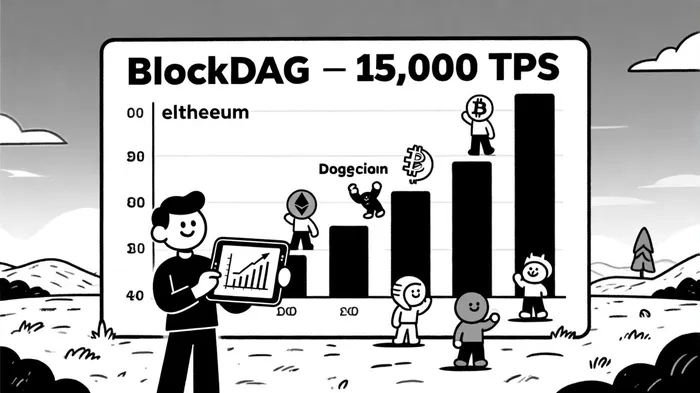
BlockDAG (BDAG) has emerged as a standout in 2025, combining speculative appeal with tangible infrastructure. Its hybrid blockchain-DAG architecture achieves 2,000–15,000 transactions per second (TPS) while integrating Proof-of-Work and Proof-of-Engagement consensus models[1]. By October 2025, the project had raised $420 million in its presale, sold 27 billion coins, and attracted 3 million miners via the X1 app[2]. Institutional interest is also surging, with whale purchases exceeding $4 million each, signaling confidence in its pre-launch ecosystem[1].
BlockDAG's live testnet and focus on real-time execution differentiate it from speculative projects. Analysts highlight its potential to disrupt payment rails and decentralized finance (DeFi) with low latency and high throughput[2]. As Layer-1 solutions compete for scalability, BlockDAG's execution-first approach aligns with institutional demands for reliability[1].
Dogecoin: Cultural Momentum and Technical Breakouts
Dogecoin (DOGE) remains a cultural phenomenon, driven by its meme-based appeal and community-driven narrative. Technical indicators suggest a potential 30–40% rally if momentum returns, particularly as weekly charts show tightening Bollinger Bands-a precursor to breakouts[1]. However, risks persist: whale selling and negative futures funding rates have dampened bullish sentiment[2].
Despite volatility, DOGE's utility as a microtransaction asset is gaining traction. Institutional investors are cautiously eyeing its role in on-chain gaming and social media platforms, where low fees and fast confirmations are critical[1]. The key for DOGEDOGE-- in 2025 will be balancing speculative hype with real-world use cases to sustain long-term adoption.
Polygon: Infrastructure Innovation and Institutional Partnerships
Polygon's transition from MATIC to POL has been a strategic win, with 88.1% of supply migrated and a 31% market cap surge to $3.8 billion[1]. The implementation of EIP-4844 reduced transaction fees to $0.01, enhancing scalability for developers and users[1]. The AggLayer mainnet launch in 2025 aims to further boost interoperability and cross-chain liquidity, positioning Polygon as a hub for tokenized assets[3].
Institutional partnerships with HSBC and BlackRock underscore Polygon's role in tokenizing real-world assets (RWAs), a $100 billion market opportunity[1]. As Layer-2 solutions mature, Polygon's focus on enterprise-grade infrastructure aligns with the broader shift toward institutional-grade crypto adoption[5].
NEAR Protocol: Resilience and Ecosystem Expansion
NEAR Protocol's Q4 2025 performance reflects resilience amid market volatility. Revenue surged 26.81% quarter-over-quarter to $2.11 million, driven by a 15.91% rise in average transaction fees[2]. Its Nightshade sharding technology and cross-chain capabilities have attracted developers, while price predictions suggest a conservative $1.47–$2.67 range for 2025[1].
NEAR's decentralized token distribution model and focus on developer-friendly tools position it to capitalize on the growing demand for scalable dApps. Analysts project a 10% price surge in the short term, fueled by ecosystem expansion and institutional interest in its tokenized finance use cases[2].
Strategic Positioning in the 2025 Crypto Cycle
The Q4 2025 cycle is defined by three macro trends: institutional adoption, regulatory clarity, and technological maturation. BlockDAG's execution-driven model, Dogecoin's cultural resilience, Polygon's infrastructure upgrades, and NEAR's ecosystem growth all align with these forces. As stablecoin adoption and tokenized assets gain traction, these projects are well-positioned to benefit from increased capital flows and use-case diversification[3].
Investors should monitor key indicators: ETF inflows, Layer-2 transaction volumes, and regulatory developments. For projects like BlockDAG and Polygon, measurable adoption metrics (miners, institutional purchases, partnerships) provide a stronger foundation than speculative narratives. Meanwhile, Dogecoin and NEAR's ability to balance hype with utility will determine their long-term viability.
Conclusion
The 2025 crypto cycle is a battleground for innovation and execution. BlockDAG, Dogecoin, Polygon, and NEAR each offer unique value propositions-whether through scalability, cultural appeal, infrastructure, or ecosystem growth. As the market consolidates and institutional players deepen their involvement, these projects exemplify the convergence of speculative and foundational forces shaping the future of crypto.






Comentarios
Aún no hay comentarios