
BlockDAG's $441M Presale and Its Strategic Edge Over Early-Stage Competitors in the AI-Driven DeFi Space
The cryptocurrency landscape in 2025 is defined by two critical forces: the explosive growth of AI-driven DeFi and the race to scale blockchain infrastructure. Amid this evolution, BlockDAG (BDAG) has emerged as a standout project, raising $441 million in its presale and positioning itself as a formidable contender against early-stage competitors like Kaspa, Aleph ZeroZBT--, and Conflux. This analysis examines BlockDAG's strategic advantages, investment timing, and project maturity, offering insights for investors navigating the high-growth crypto asset space.
The $441M Presale: A Catalyst for Growth
BlockDAG's presale, which has raised $441 million as of December 2025, is a testament to its market appeal. The project is selling tokens at $0.003 per BDAG, with a projected launch price of $0.05, offering a 16.67× upside potential. This phase, set to conclude on February 26, 2026, has attracted over 312,000 unique holders and retains 3.5 billion tokens for sale. The presale's success is underpinned by its structured roadmap, including confirmed listings on 15+ Tier 1 and US exchanges, and a robust security framework validated by audits from Halborn and Certik.
What sets BlockDAG apart is its commitment to community ownership. A formal Letter of Intent (LOI) signed by CEO Antony Turner outlines the transfer of core assets, intellectual property, and governance to the community before Mainnet launch. This move, described as a "historic step" in blockchain governance, aligns with growing investor demand for decentralized, transparent projects. While concerns about fund distribution and presale extension terms persist, the LOI's emphasis on community ratification of governance structures reinforces trust in the project's long-term vision.
Strategic Edge in AI-Driven DeFi
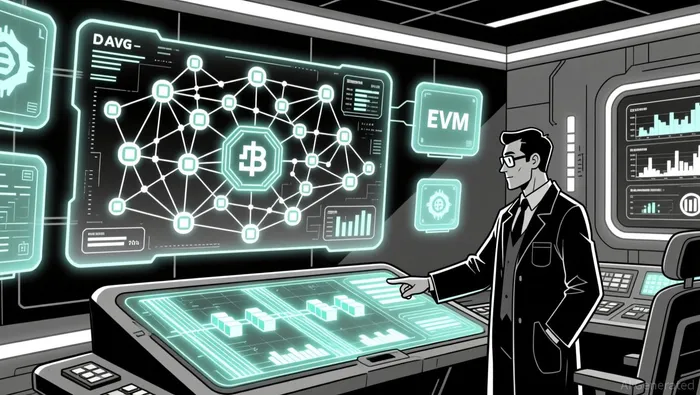
BlockDAG's technological architecture positions it as a leader in AI-driven DeFi. Its hybrid Directed Acyclic Graph (DAG) + Proof-of-Work (PoW) model enables parallel block execution, achieving throughput far exceeding traditional blockchains. This scalability, combined with EthereumETH-- Virtual Machine (EVM) compatibility, allows developers to deploy Ethereum-based dApps without rework, addressing a critical bottleneck in DeFi adoption.
In contrast, competitors like Kaspa and Aleph Zero prioritize niche use cases. Kaspa's GHOSTDAG consensus focuses on high-throughput value transfers but lacks smart contract functionality, limiting its DeFi applicability. Aleph Zero integrates privacy-centric zk-SNARKs and BFT consensus, but its DAG-BFT model may complicate developer onboarding. Conflux's Tree-Graph structure offers EVM compatibility and regulatory advantages in China, yet its focus remains on NFTs and Web3 rather than broad DeFi ecosystems.
BlockDAG's strategic edge lies in its developer-centric approach. The project has already attracted 4,500 developers to its testnet, producing over 300 dApps, and offers tools like a low-code smart contract builder. These innovations democratize DeFi development, enabling non-technical creators to participate in the ecosystem. Additionally, BlockDAG's hybrid model balances Bitcoin-level security with DAG-based scalability, addressing the "security vs. scalability" trade-off that plagues many Layer 1 projects.
Investment Timing and Project Maturity
For investors, timing is critical. BlockDAG's presale is in its final phase, with token prices set to rise to $0.0133 in the next batch, reflecting growing demand. The project's maturity is evident in its institutional partnerships, including a collaboration with the BWT Alpine F1 Team, and its confirmed exchange listings. These milestones signal a transition from speculative hype to tangible execution, a key indicator for long-term viability.
Competitors like Kaspa, while technologically innovative, lack the same level of ecosystem development. Kaspa's recent 7.21% price decline highlights the risks of prioritizing research over market readiness. Aleph Zero and Conflux, though strong in niche areas, face challenges in scaling their DeFi offerings to mass adoption. BlockDAG's $435M+ presale and 2.5 million downloads of its X1 mobile mining app underscore its ability to attract both retail and institutional capital-a rare combination in early-stage crypto projects.
Risks and Considerations
Despite its strengths, BlockDAG is not without risks. The LOI's requirement to continue the presale until February 11, 2026, raises questions about the counterparty's fundraising flexibility. Additionally, the project's reliance on a hybrid consensus model may face scrutiny if PoW's energy consumption becomes a regulatory concern. Investors should also monitor the transition to community governance, ensuring transparency in fund allocation and decision-making.
Conclusion
BlockDAG's $441M presale and strategic innovations position it as a top-tier contender in the AI-driven DeFi space. Its hybrid DAG-PoW architecture, EVM compatibility, and community ownership model address critical pain points in blockchain scalability and governance. While competitors like Kaspa and Aleph Zero offer compelling technologies, BlockDAG's ecosystem maturity, institutional backing, and developer tools give it a clear edge. For investors seeking high-growth opportunities, the final presale phase represents a pivotal moment-offering exposure to a project poised to redefine DeFi's next frontier.






Comentarios
Aún no hay comentarios