
BlockDAG's 2025 Dominance: A New Era for Blockchain Infrastructure and Strategic Alliances
In 2025, the blockchain landscape is witnessing a seismic shift as projects beyond EthereumETH-- and BitcoinBTC-- vie for dominance. Among them, BlockDAG has emerged as a formidable contender, leveraging a hybrid Directed Acyclic Graph (DAG) and Proof-of-Work (PoW) architecture to address scalability and security challenges. With a $410 million presale, strategic partnerships with global sports giants, and a roadmap targeting 15,000 transactions per second (TPS), BlockDAG is positioning itself as a next-generation Layer 1 platform. However, its journey is not without hurdles-repeated delays in its mainnet launch have raised questions about execution risks. This analysis evaluates BlockDAG's technological innovations, strategic alliances, and market traction to determine its potential to redefine blockchain infrastructure in 2025.
Technological Advancements: Bridging PoW Security with DAG Scalability
BlockDAG's core innovation lies in its hybrid architecture, which combines the security of Bitcoin-style PoW with the scalability of DAG technology. According to a report by CoinPulse HQ, the platform's Beta Testnet V1 already achieves double the speed of its alpha version, with plans to scale from 2,000 to 15,000 TPS within two years, as described in the BlockDAG–SpaceDev announcement. This is critical for real-world applications like DeFi and NFTs, where high throughput and low latency are non-negotiable.
The platform's technical roadmap also includes MEV resistance, EVM compatibility, and account abstraction, features that align it with Ethereum's ecosystem while addressing its limitations, according to BlockDAG's 2025 strategy. For instance, MEV resistance ensures fair transaction ordering, a pain point for DeFi protocols. Meanwhile, EVM compatibility allows developers to port existing Ethereum dApps with minimal effort, accelerating adoption. These advancements are supported by a growing developer community and initiatives like the BlockDAG Academy, which trains the next generation of Web3 engineers, according to Analytics Insight.
Strategic Partnerships: From Sports to Mainstream Adoption
BlockDAG's aggressive growth strategy is underpinned by high-profile partnerships that bridge blockchain with mainstream audiences. A landmark collaboration with the BWT Alpine F1 partnership, announced in September 2025, marks the first time a Layer 1 blockchain has aligned with a Formula 1 team. This partnership, unveiled at Token2049 in Singapore, aims to create digital collectibles, fan engagement tools, and NFT-based ticketing systems, embedding blockchain into the fabric of global sports culture.
Similarly, partnerships with the UFC and Inter Milan have expanded BlockDAG's reach to millions of sports enthusiasts. These collaborations are not mere branding exercises; they integrate blockchain into real-world use cases. For example, UFC fans can now purchase NFTs representing fight moments, while Inter Milan supporters engage with tokenized loyalty programs, as detailed in TechBullion's coverage. Such initiatives demonstrate BlockDAG's ability to translate blockchain utility into tangible value for non-crypto-native audiences.
User Growth and Presale Momentum: A Test of Investor Confidence
BlockDAG's user base has grown exponentially in 2025, with over 800,000 X1 app users and 20,000 hardware miners distributed globally, according to Crypto-Reporter. This grassroots adoption is complemented by a presale that has raised over $410 million, reported by MarketMinute, making it one of the most capital-rich Layer 1 projects of the year. The BDAG token, priced between $0.0013 and $0.0016 in its 30th batch, has attracted both retail and institutional investors, signaling strong demand for its utility-driven model.
However, the project's repeated delays in launching its mainnet-originally scheduled for June 2025 but pushed to late September or early October-have eroded some trust. As noted by CoinCentral, these delays raise concerns about technical complexity and project management. Yet, the platform's aggressive roadmap-including planned listings on top exchanges and a Global Hackathon Series-suggests a commitment to delivering on its vision despite setbacks.
Challenges and the Path Forward
While BlockDAG's technological and partnership achievements are impressive, its success hinges on overcoming execution risks. The mainnet launch, now critical for liquidity and developer activity, must deliver on its TPS and security promises. Additionally, the project faces competition from established Layer 1s like SolanaSOL-- and emerging DAG-based platforms such as IOTAIOTA--.
Nevertheless, BlockDAG's hybrid model offers a unique value proposition. By combining PoW's battle-tested security with DAG's scalability, it addresses two of blockchain's most persistent challenges. Its partnerships with sports entities also provide a blueprint for mainstream adoption, proving that blockchain can transcend niche communities.
Conclusion: A Contender for 2025's Blockchain Crown
BlockDAG's 2025 trajectory reflects both the promise and perils of next-generation blockchain infrastructure. While delays and technical hurdles persist, its technological innovations, strategic alliances, and presale success position it as a strong contender in the Layer 1 race. For investors, the key question is whether the project can execute its roadmap effectively. If the mainnet launch in late 2025 delivers on its TPS and security goals, BlockDAG could cement its place as a cornerstone of the decentralized future. 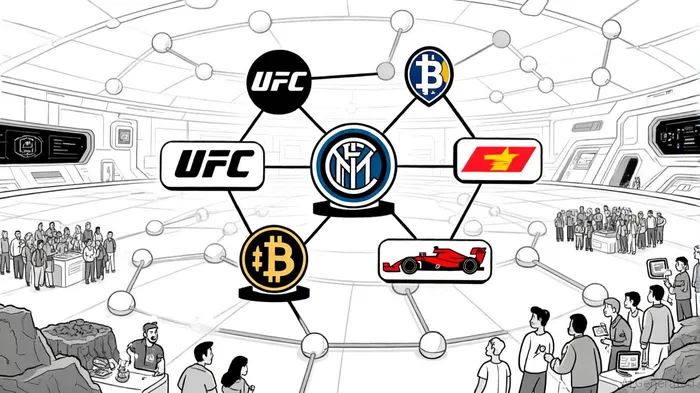






Comentarios
Aún no hay comentarios