
Blockchain Security and Decentralization Trade-Offs in the Post-Hack Era
The blockchain industry's evolution in the post-hack era has exposed a critical tension between security, decentralization, and long-term value resilience. As Layer 1 (L1) protocols face escalating threats from sophisticated cyberattacks, their ability to adapt through governance upgrades and maintain market trust has become a defining factor in their survival. This analysis examines how major security breaches between 2022 and 2025 have reshaped the landscape, with a focus on the interplay between decentralization, protocol-level responses, and token valuation dynamics.
The Escalating Threat Landscape
The period from 2022 to 2025 saw a dramatic rise in the scale and sophistication of attacks on blockchain infrastructure. The February 2025 compromise of Bybit, a centralized exchange, marked a watershed moment, with the largest crypto theft in history-$1.5 billion stolen in a single incident. North Korean state-sponsored actors emerged as dominant threat actors, stealing $2.02 billion in 2025 alone, a 51% increase from the prior year. These attacks often exploited vulnerabilities in centralized services, such as private key compromises, and leveraged social engineering tactics to infiltrate high-value systems according to reports.
While centralized exchanges bore the brunt of these losses, decentralized finance (DeFi) platforms demonstrated improved resilience. For instance, the Venus Protocol incident in September 2025 showcased how proactive governance mechanisms, including real-time monitoring and fund-freezing capabilities, enabled the recovery of stolen assets. This contrast highlights a growing maturity in decentralized systems' ability to respond to breaches, even as centralized counterparts remain exposed.
Governance Upgrades and Security Prioritization
In response to these threats, L1 protocols have implemented governance upgrades to bolster security. A key trend has been the adoption of zero-trust architectures, which emphasize continuous authentication and validation of all requests, reducing the risk of lateral movement within networks. This shift reflects a broader industry recognition that traditional perimeter-based security models are insufficient against modern threats.
Code audits and patch management have also become critical. For example, vulnerabilities like CVE-2025-7775 in Citrix NetScaler and CVE-2025-53770 in Microsoft SharePoint underscored the need for real-time monitoring and frequent infrastructure updates. Protocols that integrated these practices-such as Ethereum's focus on secure configuration and network segmentation-have seen stronger market confidence.
Community-driven governance has further played a role. The Bybit breach, for instance, prompted calls for stricter oversight of IT personnel and access controls across the industry. These responses, while reactive, signal a maturing ecosystem where security is increasingly treated as a shared responsibility.
Market Performance and Value Resilience
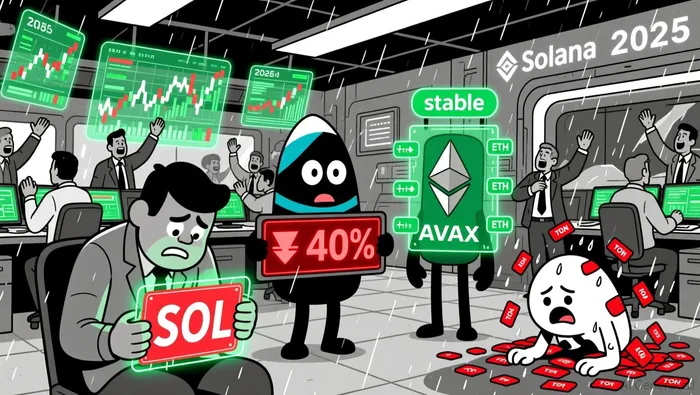
The financial impact of security breaches on L1 tokens has been profound. Between 2022 and 2025, many L1 tokens lost significant value due to overleveraged tokenomics and weak value-capture mechanisms. SolanaSOL-- (SOL), for example, saw a 35.9% drop in 2025, while AvalancheAVAX-- (AVAX) and TON fell over 67% according to financial reports. This depreciation was exacerbated by a shift in institutional and retail capital toward BitcoinBTC-- and EthereumETH--, which were perceived as more secure and stable assets according to market analysis.
Ethereum's relative stability can be attributed to its role as a settlement layer for high-value transactions and tokenized real-world assets according to industry reports. In contrast, Solana, while excelling in transactional use cases like decentralized exchanges and gaming, struggled with high inflation schedules and weak demand for governance rights according to financial data. This divergence underscores the importance of aligning tokenomics with real-world utility.
Protocols that generated meaningful revenue-such as stablecoin issuers and derivatives platforms-demonstrated greater resilience according to market research. These models, which prioritize economic value capture over speculative narratives, have become increasingly attractive to investors. Meanwhile, generic L1 and L2 tokens lacking differentiation or clear value propositions face growing irrelevance.
Decentralization and the Consolidation of Power
The security breaches of 2025 also accelerated the consolidation of user and institutional capital into a few dominant L1s. Major chains like Solana experienced a 60% drop in monthly active users, while BNBBNB-- Chain nearly tripled its user base by attracting participants from other platforms according to market data. This trend raises concerns about reduced decentralization, as the ecosystem becomes increasingly dominated by a small number of high-value chains.
The trade-off between security and decentralization is further complicated by the rise of centralized custodians and exchanges. These entities, while vulnerable to breaches, often offer user-friendly interfaces and regulatory compliance that decentralized alternatives lack according to industry analysis. As a result, the industry faces a paradox: the very features that enhance security and scalability-centralization-risk undermining the foundational principles of blockchain technology.
Conclusion: Investment Implications
For investors, the post-hack era demands a nuanced approach to evaluating L1 protocols. Key considerations include:
1. Security Infrastructure: Protocols that adopt zero-trust models, regular audits, and proactive governance upgrades are better positioned to withstand attacks.
2. Tokenomics and Revenue Generation: Tokens with sustainable value-capture mechanisms and real-world use cases are more likely to retain long-term value.
3. Market Sentiment: The shift toward Bitcoin and Ethereum as "safe haven" assets suggests that protocols without clear differentiation may struggle to attract capital.
The future of the blockchain industry will likely be defined by protocols that balance decentralization with robust security and economic resilience. As the market continues to mature, investors must prioritize projects that demonstrate adaptability in the face of evolving threats while aligning with the core principles of decentralization.






Comentarios
Aún no hay comentarios