
Blockchain's Role in Sustainable Development and Digital Governance: Strategic Investment Opportunities Aligned with SDGs
Blockchain as a Catalyst for SDG Alignment
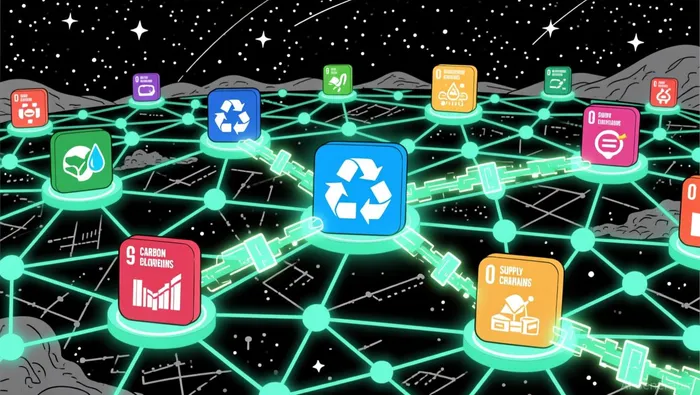
The Blockchain for Good Alliance (BGA) has emerged as a pivotal platform for showcasing blockchain projects that directly contribute to the SDGs. At its 2025 Forum in Copenhagen, the BGA recognized initiatives like Genius Tags, Plastiks, and ZenGate for their measurable impact on sustainability and financial inclusion. Genius Tags, for instance, uses blockchain to combat counterfeit goods in supply chains, ensuring ethical sourcing and reducing waste-a direct contribution to SDG 12 (Responsible Consumption). Plastiks leverages tokenized incentives to promote plastic recycling, aligning with SDG 14 (Life Below Water). These projects exemplify how blockchain can create verifiable, traceable systems that address systemic inefficiencies in global supply chains.
The BGA's Incubation 2025 category further highlights blockchain's potential in digital public goods. Kelox, a project in the ideation stage, aims to tokenize carbon credits for decentralized climate finance, while Token Tails uses NFTs to incentivize animal welfare in agriculture. Such innovations demonstrate blockchain's ability to bridge gaps between private-sector innovation and public-sector sustainability objectives.
Integration with Global Governance and Energy Systems
Blockchain's integration with cloud-based computing and energy management systems is reshaping how sustainability goals are operationalized. CreditBlockchain, a platform highlighted in recent industry reports, has developed a framework that combines blockchain with energy-efficient infrastructure to automate digital asset management. By leveraging smart contracts for transparent verification, CreditBlockchain enables stakeholders to track carbon emissions and renewable energy transactions in real time. This aligns with SDG 7 (Affordable and Clean Energy) and SDG 13 (Climate Action) by fostering accountability in energy markets.
In the energy sector, blockchain is enabling peer-to-peer (P2P) energy trading models that decentralize power distribution. Projects like Energy Web Foundation and Power Ledger are facilitating the exchange of renewable energy between households and businesses, reducing reliance on fossil fuels. A 2025 study notes that blockchain-based energy systems not only enhance grid efficiency but also empower communities to participate in green energy economies. For investors, this represents a dual opportunity: supporting decarbonization while capitalizing on the growing $219.3 billion energy management systems market projected to reach $219.3 billion by 2034.
Policy Alignment and Measurable Impact Metrics
The alignment of blockchain projects with international policy frameworks remains a critical factor in their scalability. CreditBlockchain's emphasis on cloud-based automation and energy efficiency reflects broader policy goals, such as the EU Green Deal's carbon neutrality targets. Similarly, blockchain's role in tokenizing environmental assets-like carbon credits and green bonds-is enhancing liquidity in sustainability markets, making it easier for investors to deploy capital toward verified ESG (Environmental, Social, and Governance) outcomes.
However, challenges persist. Scalability issues, regulatory uncertainty, and the risk of greenwashing remain barriers to widespread adoption. To mitigate these risks, investors must prioritize projects with transparent impact metrics. For example, Genpulse, a joint funds initiative recognized by the BGA, uses blockchain to track social impact investments in education and healthcare. Such projects provide quantifiable data on outcomes like improved access to clean water or reduced carbon footprints, aligning with SDG 6 (Clean Water and Sanitation) and SDG 13.
Strategic Investment Considerations
The convergence of blockchain, sustainability, and governance presents a compelling case for strategic investment. Key opportunities include:
1. Infrastructure-Heavy Sectors: Energy management systems and carbon credit platforms, which are projected to grow as governments enforce stricter climate policies.
2. Social Impact Tokens: Projects like Token Tails and Genpulse, which tokenize social outcomes, offer a novel way to align capital with SDG-driven missions.
3. Policy-Ready Platforms: Blockchain solutions that integrate with existing governance frameworks-such as CreditBlockchain's cloud-based systems-are well-positioned to benefit from regulatory tailwinds.
Investors should also monitor emerging trends, such as the tokenization of renewable energy assets and AI-driven climate data tracking. These innovations are likely to attract institutional capital as they demonstrate tangible, auditable impact.
Conclusion
Blockchain is no longer a peripheral technology but a cornerstone of modern sustainability and governance strategies. By investing in projects that align with SDGs and global policy frameworks, stakeholders can drive both environmental progress and financial returns. As the BGA and platforms like CreditBlockchain demonstrate, the future of blockchain lies in its ability to create trust-based systems that transcend traditional market and regulatory boundaries. For investors, the time to act is now-before the next wave of blockchain-driven sustainability innovations reshapes the global economy.







Comentarios
Aún no hay comentarios