
Blockchain in Motorsport: A New Era of ROI and Market Sentiment
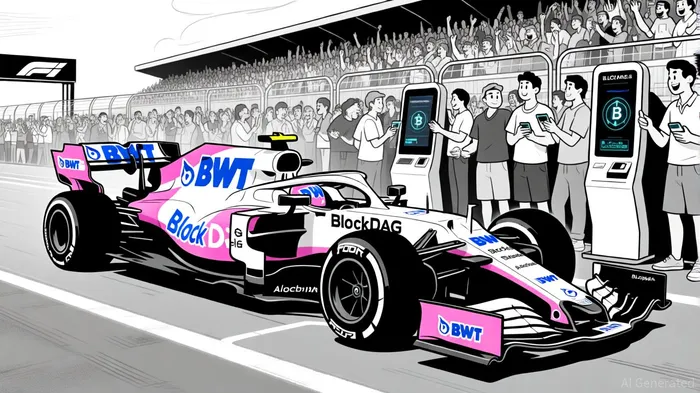
The convergence of blockchain technology and motorsport has ignited a seismic shift in how we perceive both industries. At the forefront of this revolution is the BlockDAG-BWT AlpineALPINE-- F1 partnership, a multi-year collaboration that has redefined the boundaries of crypto-driven sponsorships. As the exclusive LayerLAYER-- One Blockchain Partner of the BWT Alpine F1 Team, BlockDAG has secured a platform to integrate its Directed Acyclic Graph (DAG) technology into Formula 1's global ecosystem, leveraging the sport's 1.5 billion-strong audience to amplify brand visibility and drive adoption, a FinanceFeeds article reports. This partnership is not merely a branding exercise but a strategic move to embed blockchain into the fabric of motorsport, from on-track fan simulators to decentralized governance models for team activations, Coindoo reports.
The ROI of Blockchain in Motorsport: A Case Study
BlockDAG's financial performance underscores the lucrative potential of blockchain-motorsport partnerships. The project has raised over $420 million in its presale, selling 26.5 billion tokens at a price of $0.0015, with a projected listing price of $0.05. Early investors who entered during Batch 1 have already seen returns exceeding 2,900%, a testament to the project's rapid growth, Analytics Insight reports. This ROI is further amplified by the partnership's tangible outcomes: BlockDAG's branding on Alpine's race cars, integration into the team's RISE+ app, and co-branded NFT drops. These initiatives not only enhance fan engagement but also create new revenue streams through digital collectibles and tokenized experiences, per the Alpine F1 announcement.
The broader market reflects a similar trajectory. According to Financial Content, the English Premier League saw a 30% year-on-year increase in crypto sponsorship spending in the 2024/25 season, with 14 of its 20 clubs partnering with crypto firms. Globally, crypto sports sponsorships surged to $565 million in 2024/25, Neobanque notes, a 20% increase from the previous year. These figures highlight a maturing market where crypto brands are no longer just seeking visibility but are investing in long-term value creation. For instance, Coinbase's partnership with Aston Martin involved the first fully transacted sponsorship in USDCUSDC-- stablecoin, reducing transaction fees by 3–5% and streamlining payment cycles, as VantagePoint MEA reports.
Market Sentiment: From Skepticism to Strategic Integration
Market sentiment toward blockchain-motorsport partnerships has evolved significantly. In 2022, the collapse of major crypto projects like FTX led to the termination of high-profile sponsorships, including Bybit's $150 million deal with Red Bull Racing. However, 2025 has seen a resurgence, with teams and sponsors adopting risk-mitigation strategies such as hedging against token volatility and prioritizing regulatory compliance, Optimisus notes. The resilience of long-term partnerships-such as Crypto.com's renewed global deal with Formula 1-indicates growing institutional confidence in the sector, as covered by The CoinRise.
The BlockDAG-Alpine partnership has further bolstered this optimism. By aligning with a globally recognized brand like Alpine F1, BlockDAG has positioned itself as a credible player in the Layer-1 blockchain space. Analysts note that the project's 312,000+ global holders and 3 million daily users of its X1 miner app demonstrate real-world adoption, a critical factor for long-term success, according to Analytics Insight. Moreover, the integration of blockchain into fan engagement-such as interactive simulators and hackathons at Grand Prix events-has created a unique value proposition that transcends traditional sponsorship models, as Motorsport Week reports.
Challenges and the Road Ahead
Despite the optimism, challenges persist. Regulatory scrutiny remains a hurdle, with governments worldwide grappling with how to classify and govern crypto assets. Additionally, the volatility of digital assets poses risks for both sponsors and teams. For example, the recent Bybit hack, which exposed vulnerabilities in crypto infrastructure, has raised concerns about the security of blockchain-based partnerships, 99Bitcoins reports.
However, the industry is adapting. Teams are increasingly prioritizing partnerships with projects that emphasize security, transparency, and real-world utility. BlockDAG's focus on DAG technology-a scalable, energy-efficient alternative to traditional blockchains-positions it as a leader in this space, as FinanceFeeds reported earlier. Furthermore, the integration of blockchain into operational efficiencies, such as smart contracts for driver incentives and supply chain management, is proving its value beyond marketing, according to Nexa Reports.
Conclusion: A High-Stakes Bet with High Rewards
The BlockDAG-BWT Alpine F1 partnership exemplifies the transformative potential of blockchain in motorsport. With a projected $600 million in total funding and a roadmap that includes 20 confirmed exchange listings, BlockDAG is poised to capitalize on the growing intersection of crypto and sports, Tribune India reports. For investors, the key takeaway is clear: blockchain-motorsport partnerships are no longer speculative but strategic investments in the future of digital engagement and financial innovation.
As the global motorsport market is projected to grow to $20.1 billion by 2034, GM Insights projects, and the blockchain in sports market reaches $10 billion by 2035, per Market Research Future, the ROI potential for forward-thinking projects like BlockDAG is immense. The question is no longer whether blockchain will reshape motorsport-but how quickly it will do so.






Comentarios
Aún no hay comentarios