
Blockchain Innovation in the Gulf: Strategic Partnerships Fuel Fintech Adoption and Market Access
Blockchain Innovation in the Gulf: Strategic Partnerships Fuel Fintech Adoption and Market Access
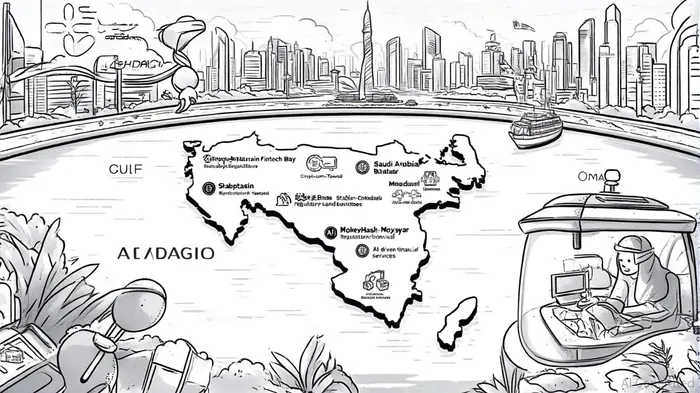
The Gulf Cooperation Council (GCC) has emerged as a global epicenter for blockchain innovation and fintech adoption, driven by a confluence of progressive regulatory frameworks, government-backed digital transformation agendas, and high-impact strategic partnerships. From 2023 to 2025, the region has witnessed a surge in collaborations between blockchain firms, governments, and fintech players, positioning the Gulf as a bridge between traditional finance and decentralized technologies. These partnerships are notNOT-- only accelerating cross-border payments and stablecoin adoption but also reshaping market access for global innovators seeking regulated environments to scale their solutions.
Ripple and Bahrain Fintech Bay: A Blueprint for Regional Expansion
One of the most significant developments in the Gulf's blockchain landscape is Ripple's strategic partnership with Bahrain Fintech Bay (BFB), announced in October 2025. This collaboration aims to integrate Ripple's RLUSD stablecoin and blockchain infrastructure into Bahrain's financial ecosystem, with pilot projects focused on cross-border payments, tokenization, and digital custody services, CoinDesk reported. By leveraging BFB's role as a regulatory sandbox, Ripple is fast-tracking market access for its solutions in the Gulf, while Bahrain solidifies its reputation as a crypto-friendly jurisdiction. The partnership aligns with Bahrain's early adoption of crypto regulations, including its 2021 licensing framework for virtual asset service providers, which has attracted over 50 blockchain firms to the island nation, a Carnegie Endowment report.
The ripple effects (pun intended) of this collaboration extend beyond Bahrain. Ripple, already operating with 60+ global regulatory licenses, is using the Gulf as a launchpad for expansion into Africa, Europe, and the Middle East. For investors, this signals a strategic shift in blockchain adoption from Silicon Valley-centric models to regions with clear regulatory guardrails and government support, as highlighted in 5StarsStocks coverage.
UAE: A Fintech Ecosystem Built on Partnerships
The UAE has positioned itself as a regional leader in blockchain innovation through aggressive public-private partnerships. In 2025, Crypto.com partnered with Tawasal, a UAE sovereign tech firm, to integrate cryptocurrency services into Tawasal's AI-driven SuperApp, simplifying crypto access for millions of users, Khaleej Times reported. Similarly, Abu Dhabi's MGX investment group committed $2 billion to Binance, deepening ties between the world's largest crypto exchange and the UAE's financial infrastructure; Khaleej Times also covered that development. These moves underscore the UAE's dual focus on regulatory clarity and market accessibility, exemplified by frameworks like the Dubai International Financial Centre (DIFC) and Abu Dhabi Global Market (ADGM).
The UAE's ambitions are further reflected in its AE Coin stablecoin initiative, pegged to the dirham, which is being tested for use in government transactions and cross-border trade, AWConnect reported. With a projected 12–15% CAGR for its fintech sector from 2025 to 2030, the UAE's ecosystem is attracting global players seeking to bypass the regulatory ambiguity of Western markets, according to the same AWConnect analysis.
Saudi Arabia: Vision 2030 and the Rise of Fintech Hubs
Saudi Arabia's fintech revolution, accelerated by Vision 2030, has seen the number of active fintech companies grow from 10 in 2018 to over 261 by 2024, according to the Tenity report. Strategic partnerships are central to this growth. In September 2025, MoneyHash and Moyasar announced a collaboration to advance payment orchestration and digital transformation in the Kingdom, combining MoneyHash's global payment expertise with Moyasar's local regulatory compliance capabilities, TechAfricaNews reported.
The Saudi government's Open Banking Policy and Fintech Saudi initiative have created a fertile ground for innovation. Non-cash retail transactions now account for 79% of the market, a testament to the success of digital payment ecosystems noted in the Tenity report. Additionally, projections highlighted in coverage of the MoneyHash–Moyasar partnership indicate that fintech companies in Saudi Arabia are expected to grow substantially by 2030, driven by demand in WealthTech, InsurTech, and B2B solutions.
Qatar and Oman: Quietly Building Blockchain-Ready Economies
While less visible than their Gulf neighbors, Qatar and Oman are making strategic investments in blockchain infrastructure. Qatar's Central Bank launched the Qatar Mobile Payment initiative in April 2025, streamlining digital transactions and integrating blockchain for secure data management, Zawya reported. Tasmu Digital Valley projects the country's blockchain market to grow from $33 million in 2022 to $253 million by 2026, driven by logistics and supply chain use cases, as also reported by Zawya.
Oman, under Vision 2040, is piloting blockchain in economic zones to track goods and is exploring regulatory sandboxes to attract crypto startups, initiatives noted in regional coverage. These efforts reflect a broader GCC strategy to reduce reliance on the U.S. dollar and traditional financial systems, with blockchain serving as a cornerstone for financial sovereignty, a point explored in a Carnegie Endowment analysis.
Regulatory Frameworks: The Enablers of Innovation
The Gulf's success in blockchain adoption is underpinned by its regulatory agility. Bahrain's pioneering crypto licensing framework, the UAE's VARA (Virtual Assets Regulatory Authority), and Saudi Arabia's SAMA-led sandboxes have created a "test-and-scale" environment for innovators. For instance, Bahrain's regulatory clarity attracted Ripple's RLUSD launch, while the UAE's DIFC and ADGM frameworks enabled MGX's Binance investment, as reported by CoinDesk and Khaleej Times earlier.
Governments are also balancing innovation with risk mitigation. The IMF notes that the Gulf's approach-combining regulatory sandboxes with consumer protection measures-has fostered trust in digital finance, particularly in sectors like micro-financing and SME lending, according to an IMF analysis.
Conclusion: A Strategic Investment Opportunity
The Gulf's blockchain and fintech ecosystem is no longer a speculative experiment but a proven model for scalable innovation. Strategic partnerships like Ripple–BFB, Crypto.com–Tawasal, and MoneyHash–Moyasar are not isolated events but part of a larger narrative of regional economic diversification. For investors, the Gulf offers a unique combination of regulatory clarity, government-backed infrastructure, and a rapidly growing digital economy. As the region continues to align with BRICS+ and China's blockchain initiatives, the Gulf's role as a global fintech hub is set to expand, making it a critical market for blockchain-focused investments in the coming decade.







Comentarios
Aún no hay comentarios