
Blockchain Gaming as a Resilient Web3 Sector Amid Ecosystem-Wide Decline
The Web3 Winter: A Tale of Two Sectors
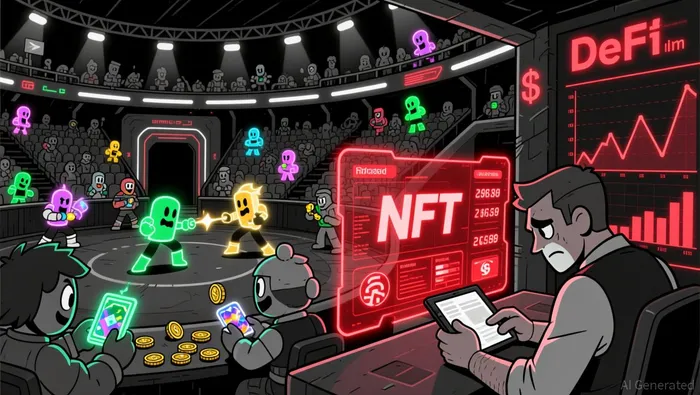
The broader Web3 downturn has been stark. DeFi's total value locked (TVL) plummeted by 6.3% in October alone, retreating to $221 billion before slipping further to $193 billion by early November, according to the Cryptopolitan report. A catastrophic market crash on October 10 exacerbated losses, with protocols like Stream Finance hemorrhaging $93 million, according to the report. Meanwhile, NFT trading volumes, though buoyed by a $546 million surge in October, remain inconsistent, driven largely by gaming-related assets such as utility-backed NFTs tied to virtualCYBER-- identities and loyalty programs, the report notes.
In contrast, blockchain gaming has defied the slump. Platforms like RaydiumRAY--, Pump.fun, and PancakeSwapCAKE-- v2 have leveraged social trading, lower fees, and liquidity incentives to attract users, according to the report. The sector's resilience is further amplified by partnerships with major blockchains like SolanaSOL--, BNB Chain, and Polygon, which provide scalable infrastructure for interactive, economically viable gaming environments, as noted in a Markets report.
Drivers of Growth: Utility, Innovation, and Network Effects
Blockchain gaming's success stems from its ability to deliver tangible value. Unlike speculative NFTs or volatile DeFi protocols, gaming platforms integrate digital assets into core user experiences. For instance, utility-backed NFTs now serve as in-game currency, customizable avatars, and access tokens for exclusive content, according to the Cryptopolitan report. This utility has driven a 27.9% market share in October, outpacing even the most aggressive DeFi campaigns, the report notes.
Network effects further cement gaming's dominance. The 1kx Onchain Revenue Report projects $19.8 billion in blockchain-based fees for 2025, with gaming contributing significantly to this growth through user-paid transaction fees and in-game purchases, according to the Markets report. Meanwhile, platforms like ApolloID-Blaqclouds' Web3 identity registry-highlight how gaming is redefining digital ownership, enabling seamless cross-platform interactions, as noted in the Markets report.
Strategic Rotation: Why Investors Are Reallocating
The sector rotation reflects broader market realities. DeFi's regulatory challenges-such as proposed KYC requirements for non-custodial wallets-threaten its foundational principles of decentralization, according to the Cryptopolitan report. Conversely, gaming's entertainment focus aligns with less contentious use cases, attracting both retail and institutional capital. MEXC's expansion into Latin America, mirroring its Asian success, exemplifies how exchanges are pivoting to support gaming-driven adoption, according to a MEXC press release.
Investors are also capitalizing on gaming's first-mover advantages. Ethereum-based alliances, such as the EthereumETH-- Protocol Advocacy Alliance, highlight the sector's push for decentralized infrastructure, according to the Cryptopolitan report. Meanwhile, risk-management tools like RedStone's DeFi lending solutions underscore the industry's maturation, even as gaming remains the primary growth engine, the report notes.
Conclusion: A New Paradigm for Web3
The 2025 Web3 landscape is defined by stark contrasts. While DeFi's TVL dwindles and NFTs face fragmentation, blockchain gaming thrives by merging entertainment with economic incentives. This strategic rotation reflects a market prioritizing user retention and real-world utility-a shift likely to accelerate as platforms like ApolloID and MEXC scale globally. For investors, the lesson is clear: in a Web3 winter, entertainment-driven applications are proving to be the most resilient shelters.






Comentarios
Aún no hay comentarios