
Blockchain-Driven Financial Inclusion in Education: A New Investment Frontier in Emerging Markets
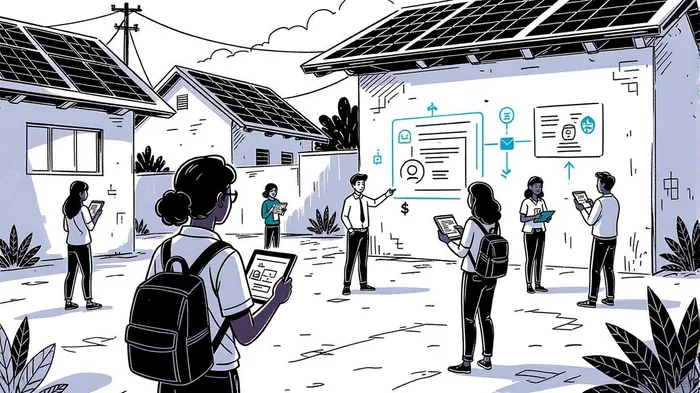
Blockchain technology is redefining the intersection of financial inclusion and education in emerging markets, creating a fertile ground for strategic infrastructure development and scalable impact investing. By leveraging decentralized systems, immutable records, and low-cost transaction mechanisms, blockchain addresses systemic barriers such as limited access to banking, fragmented educational ecosystems, and inadequate digital infrastructure. This convergence of financial and educational empowerment is not merely speculative—it is already being validated by real-world case studies, regulatory shifts, and surging investment flows.
Strategic Infrastructure Development: Bridging Gaps in Digital Access
Blockchain’s ability to function independently of traditional banking infrastructure makes it a critical tool for expanding financial inclusion in education. For instance, blockchain-based digital identity systems enable unbanked populations to establish verifiable credentials, a prerequisite for accessing financial services and educational programs. In Morocco, where cryptocurrencies have persisted despite regulatory bans, blockchain’s informal adoption highlights its potential to bypass traditional barriers like high transaction costs and rural inaccessibility [2]. Similarly, FordF-- and Renault’s blockchain-driven supply chain solutions demonstrate how decentralized systems can enhance transparency and trust—qualities essential for educational platforms in regions with weak institutional frameworks [1].
Digital infrastructure alignment is another cornerstone. Blockchain integrates with complementary technologies like IoT and mobile banking to create hybrid systems. For example, Ford’s cobalt-tracking initiative combines blockchain with IoT data to ensure ethical sourcing, a model that could be adapted for educational supply chains, such as verifying the authenticity of learning materials or certifying teacher training programs [1]. In emerging markets, where 60% of the population lacks reliable internet access [3], blockchain’s offline capabilities—such as peer-to-peer transactions—can bridge gaps until broader infrastructure is developed.
Scalable Impact Investing: From Micro-Financing to Systemic Change
Impact investors are increasingly targeting blockchain-based education initiatives that align with the UN Sustainable Development Goals (SDGs), particularly SDG 4 (Quality Education) and SDG 8 (Decent Work and Economic Growth). The European Union’s AI/Blockchain Investment Fund, for instance, provides equity financing to startups leveraging blockchain for education, enabling scalable solutions like tamper-proof digital diplomas and micro-credential platforms [4]. These initiatives reduce administrative costs by up to 42.6% and cross-border payment times by 78.3%, metrics that attract investors seeking both social and financial returns [1].
Case studies underscore this potential. The UNDP’s Blockchain Academy, which trains 24,000 UN personnel in blockchain solutions for sustainable development, is backed by impact investments from the AlgorandALGO-- Foundation. This initiative directly supports SDG 9 (Industry Innovation) by fostering blockchain literacy in emerging markets [3]. Meanwhile, Oxfam’s Unblocked Cash project reduced humanitarian aid delivery costs by 50% using blockchain, a model adaptable to educational funding streams [5]. Such projects highlight blockchain’s capacity to scale impact while maintaining cost efficiency—a critical factor for investors prioritizing long-term sustainability.
Regulatory and Market Challenges: Navigating the Path Forward
Despite its promise, blockchain’s adoption in education and finance faces hurdles. Regulatory uncertainty remains a significant barrier; while Argentina introduced tax amnesty for crypto holdings in 2024, Brazil delayed VASP registration rules to refine frameworks [1]. Investors must navigate these dynamics carefully, favoring jurisdictions with progressive policies like Morocco’s potential regulatory formalization of cryptocurrencies [2].
Technological limitations also persist. Blockchain’s energy consumption and computational demands require integration with renewable energy sources and cloud-based solutions to ensure scalability in low-income regions. Furthermore, digital literacy gaps—where blockchain adoption enhances inclusion in Africa but paradoxically reduces it in Asia—necessitate region-specific strategies [2].
Conclusion: A Dual-Track Investment Strategy
For investors, the key lies in dual-track strategies that combine short-term, high-impact projects with long-term infrastructure development. Prioritizing initiatives that align with existing digital ID systems (e.g., India’s Aadhaar) or mobile money networks (e.g., M-Pesa in Kenya) can accelerate adoption. Additionally, partnerships with local governments and NGOs—such as the IFC’s blockchain reports analyzing supply chain and financial sector opportunities—can mitigate risks while amplifying impact [4].
Blockchain-driven financial inclusion in education is no longer a niche concept. It is a proven, scalable model for transforming emerging markets, provided investors commit to strategic infrastructure alignment and adaptive regulatory engagement. As the EU’s 50% annual growth in blockchain education investments and the World Bank’s emphasis on hybrid learning systems demonstrate, the future of this sector is not just digital—it is deeply human.
Source:
[1] 12 Blockchain Case Studies Across Key Industries, [https://research.aimultiple.com/blockchain-case-studies/]
[2] The impact of digital literacy and technology adoption on..., [https://www.sciencedirect.com/science/article/pii/S2405844024169824]
[3] UNDP takes its Blockchain Academy global, [https://www.undp.org/news/undp-takes-its-blockchain-academy-global]
[4] Blockchain Funding and Investment in the EU, [https://digital-strategy.ec.europa.eu/en/policies/blockchain-funding]
[5] Case Studies: Successful Blockchain Projects with Social Impact, [https://blockapps.net/blog/case-studies-successful-blockchain-projects-with-social-impact/]






Comentarios
Aún no hay comentarios