
Blockchain-Driven Esports and the Rise of Tokenized Fan Engagement: Datavault AI's Strategic Position in the Next-Gen Sports Metaverse
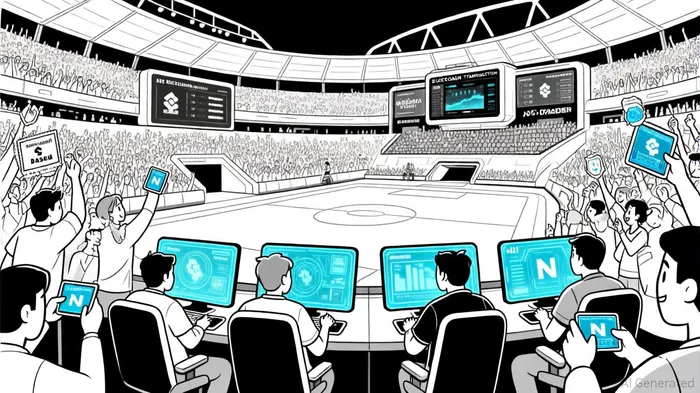
The convergence of blockchain technology and esports is reshaping the sports metaverse, creating new avenues for fan engagement, athlete monetization, and data-driven innovation. At the forefront of this transformation is Datavault AI, a company leveraging AI and decentralized systems to redefine how audiences interact with sports and gaming ecosystems. With its strategic partnerships, tokenized initiatives, and Web 3.0 infrastructure, Datavault AIDVLT-- is positioning itself as a pivotal player in the next-gen sports metaverse-a space projected to grow exponentially as digital identities and virtual experiences become mainstream.
The Convergence of Blockchain and Esports
Blockchain's inherent transparency, security, and tokenization capabilities are addressing long-standing challenges in esports, such as fraud prevention, revenue sharing, and fan loyalty. According to a GlobeNewswire report, Datavault AI is pioneering this shift by integrating AI-driven analytics with blockchain-based systems to create "stats-based invitational processes" for elite athletes in both traditional and digital sports. For instance, the company's collaboration with Cutting Edge Sports Management and FN Esports will power the first tokenized Dream Bowl XIV in January 2026, an event that merges college football and esports talent through AI-curated selection criteria and tokenized sponsorships. This approach not only ensures statistical fairness but also opens new revenue streams for athletes and brands through programmable digital assets.
Tokenized Fan Engagement: A New Era of Interactivity
Traditional fan engagement models are being upended by tokenized ecosystems, where audiences can own, trade, and interact with digital assets tied to their favorite teams and players. Datavault AI's ADIO® tone technology exemplifies this shift, enabling fans to participate in live events through interactive features such as appearing on stadium screens or voting on in-game decisions via NFTs. By tokenizing sponsorships and fan experiences, the company is creating a "participatory economy" where engagement is both measurable and monetizable.
This strategy aligns with broader industry trends. A ShapeFin analysis notes that Web 3.0-enabled platforms are increasingly prioritizing user-generated content and decentralized governance, allowing fans to influence event outcomes and revenue distribution. Datavault AI's Q3 2025 objectives-launching digital asset exchanges and advancing AI-driven data monetization-underscore its commitment to building a self-sustaining metaverse where stakeholders from athletes to advertisers benefit from transparent, blockchain-verified transactions.
Strategic Partnerships and Esports Expansion
Datavault AI's partnerships with established sports and esports entities amplify its credibility and reach. The Madden 2026 Global Championship, Team Esports Global Championship, and Drone Racing Championships are set to leverage the company's technology for authenticity verification and fan interaction. These initiatives not only diversify Datavault's portfolio but also position it to capture a share of the $1.5 billion esports market, which is expected to grow at a 12% CAGR through 2030.
Q3 2025 Objectives: Building the Infrastructure for Scalability
Beyond event-specific projects, Datavault AI is investing in foundational infrastructure to support long-term growth. Its Q3 2025 roadmap includes the launch of Web 3.0-enabled digital asset exchanges, which will facilitate seamless trading of NFTs, virtual real estate, and AI-generated content. Simultaneously, the company is advancing its supercomputing and AI development strategy, ensuring its platforms can handle the computational demands of real-time data processing and immersive metaverse experiences. These moves signal a focus on scalability, a critical factor for competing in a space where user adoption and technological agility determine success.
Conclusion: A Strategic Bet on the Future of Sports
Datavault AI's integration of blockchain, AI, and tokenized ecosystems positions it as a key architect of the next-gen sports metaverse. By addressing pain points in athlete selection, fan engagement, and data monetization, the company is not only capitalizing on current trends but also laying the groundwork for future innovations. For investors, the alignment of Datavault AI's initiatives with macroeconomic shifts-such as the rise of decentralized finance (DeFi) and the demand for immersive digital experiences-makes it a compelling case study in how technology can democratize and monetize sports ecosystems.
As the line between physical and virtual sports continues to blur, Datavault AI's ability to execute its vision will depend on its capacity to maintain strategic partnerships, innovate in AI-driven analytics, and scale its Web 3.0 infrastructure. With the tokenized Dream Bowl XIV and Q3 2025 milestones on the horizon, the company's trajectory offers a glimpse into a future where sports fandom is no longer passive-but participatory, programmable, and profit-driven.





Comentarios
Aún no hay comentarios